Goodram IRDM Ultimate X 512GB Review — Early PCIe 4.0 NVMe SSD (2026)
Quick answer
The Goodram IRDM Ultimate X 512GB is a competent early PCIe 4.0 SSD that brings Gen4 compatibility to budget-conscious builds through the proven Phison E16 platform.
Read: 5000 MB/s Write: 4500 MB/s Endurance: 3600 TBW Warranty: 5 years Interface: M.2 4.0 x 4
The Goodram IRDM Ultimate X 512GB is a PCIe Gen4 NVMe SSD from Polish manufacturer Goodram, built around the first-generation Phison E16 controller and Toshiba 3D TLC NAND for 5000 MB/s reads.
Controller & Memory
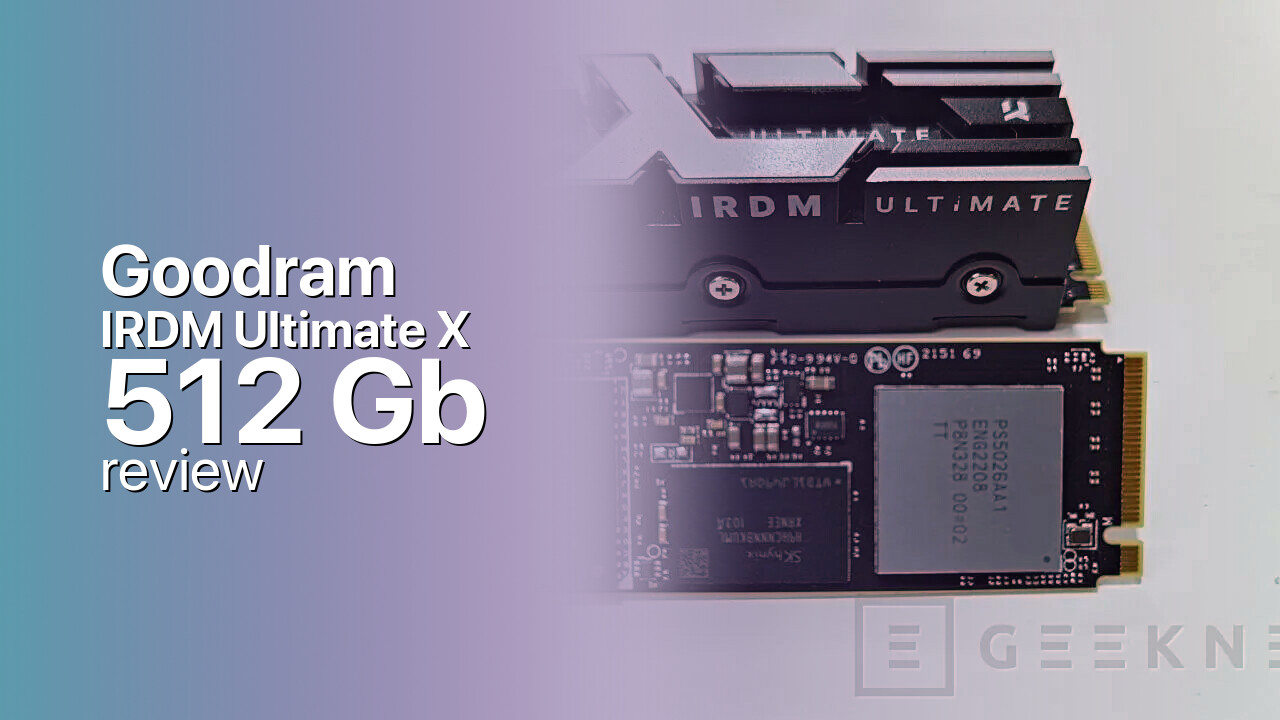
Goodram is a Polish memory brand under the ownership of Wilk Elektronik, and the IRDM Ultimate X is their entry into the PCIe 4.0 SSD market. The drive uses the Phison PS5016-E16 controller — the very first PCIe 4.0 x4 controller to reach consumers, launching in late 2019 and powering early Gen4 drives from Corsair, Gigabyte, and Seagate. Toshiba 3D TLC NAND (later rebranded as Kioxia following Toshiba Memory's corporate restructuring) provides the flash storage, with rated sequential reads of 5,000 MB/s and writes of 4,500 MB/s.
The E16 was a landmark controller as the world's first consumer PCIe 4.0 silicon, but it was also known for running hot. Built on a 28 nm process — significantly larger than the 12 nm E18 that followed — the E16 draws more power and generates more heat at equivalent workloads. Most E16-based drives shipped with substantial heatsinks, and Goodram's IRDM Ultimate X follows that pattern with its own thermal solution. The controller supports DDR4 DRAM caching in its reference design, though Goodram does not explicitly confirm the DRAM configuration for this specific SKU in public documentation.
At 512 GB, this drive targets users who want PCIe 4.0 compatibility — either for forward-proofing a build or for PS5 expansion — without paying for larger capacities. The 5,000 MB/s read speed is respectable but notably below what later PCIe 4.0 controllers like the E18 (7,000+ MB/s) and InnoGrit IG5236 (7,400+ MB/s) achieve. For everyday desktop use and gaming, the difference between 5,000 and 7,000 MB/s is barely perceptible.
Goodram provides a five-year warranty on the IRDM Ultimate X, which matches the industry standard for enthusiast SSDs. The listed endurance figure of 3,600 TBW for a 512 GB drive is unusually high — typical 512 GB TLC SSDs from major manufacturers carry ratings in the 300–400 TBW range. Without access to Goodram's official endurance documentation, this figure should be treated with caution. It may represent a data entry error or a different interpretation of the endurance metric.
Storage Comparisons:
IRDM Ultimate X Performance & Benchmarks
Sequential performance peaks at 5,000 MB/s read and 4,500 MB/s write, which was competitive at the E16's 2019 launch but has since been surpassed by second-generation PCIe 4.0 controllers. The Phison E16 uses a 28 nm process with support for up to eight NAND channels, and its random 4K performance is adequate for everyday desktop responsiveness. Load times for games and application launches are fast, though not noticeably quicker than a good PCIe 3.0 drive in blind testing.
Goodram IRDM Ultimate X 512 GB vs M.2 4.0 x 4 peers
Switch between sequential throughput and random IOPS to see how this drive stacks up against other M.2 4.0 x 4 SSDs in our database. The highlighted bar is the drive on this page — click any other bar to open that drive.
- Patriot Viper PV593 1 TB: 14,500 MB/s read, 14,000 MB/s write
- Patriot Viper PV593 2 TB: 14,500 MB/s read, 14,000 MB/s write
- Patriot Viper PV593 4 TB: 14,500 MB/s read, 14,000 MB/s write
- Patriot Viper PV573 2 TB: 14,000 MB/s read, 12,000 MB/s write
- Goodram IRDM Ultimate X 512 GB (this drive): 5,000 MB/s read, 4,500 MB/s write
The E16's thermal characteristics are the platform's most notable weakness. The 28 nm controller runs warm even at idle and can reach throttling temperatures under sustained writes without adequate cooling. Goodram's heatsink is essential — do not attempt to use this drive bare in a desktop build. Like all TLC drives, the IRDM Ultimate X uses dynamic SLC caching for burst writes, and sustained writes that exhaust the cache will fall to direct TLC speeds, typically in the 500–800 MB/s range for this generation. The Toshiba BiCS4 TLC NAND is a mature and reliable flash type, though it lacks the performance density of newer 176L and 200L designs.
Goodram IRDM Ultimate X vs Competitors
See how the IRDM Ultimate X stacks up against other M.2 4.0 x 4 drives in our database:
Compare with rival drives:
Endurance, TBW & Warranty
Goodram covers the IRDM Ultimate X with a five-year warranty, consistent with the enthusiast positioning of the product and matching coverage from competitors like Samsung and Corsair. The published endurance figure of 3,600 TBW for the 512 GB model is notably higher than what comparable drives from Western brands offer — typical 512 GB TLC SSDs rate between 300 and 400 TBW. Without official confirmation from Goodram's datasheet, this figure is difficult to verify and may be inflated. MTBF is not publicly stated. For normal consumer use, the five-year warranty is the practical guarantee that matters, and the drive should comfortably outlast that period under typical workloads regardless of the actual endurance rating.
Goodram IRDM Ultimate X 512 GB Specifications
| Category | Value |
|---|---|
| Capacity [?] | 512 GB |
| Interface [?] | M.2 4.0 x 4 |
| Controller [?] | Phison PS5016-E16 |
| Memory type [?] | Toshiba 3D TLC |
| DRAM [?] | Yes |
| Read speed (MB/s) [?] | 5000 |
| Write speed (MB/s) [?] | 4500 |
| Read IOPS [?] | 750000 |
| Write IOPS [?] | 700000 |
| Endurance (TBW) [?] | 3600 |
| MTBF (million hours) [?] | 2000000 |
| Warranty (years) [?] | 5 |
Verdict: Is the IRDM Ultimate X Worth It in 2026?
The Goodram IRDM Ultimate X 512GB is a competent early PCIe 4.0 SSD that brings Gen4 compatibility to budget-conscious builds through the proven Phison E16 platform. The five-year warranty is a strong point, and the Toshiba TLC NAND is from a reputable flash manufacturer. The E16's thermal output and the 28 nm process efficiency lag behind newer controllers, and the endurance figure appears inflated compared to industry norms. For buyers in Central European markets where Goodram is readily available at competitive pricing, the IRDM Ultimate X is a reasonable entry into PCIe 4.0 storage.
+ Pros
- PCIe 4.0 x4 compatibility for future-proofing
- Phison E16 controller with proven track record
- Toshiba 3D TLC NAND from reputable manufacturer
- Five-year warranty coverage
- 5,000 MB/s read speed adequate for gaming
- Cons
- E16 controller runs hot on 28 nm process
- Endurance rating appears inflated for 512 GB
- Slower than second-gen PCIe 4.0 controllers
- DRAM configuration not publicly confirmed
Buy this or similar SSD Storage:



Video Review
Goodram PCIe 4 x4 NVMe M.2 SSD, 500GB, 1TB and 2TB IRDM Ultimate X