HP FX 900 1TB PCIe 4.0 NVMe SSD Review (2026)
Quick answer
Buy the HP FX 900 1 TB if you want PCIe 4.0 speeds on a budget and do not need the absolute last megabyte per second that flagship drives command.
Read: 5000 MB/s Write: 4800 MB/s Endurance: 800 TBW Warranty: 5 years Interface: M.2 4.0 x 4
The HP FX 900 1 TB is a budget-friendly PCIe 4.0 NVMe that punches above its weight by pairing the Innogrit IG5236 controller with Micron 3D TLC NAND and hitting 5,000 MB/s sequential reads without the cost of onboard DRAM.
Controller & Memory
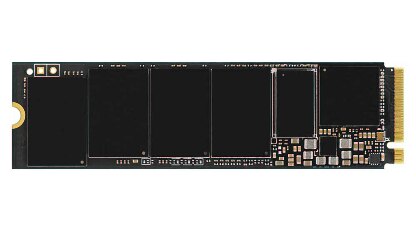
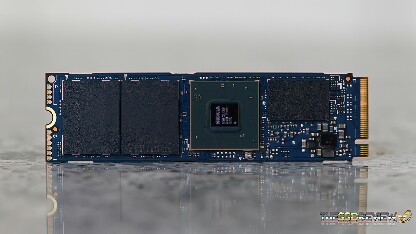
Under the hood, the HP FX 900 1 TB runs on Innogrit IG5236 controller (listed as IG5220BAA in some variants) — a DRAM-less design that relies on Host Memory Buffer (HMB) technology to borrow a small slice of system RAM for caching metadata. The NAND is Micron 96-layer 3D TLC, configured in a double-sided M.2 2280 form factor. HMB has come a long way since the early DRAM-less drives, and modern implementations like this one narrow the performance gap with full-DRAM competitors while keeping costs down.
HP offers the FX 900 series in 256 GB, 512 GB, 1 TB, and 2 TB capacities. The 1 TB model reviewed here sits at the sweet spot: it carries the full 5,000 MB/s read rating and a substantial 800 TBW endurance rating, whereas smaller capacities often throttle write speeds. The drive ships without a heatsink, so if you are dropping it into a PS5 or a thermally constrained laptop, factor in a low-profile M.2 cooler.
The HP FX 900 competes directly with other mid-tier PCIe 4.0 drives like the Western Digital Blue SN580, Kingston KC3000, and Crucial P5 Plus. It trades blows on sequential throughput but undercuts many of them on price, making it a solid pick for gamers upgrading from SATA or PCIe 3.0 NVMe who want the 4.0 jump without paying flagship premiums. PS5 users should note the lack of included heatsink — Sony requires a drive with a cooling solution to meet thermal specs, so add that to the cart.
Storage Comparisons:
FX 900 Performance & Benchmarks
HP rates the FX 900 1 TB at up to 5,000 MB/s sequential reads and 4,800 MB/s sequential writes over its PCIe 4.0 x 4 interface. Random performance comes in at up to 820,000 read IOPS and 645,000 write IOPS — strong numbers for a DRAM-less design and ample for gaming, OS boot, and typical desktop workloads. Independent benchmarks consistently show the drive hitting or exceeding these rated figures in CrystalDiskMark, with real-world file copies landing in the 3,500–4,200 MB/s range depending on file size.
HP FX 900 1 TB vs M.2 4.0 x 4 peers
Switch between sequential throughput and random IOPS to see how this drive stacks up against other M.2 4.0 x 4 SSDs in our database. The highlighted bar is the drive on this page — click any other bar to open that drive.
- Patriot Viper PV593 1 TB: 14,500 MB/s read, 14,000 MB/s write
- Patriot Viper PV593 2 TB: 14,500 MB/s read, 14,000 MB/s write
- Patriot Viper PV593 4 TB: 14,500 MB/s read, 14,000 MB/s write
- Patriot Viper PV573 2 TB: 14,000 MB/s read, 12,000 MB/s write
- HP FX 900 1 TB (this drive): 5,000 MB/s read, 4,800 MB/s write
Like most TLC-based NVMe drives, the FX 900 employs an SLC cache strategy to accelerate burst writes. Independent testing indicates a cache size in the 150–200 GB range on the 1 TB model, after which writes settle into a steady-state TLC write speed. For typical consumer workloads — game installs, video editing projects, large file transfers — this means you get full-speed writes for most single operations and only see throttling if you are pushing hundreds of gigabytes in one go. Gaming load times see modest improvements over SATA SSDs and PCIe 3.0 drives. DirectStorage titles will benefit more from the random IOPS than raw sequential throughput.
HP FX 900 vs Competitors
See how the FX 900 stacks up against other M.2 4.0 x 4 drives in our database:
Compare with rival drives:
Endurance, TBW & Warranty
HP backs the FX 900 1 TB with a 5-year warranty that is TBW-limited to 800 terabytes written. TBW measures how much data you can write before the warranty expires — in this case, 800 TB. To put that in perspective, at a heavy workload of 100 GB per day, the 1 TB model would last roughly 22 years before exhausting its TBW rating. Even at 200 GB daily — more than most enthusiasts write — you are looking at over a decade of covered use. Most users will hit the five-year calendar limit long before they approach 800 TBW.
The warranty is direct with HP, which generally means RMA through HP support channels rather than the retailer. MTBF is not prominently specified in HP consumer datasheet for this series, which is common for DRAM-less HMB designs targeting the budget tier. The combination of 800 TBW and five years of coverage is competitive for the price point and matches or exceeds offerings from some competitors in the same segment.
HP FX 900 1 TB Specifications
| Category | Value |
|---|---|
| Capacity [?] | 1 TB |
| Interface [?] | M.2 4.0 x 4 |
| Controller [?] | Innogrit IG5220BAA |
| Memory type [?] | Micron 3D TLC |
| DRAM [?] | HMB |
| Read speed (MB/s) [?] | 5000 |
| Write speed (MB/s) [?] | 4800 |
| Read IOPS [?] | 820000 |
| Write IOPS [?] | 645000 |
| Endurance (TBW) [?] | 800 |
| MTBF (million hours) [?] | 1500000 |
| Warranty (years) [?] | 5 |
Verdict: Is the FX 900 Worth It in 2026?
Buy the HP FX 900 1 TB if you want PCIe 4.0 speeds on a budget and do not need the absolute last megabyte per second that flagship drives command. It is an excellent boot drive for gaming PCs, a solid upgrade path from SATA or older NVMe, and a perfectly capable scratch disk for 4K video editing or Lightroom catalogs. Skip it if you need sustained write performance for multi-TB transfers or if you require an included heatsink for a PS5 upgrade. The WD Black SN850X or Samsung 990 Pro will beat it on sustained heavy workloads, but they also cost significantly more. For most gamers and general-purpose users, the FX 900 hits the value sweet spot.
+ Pros
- 5,000 MB/s sequential reads at a budget price point
- 800 TBW endurance on the 1 TB model
- 5-year warranty with competitive TBW coverage
- Innogrit IG5236 controller with mature HMB implementation
- Available up to 2 TB capacity
- Low power draw suitable for laptops
- Cons
- DRAM-less HMB design, slower than full-DRAM competitors on sustained writes
- No included heatsink — required for PS5
- SLC cache exhausts after 150–200 GB of sustained writes
- Write speed drops in TLC steady-state vs DRAM-equipped drives
Buy this or similar SSD Storage:



Video Review
Una SSD ULTRA RÁPIDA para PC | Laptop | PlayStation 5 - Review HP FX900 PRO Nvme 1.4