Top PCIe 3.0 SSD Drives
PCIe 3.0 NVMe SSDs remain a solid budget choice with reads up to 3,500 MB/s. 334 drives in our database — ideal for older systems and value builds.

PCIe 3.0 x4 NVMe SSDs are the mature, budget-friendly tier of consumer storage. With sequential reads up to 3,500 MB/s and writes up to 3,000 MB/s, these drives deliver performance that is still more than adequate for boot drives, game libraries, and general productivity workloads. The massive selection — 334 drives in our database — means you can find excellent value at every capacity point.
The PCIe 3.0 ecosystem is anchored by proven controllers like the Phison PS5012-E12 (enthusiast tier, up to 3,400 MB/s reads), SM2262EN (mid-range, DRAM-equipped), and SM2263T/RTS5765 (budget DRAM-less designs). Many of these drives have been in production for 5+ years, meaning their quirks are well understood and firmware is mature. Standout models include the Sabrent Rocket Q (high-capacity QLC), Kingston KC2000/A2000, and the Intel 660p/670p series (QLC with excellent idle power draw).
For legacy system upgrades, PCIe 3.0 drives are ideal. Any motherboard with an M.2 slot from 2017 onward supports them, and they are backward compatible with even older platforms via adapter cards. The price per gigabyte is the lowest of any NVMe tier — often within 10–15% of SATA SSD prices for the same capacity, while delivering 5–6x the sequential throughput.
The trade-off is age and availability. As manufacturers shift production to PCIe 4.0 and 5.0, the selection of new PCIe 3.0 drives is shrinking. Many models in our database are end-of-life or available only through remaining stock. That said, the drives that remain in production — particularly budget offerings from Kingston, Team Group, and Silicon Power — continue to offer compelling value.
NAND type varies widely in this tier. You will find MLC drives from the early PCIe 3.0 era (excellent endurance, now rare), mainstream TLC (the majority), and QLC (budget bulk storage). Check the memory type before buying — a QLC PCIe 3.0 drive at the same price as a TLC PCIe 4.0 drive is generally the worse purchase, since the PCIe 4.0 drive will outperform it even in a PCIe 3.0 slot.
List of PCIe 3.0 NVMe SSDs to buy in 2026
There is 334 SSD in our database. Links to reviewed models of storage with detailed characteristics listed in table below.
| Name | Write Speed, Mb/s | Read Speed, Mb/s | Memory type |
|---|---|---|---|
| ADATA XPG Spectrix S20G RGB | 1800 | 2500 | Spectek 3D QLC |
| ADATA Swordfish | 1200 | 1800 | ADATA 3D TLC |
| ADATA Falcon | 1500 | 3100 | 3D TLC |
| ADATA SX 8800 Pro | 2700 | 3500 | 3D TLC |
| ADATA XPG Spectrix S40G RGB | 3000 | 3500 | IMFT 3D TLC |
| ADATA XPG Gammix S11 Pro | 3000 | 3500 | Micron TLC |
| ADATA XPG Gammix S5 | 1500 | 2100 | Micron TLC |
| ADATA XPG SX8200 Pro | 1150 | 3500 | Micron 64-layer 3D TLC |
| ADATA XPG SX8000 | 1100 | 2500 | ADATA MLC |
| ADATA XPG SX6000 Pro | 1500 | 2100 | Micron TLC |
| ADATA XPG SX6000 Lite | 1200 | 1800 | Micron TLC |
| Addlink X70 | 3000 | 3500 | Toshiba 3D TLC |
| Addlink S70 | 2700 | 3500 | Toshiba 3D TLC |
| Addlink S68 | 1200 | 2000 | 3D TLC |
| Apacer AS2280P2 Pro | 950 | 1580 | 3D TLC |
| Apacer AS2280P4 | 2000 | 3200 | 3D TLC |
| Asura Genesis Xtreme | 3000 | 3400 | Toshiba 64-L TLC |
| Biostar M700 | 950 | 1850 | Intel 3D TLC |
| Corsair Force MP400 | 3000 | 3480 | Micron 96L QLC |
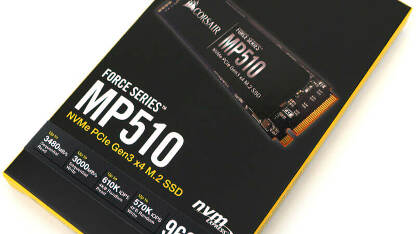
| Corsair MP510 | 1050 | 3100 | Toshiba 64L TLC |
| Corsair Neutron NX500 | 1600 | 2800 | Toshiba 15nm MLC |
| Crucial P5 | 1400 | 3400 | Micron TLC |
| Crucial P2 | 1150 | 2100 | Micron TLC |
| Crucial P1 | 950 | 1900 | Micron 3D QLC |
| Drevo D1 Xtreme | 1600 | 3100 | TLC |
| Edge NextGen M.2 | 515 | 1215 | TLC |
| Gigabyte M30 | 3000 | 3500 | 3D TLC |
| Gigabyte AORUS RGB | 1050 | 3100 | Toshiba TLC |
| Goodram PX500 | 950 | 1850 | 3D TLC |
| Goodram IRDM Ultimate | 2200 | 2900 | Toshiba MLC |
| HP EX950 | 2900 | 3500 | Micron 64L 3D TLC |
| HP EX920 | 1200 | 3200 | Micron TLC |
| HP EX900 | 650 | 1900 | Micron TLC |
| Integral Memory Ultima Pro X | 3000 | 3300 | 3D TLC |
| Intel Optane H20 | 2000 | 3300 | Intel 144L QLC |
| Intel 760P | 650 | 1640 | Intel TLC |
| Intel 670P | 2700 | 3500 | Intel 144L 3D QLC |
| Intel 665P | 2000 | 2000 | Intel 96L 3D QLC |
| Intel 660P | 1800 | 1800 | Intel QLC |
| Kingmax PX3480 | 3000 | 3400 | Toshiba TLC |
| Kingston KC2500 | 1200 | 3500 | 96-layer 3D TLC |
| Kingston A2000 | 2000 | 2200 | Toshiba 3D TLC |
| Kingston KC2000 | 1100 | 3000 | Toshiba 3D TLC |
| Kingston KC1000 | 1600 | 2700 | Toshiba MLC |
| Kioxia XG5-P | 2200 | 3000 | Toshiba 64L BiCS3 TLC |
| Kioxia Exceria Plus | 3200 | 3400 | Toshiba 96L 3D TLC |
| Kioxia Exceria | 1600 | 1700 | Toshiba 96L 3D TLC |
| Leven JPR600 | 3000 | 3400 | 3D TLC |
| Lexar NM700 | 2000 | 3500 | 3D TLC |
| Lexar NM620 | 1300 | 3000 | 3D TLC |
| Lexar NM610 | 1600 | 2100 | Intel TLC |
| Lite-On MU X1 | 3000 | 3400 | Toshiba 3D TLC |
| Mushkin Helix-L | 1500 | 1700 | TLC |
| Mushkin Pilot-E | 2300 | 3500 | Micron 3D TLC |
| Mushkin Pilot | 1000 | 1500 | Micron TLC |
| MyDigitalSSD SBXe | 1550 | 1700 | Toshiba TLC |
| MyDigitalSSD BPX Pro | 1100 | 3400 | Toshiba TLC |
| MyDigitalSSD BPX | 1300 | 2600 | SanDisk MLC |
| Netac 930E | 1500 | 2000 | TLC |
| OWC Aura Pro X2 | 2400 | 3200 | IMFT TLC |
| OWC Mercury M.2 | 1087 | 1872 | MLC |
| Patriot P300 | 1650 | 2100 | Toshiba 3D TLC |
| Patriot Viper VPR100 | 2900 | 3300 | Toshiba 3D TLC |
| Patriot Viper VPN100 | 1000 | 3000 | Toshiba TLC |
| Pioneer APS-SE20Q | 3000 | 3400 | Micron 3D QLC |
| Plextor M9Pe Series | 1000 | 3000 | Toshiba TLC |
| Plextor M8Se Series | 1000 | 2400 | Toshiba TLC |
| Plextor M8Pe | 500 | 1600 | Toshiba MLC |
| PNY XLR8 CS3030 | 1050 | 3500 | Toshiba TLC |
| PNY CS2030 | 1550 | 2800 | Toshiba MLC |
| Sabrent Rocket Nano | 2100 | 2500 | Toshiba TLC |
| Sabrent Rocket Q | 3000 | 3400 | QLC |
| Samsung 980 | 3000 | 3500 | Samsung TLC |
| Samsung 970 EVO Plus | 2300 | 3500 | Samsung 3D TLC |
| Samsung 970 Pro | 2300 | 3500 | Samsung MLC |
| Samsung 970 EVO | 1500 | 3500 | Samsung TLC |
| SanDisk Extreme Pro | 2500 | 3400 | SanDisk/Toshiba BiCS3 64L 3D TLC |
| Seagate FireCuda 510 | 3200 | 3400 | Toshiba TLC |
| Seagate BarraCuda 510 | 2100 | 3400 | Toshiba 64-L TLC |
| Silicon Power UD70 | 3000 | 3400 | Micron 3D QLC |
| Silicon Power P34A80 | 3000 | 3200 | Toshiba 64L 3D TLC |
| Silicon Power P34A60 | 1600 | 2200 | Intel 3D TLC |
| SK Hynix Gold P31 | 3100 | 3500 | SK Hynix 128L 3D TLC |
| Team Group Cardea Zero Z340 | 3000 | 3400 | 3D TLC |
| Team Group T-Force Cardea Liquid | 3000 | 3400 | Toshiba 3D TLC |
| Team Group MP34 | 850 | 2700 | Toshiba BiCS3 64L TLC |
| Team Group MP33 | 1000 | 1600 | Toshiba 3D TLC |
| Team Group T-Force Cardea II | 1000 | 3400 | Toshiba 64L 3D TLC |
| Team Group P30 | 1350 | 2500 | 3D TLC |
| Team Group T-Force Cardea Zero | 1400 | 2600 | Toshiba MLC |
| Team Group T-Force Cardea | 1400 | 2600 | Toshiba MLC |
| Kioxia BG4 | 1800 | 2300 | Toshiba 3D TLC |
| Kioxia RD500 | 3200 | 3400 | Toshiba TLC |
| Kioxia RC500 | 1600 | 1700 | Toshiba TLC |
| Kioxia XG6-P | 2920 | 3180 | Toshiba TLC |
| Kioxia XG6 | 2960 | 3180 | Toshiba TLC |
| Kioxia XG5 | 2100 | 3000 | Toshiba TLC |
| Transcend PCIe SSD 220S | 1500 | 1700 | MLC |
| Transcend PCIe SSD 110S | 1500 | 1700 | MLC |
| VisionTek Pro 2 | 1750 | 2680 | 3D TLC NAND |
| VisionTek Pro | 1000 | 1800 | 3D TLC |
| Western Digital Blue SN550 | 1900 | 2400 | SanDisk 3D TLC |
| Western Digital Black ZN750 | 1600 | 3100 | SanDisk 64L TLC |
| Zadak Spark | 3000 | 3400 | Micron 3D TLC |
| Digma Mega G1 | 2800 | 3300 | 3D TLC |
| NEO FORZA eSports NFP075 | 3000 | 3400 | Kioxia 3D TLC |
| PATRIOT Viper VPN110 | 3000 | 3300 | Kioxia TLC |