ADATA XPG S70 1TB Review — PCIe 4.0 NVMe SSD (2026)
Quick answer
The ADATA XPG Gammix S70 1 TB makes sense for a desktop builder who wants a fast, DRAM-equipped PCIe 4.0 boot drive with a capable heatsink included in the price.
Read: 7400 MB/s Write: 5500 MB/s Endurance: 740 TBW Warranty: 5 years Interface: M.2 4.0 x 4
The ADATA XPG Gammix S70 1 TB proves that a factory heatsink and DRAM cache still matter in 2026, delivering sustained writes that hold well after the SLC buffer empties.
Controller & Memory
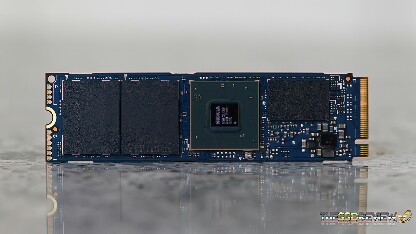
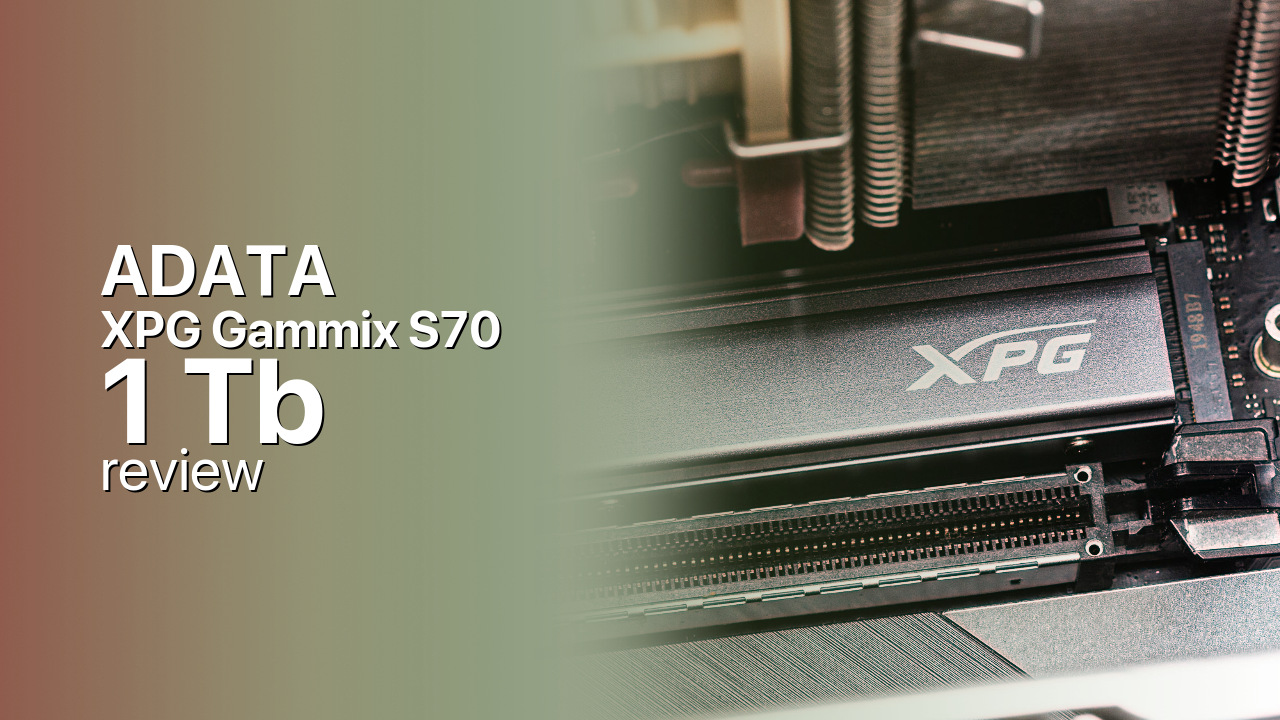
The XPG Gammix S70 is built around InnoGrit's IG5236 controller paired with Micron 3D TLC NAND and a 1 GB DDR4 DRAM cache. That DRAM buffer is the cornerstone of its responsiveness — unlike DRAM-less HMB designs that borrow system memory, the S70 keeps its mapping tables on the drive itself, which lowers latency under mixed read/write workloads. The drive uses the PCIe 4.0 x4 interface on a standard M.2 2280 form factor, and it ships with a large aluminium heatsink permanently attached to the PCB. The heatsink does its thermal job but adds roughly 11 mm of total height, making the drive a desktop-only proposition — it will not fit in a laptop M.2 slot, a PS5 expansion bay, or any thin-form-factor system.
ADATA also offers this drive in a 2 TB capacity, which doubles the sequential write speed to 6,400 MB/s and the endurance to 1,480 TBW while bumping the DRAM to 2 GB. The 1 TB variant reviewed here is the practical pick for a boot-and-games desktop — it gets the same 7,400 MB/s sequential reads as the flagship, and the 5,500 MB/s sustained write ceiling is still well above what any game load, OS task, or 4K video playback demands. Both capacities use the same IG5236 controller and Micron TLC NAND; the only hardware difference is the DRAM size and NAND channel population.
In the enthusiast PCIe 4.0 segment, the S70 competed directly with the Samsung 980 Pro, the WD Black SN850, and the Sabrent Rocket 4 Plus — all drives that trade blows in synthetic benchmarks. The S70's differentiator at launch was its aggressively priced heatsink bundle: the 980 Pro and SN850 required a separate heatsink purchase for sustained-heavy workloads, while the S70 included a capable one from the factory. The counterweight is compatibility — the fixed heatsink means the drive fits full-size desktop M.2 slots but demands clearance measurements in ITX and micro-ATX builds where the M.2 slot sits under a GPU or behind a riser card.
Storage Comparisons:
XPG Gammix S70 Performance & Benchmarks
The 1 TB XPG Gammix S70 is rated for up to 7,400 MB/s sequential reads and 5,500 MB/s sequential writes — figures that saturate the PCIe 4.0 x4 bus on reads while leaving a modest gap on writes compared to the 2 TB variant's 6,400 MB/s ceiling. Random performance is rated at up to 350,000 IOPS read and 720,000 IOPS write, which puts the S70 among the fastest IG5236 implementations tested. In practice, these numbers translate to sub-10-second OS boots, near-instant game level loads, and smooth 4K video timeline scrubbing in editing applications.
ADATA XPG Gammix S70 1 TB vs M.2 4.0 x 4 peers
Switch between sequential throughput and random IOPS to see how this drive stacks up against other M.2 4.0 x 4 SSDs in our database. The highlighted bar is the drive on this page — click any other bar to open that drive.
- Patriot Viper PV593 1 TB: 14,500 MB/s read, 14,000 MB/s write
- Patriot Viper PV593 2 TB: 14,500 MB/s read, 14,000 MB/s write
- Patriot Viper PV593 4 TB: 14,500 MB/s read, 14,000 MB/s write
- Patriot Viper PV573 2 TB: 14,000 MB/s read, 12,000 MB/s write
- ADATA XPG Gammix S70 1 TB (this drive): 7,400 MB/s read, 5,500 MB/s write
Like most NVMe drives with a DRAM cache, the S70 uses a pSLC write cache to absorb burst writes at full speed. Independent reviewers consistently find the 1 TB model's pSLC cache holds roughly 180—200 GB before filling, after which the direct-to-TLC write speed settles in the 1,500—1,800 MB/s range. For a boot or game drive, this is a non-issue — a 100 GB game install finishes before the cache exhausts. The factory heatsink is effective: even under sustained sequential writes, thermal testing shows the drive maintains above 3,500 MB/s on an open bench. In a case with poor airflow the controller will throttle sooner, but the heatsink delays that point substantially compared to bare-drive alternatives. Power consumption at idle runs higher than competing PCIe 4.0 drives — something to note for always-on systems — while peak draw under load is typical for the IG5236 controller class.
ADATA XPG Gammix S70 vs Competitors
See how the XPG Gammix S70 stacks up against other M.2 4.0 x 4 drives in our database:
Compare with rival drives:
Endurance, TBW & Warranty
The 1 TB XPG Gammix S70 carries a 740 TBW endurance rating and a 5-year limited warranty, whichever limit is reached first — standard for a premium PCIe 4.0 drive of this generation. At a typical desktop workload of 20—50 GB of writes per day, the rated endurance translates to roughly 40 to 100 years of service, meaning the warranty clock will almost certainly run out before the NAND cells wear. The MTBF is rated at 2 million hours, a population-level statistic that describes expected failure rates across a large sample rather than any individual drive's lifespan. ADATA handles warranty claims through its standard RMA process; the 5-year term matches what Samsung and WD offer on their competing flagships. For context, the 2 TB variant doubles endurance to 1,480 TBW — a figure the 1 TB does not need for consumer workloads. If endurance is a deciding factor, the S70's 740 TBW rating covers even a moderately heavy mixed-workload desktop for the full warranty period and then some.
ADATA XPG Gammix S70 1 TB Specifications
| Category | Value |
|---|---|
| Capacity [?] | 1 TB |
| Interface [?] | M.2 4.0 x 4 |
| Controller [?] | Innogrit Rainer IG5236 |
| Memory type [?] | Micron 3D TLC |
| DRAM [?] | SLC Caching and DRAM cache buffer |
| Read speed (MB/s) [?] | 7400 |
| Write speed (MB/s) [?] | 5500 |
| Read IOPS [?] | 350000 |
| Write IOPS [?] | 720000 |
| Endurance (TBW) [?] | 740 |
| MTBF (million hours) [?] | 2 |
| Warranty (years) [?] | 5 |
Verdict: Is the XPG Gammix S70 Worth It in 2026?
The ADATA XPG Gammix S70 1 TB makes sense for a desktop builder who wants a fast, DRAM-equipped PCIe 4.0 boot drive with a capable heatsink included in the price. It delivers full Gen 4 sequential reads, high random IOPS, and a factory thermal solution that actually keeps it from throttling — a combination that holds up well years after its 2021 launch. Skip the S70 if you need a laptop or PS5 drive: the permanently attached heatsink is a hard compatibility blocker in both scenarios. For small-form-factor builds and consoles, consider the XPG Gammix S70 Blade instead, which drops the factory heatsink, fits in tighter M.2 slots, and matches or exceeds this drive's speeds in most capacities. The S70 was one of the first IG5236 drives to market and remains a solid performer — but only in a desktop with the clearance to house it.
+ Pros
- 7,400 MB/s sequential reads
- DRAM cache (1 GB DDR4) for consistent mixed-workload latency
- 740 TBW endurance rating on the 1 TB capacity
- Factory aluminium heatsink prevents throttling under sustained loads
- 5-year warranty matches flagship competitors
- Innogrit IG5236 controller delivers strong random IOPS
- Cons
- Permanently attached heatsink blocks laptop and PS5 installation
- 5,500 MB/s writes trail the 2 TB variant's 6,400 MB/s
- Higher idle power consumption than competing PCIe 4.0 drives
- Heatsink clearance issues on ITX and micro-ATX motherboards
Buy this or similar SSD Storage:



Video Review
XPG GAMMIX S70 PCIe Gen4x4 M.2 2280 SSD Review