Apacer AS2280P4 240 GB — Budget PCIe 3.0 x4 NVMe SSD (2026)
Quick answer
The Apacer AS2280P4 240 GB is a capable budget NVMe SSD for one specific use case: breathing life into an older PCIe 3.0 desktop or laptop that is still running on a SATA SSD or hard drive.
Read: 3200 MB/s Write: 2000 MB/s Endurance: 150 TBW Warranty: 3 years Interface: M.2 3.0 x 4
The Apacer AS2280P4 240 GB is a PCIe 3.0 x4 NVMe drive from the era when 3,000 MB/s-class SSDs became affordable for mainstream builders — a solid OS boot drive now firmly in the budget category.
Controller & Memory
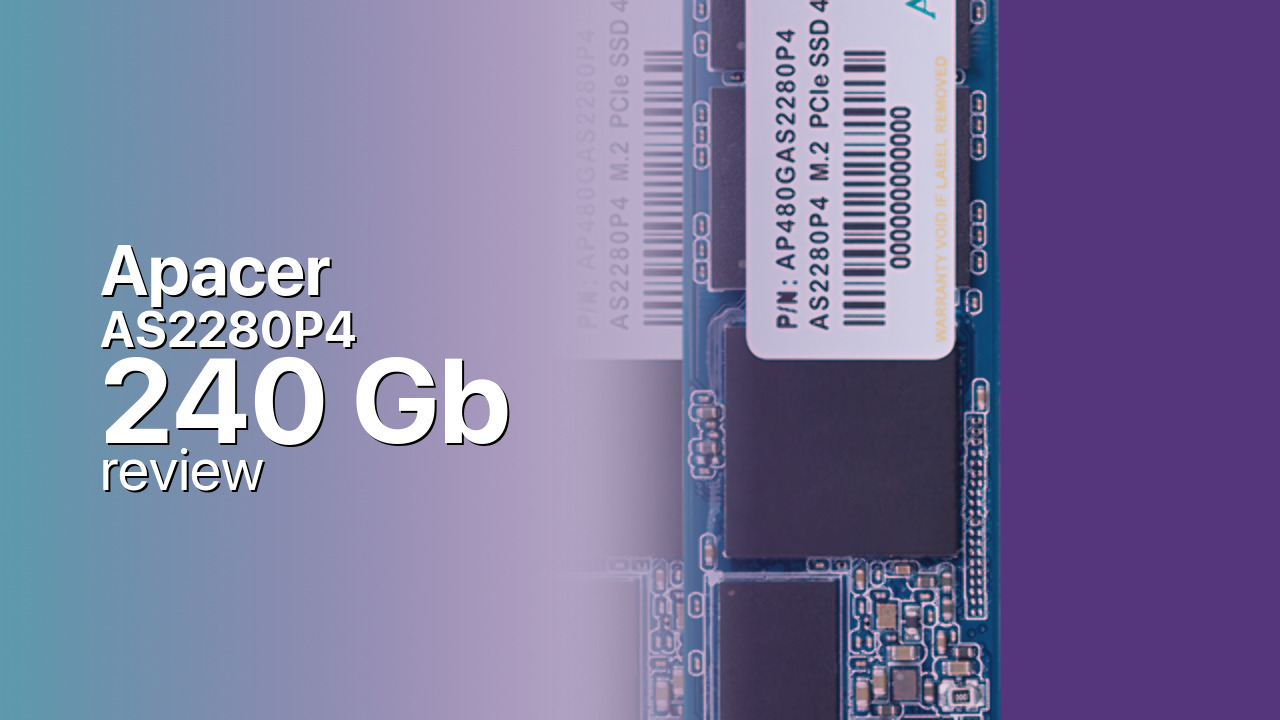
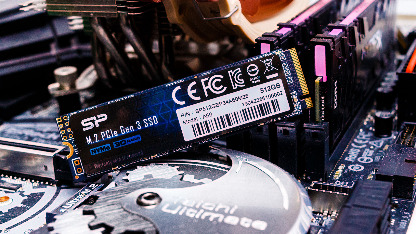
Apacer launched the AS2280P4 as a mid-range NVMe SSD built on a PCIe 3.0 x4 interface with 3D TLC NAND. The controller is a 4-channel DRAM-less design — likely a Silicon Motion SM2263XT based on third-party teardowns — which keeps costs down but means the drive relies on host memory buffer (HMB) technology rather than a dedicated DRAM cache. The 240 GB variant is the second-smallest of four capacities; Apacer also shipped 120 GB, 480 GB, and 960 GB versions of this drive. The smaller capacities use fewer NAND dies and typically deliver lower sustained write performance than the larger variants.
The drive uses a single-sided M.2 2280 form factor measuring 80 x 22 x 2.25 mm, which fits comfortably in desktops and most laptops including thinner ultrabooks. Power draw is modest — Apacer rates the drive at 275 mA active and 80 mA idle — so thermal management is straightforward. A dedicated heatsink is not required for typical desktop or laptop use, though sustained sequential writes may push the controller toward throttling territory. The PCIe 3.0 interface means the drive is not compatible with the PS5 expansion slot, which requires PCIe 4.0 and a minimum 5,500 MB/s read speed.
When it shipped, the AS2280P4 competed against drives like the ADATA XPG SX8200 Pro (which offered a DRAM-equipped SM2262EN controller and similar sequential speeds) and the WD Blue SN550 (a DRAM-less PCIe 3.0 x4 drive with an in-house SanDisk controller). The Kingston A2000 sat in a similar price band but included DRAM and hardware encryption — features the AS2280P4 lacked. In 2026, the AS2280P4 is best understood as a budget OS drive for upgrading an older PCIe 3.0 desktop or laptop where the jump from SATA to NVMe is the real win, not the absolute peak throughput.
Storage Comparisons:
AS2280P4 Performance & Benchmarks
Apacer rates the AS2280P4 at up to 3,200 MB/s sequential reads and 2,000 MB/s sequential writes, with random performance reaching 360,000 IOPS for 4K writes. These are maximum figures that apply to the larger capacities; the 240 GB variant likely falls short of the peak read speed due to fewer NAND channels active in parallel. Third-party benchmarks of the 512 GB variant show real-world CrystalDiskMark results around 2,300 MB/s reads and 1,750 MB/s writes — below the rated maximums but still a meaningful step up from SATA SSDs and entry-level PCIe 3.0 x2 drives.
Apacer AS2280P4 240 GB vs M.2 3.0 x 4 peers
Switch between sequential throughput and random IOPS to see how this drive stacks up against other M.2 3.0 x 4 SSDs in our database. The highlighted bar is the drive on this page — click any other bar to open that drive.
- ADATA SX 8800 Pro 512 GB: 3,500 MB/s read, 2,700 MB/s write
- ADATA SX 8800 Pro 1 TB: 3,500 MB/s read, 2,700 MB/s write
- ADATA XPG Spectrix S40G RGB 256 GB: 3,500 MB/s read, 3,000 MB/s write
- ADATA XPG Spectrix S40G RGB 512 GB: 3,500 MB/s read, 3,000 MB/s write
- Apacer AS2280P4 240 GB (this drive): 3,200 MB/s read, 2,000 MB/s write
For everyday use — Windows boot times, application launches, and game level loads — the AS2280P4 240 GB performs in the same ballpark as other DRAM-less PCIe 3.0 x4 drives. The HMB design means random read latency at low queue depths is slightly higher than DRAM-equipped alternatives, but the difference is imperceptible in typical desktop workloads. The main constraint with the 240 GB capacity is not speed but space: after a Windows installation and a handful of applications, free capacity shrinks quickly, and SSDs slow down as they fill. Sustained sequential writes will also reveal the DRAM-less controller's limits once the SLC write cache is exhausted, at which point write speeds drop to the native TLC rate of roughly 300–400 MB/s.
Apacer AS2280P4 vs Competitors
See how the AS2280P4 stacks up against other M.2 3.0 x 4 drives in our database:
Compare with rival drives:
Endurance, TBW & Warranty
Apacer covers the AS2280P4 with a 3-year limited warranty. The MTBF is rated at 1.5 million hours, a standard population-level statistic for consumer SSDs that reflects expected failure rates across large sample sizes rather than an individual drive's projected lifespan. Apacer does not publicly specify a TBW endurance rating for the 240 GB variant in its current documentation; third-party databases suggest a figure around 200 TBW for the smaller capacities, though this should be treated as an estimate rather than a manufacturer guarantee. At a typical consumer workload of 20 GB per day, even a conservative 150 TBW rating would translate to roughly 20 years of use — well past the practical service life of a 240 GB drive. Warranty claims are handled through Apacer's standard RMA process; the drive is covered for the full three years as long as it has not exceeded its rated endurance or been physically damaged.
Apacer AS2280P4 240 GB Specifications
| Category | Value |
|---|---|
| Capacity [?] | 240 GB |
| Interface [?] | M.2 3.0 x 4 |
| Controller [?] | Silicon Motion SM2263XT |
| Memory type [?] | 3D TLC |
| DRAM [?] | HMB |
| Read speed (MB/s) [?] | 3200 |
| Write speed (MB/s) [?] | 2000 |
| Read IOPS [?] | 360000 |
| Write IOPS [?] | 360000 |
| Endurance (TBW) [?] | 150 |
| MTBF (million hours) [?] | 1.5 |
| Warranty (years) [?] | 3 |
Verdict: Is the AS2280P4 Worth It in 2026?
The Apacer AS2280P4 240 GB is a capable budget NVMe SSD for one specific use case: breathing life into an older PCIe 3.0 desktop or laptop that is still running on a SATA SSD or hard drive. The jump to NVMe — even on a DRAM-less controller — is the meaningful upgrade here, and the AS2280P4 delivers that at minimal cost. Skip it if you need more than a pure OS boot drive; 240 GB fills up fast, and modern games and creative applications demand more breathing room. Skip it also if your system supports PCIe 4.0, where drives like the WD Blue SN580 or Kingston NV3 offer double the bandwidth for a small price premium. For an ultra-budget system refresh where every dollar counts, the AS2280P4 does its job without drawing attention to itself — which, at this price, is exactly what you want.
+ Pros
- PCIe 3.0 x4 delivers ~3,200 MB/s reads at larger capacities
- Single-sided M.2 2280 fits thin laptops and ultrabooks
- Low power draw (275 mA active, 80 mA idle) runs cool
- 360,000 random write IOPS on rated specifications
- 3-year warranty with standard RMA process
- Affordable entry point for SATA-to-NVMe upgrades
- Cons
- 240 GB capacity fills quickly with OS and a few applications
- DRAM-less HMB design limits sustained write performance
- No hardware encryption support
- Not compatible with PS5 (requires PCIe 4.0)
- Smaller capacities likely do not reach rated maximum speeds
Buy this or similar SSD Storage:
Video Review
Apacer PCIe AS2280P4 M.2 SSD Review ‼️