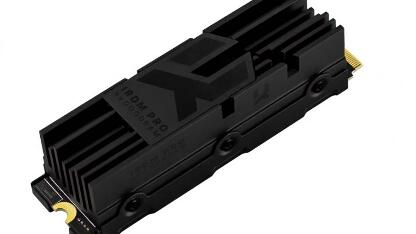
HP FX900 2 TB Review — DRAM-less PCIe 4.0 NVMe SSD (2026)
Quick answer
The HP FX900 2 TB is the right pick if you want a value-tier PCIe 4.0 NVMe at 2 TB on a budget Gen 4 build, and you understand that the DRAM-less HMB design is the trade.
Read: 5000 MB/s Write: 4800 MB/s Endurance: 800 TBW Warranty: 5 years Interface: M.2 4.0 x 4
The HP FX900 2 TB is a value-tier PCIe 4.0 NVMe \xe2\x80\x94 a DRAM-less Innogrit IG5220-based drive that hits 5,000 MB/s reads at a clear discount to the FX900 Pro flagship.
Controller & Memory
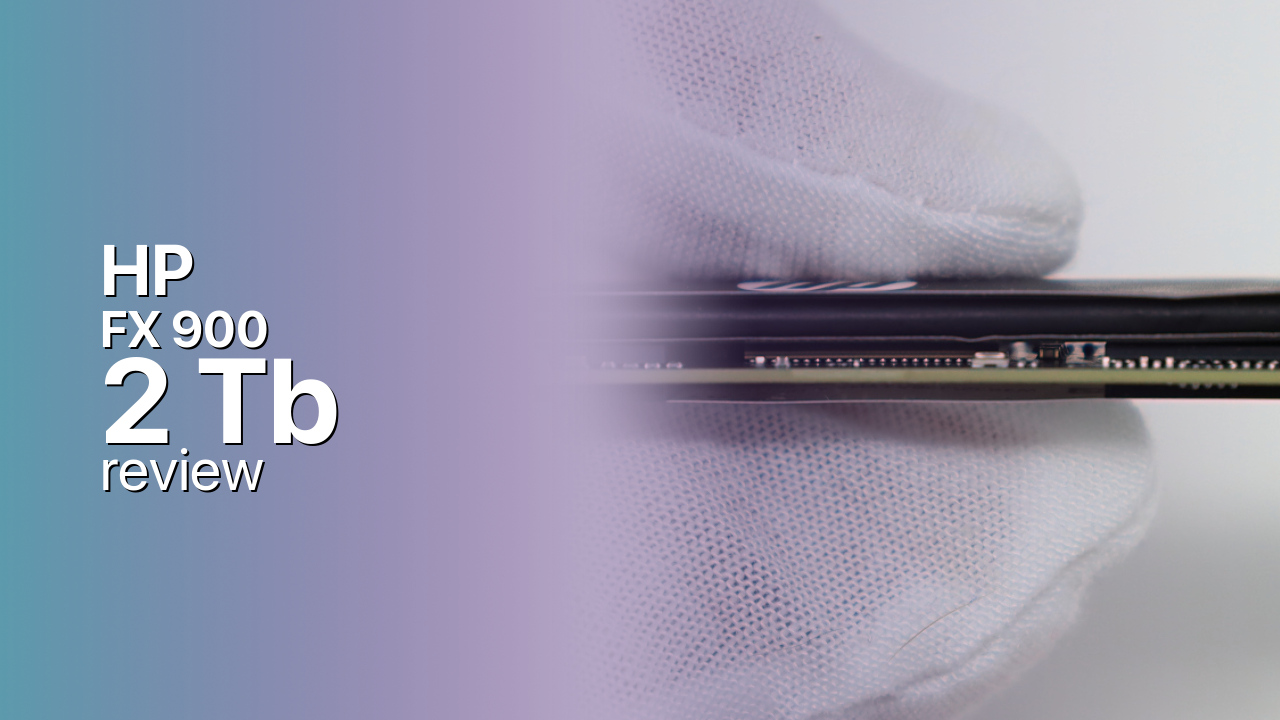
The HP FX900 2 TB is the mainstream Gen 4 NVMe drive in HP’s consumer family — distinct from the higher-end FX900 Pro, which uses the eight-channel Innogrit IG5236 controller and DRAM. The FX900 is built around the Innogrit IG5220 (also known as RainierQX), a four-channel DRAM-less controller that leans on Host Memory Buffer (HMB) to borrow a slice of system RAM for the flash-translation-layer map. NAND is Micron 176-layer 3D TLC across Biwin-binned packages on a single-sided M.2 2280 PCB. As with the rest of HP’s consumer SSD line, the FX900 is licensed to HP but manufactured and supported by Biwin.
At 2 TB the FX900 hits the family’s rated peak: 5,000 MB/s sequential reads, 4,800 MB/s sequential writes, 820,000 random read IOPS, and 645,000 random write IOPS. Those sequential numbers sit in the middle of the Gen 4 envelope — well above any PCIe 3.0 drive, well below a Samsung 990 Pro — and the random IOPS are surprisingly high for a DRAM-less HMB controller. The closest direct rivals at 2 TB and this tier are the WD Black SN770 2 TB (Sandisk in-house DRAM-less, similar reads), the Crucial P3 Plus 2 TB (Phison E21T QLC, lower TBW), and the Kingston NV2 2 TB (variable controller, value tier). The FX900’s case against the SN770 is the typically lower street price and a known Biwin firmware lineage; its weakness against the FX900 Pro is sustained write performance under heavy mixed workloads.
The target audience is a budget-to-mid PCIe 4.0 build that wants Gen 4 sequential speeds without paying for a flagship, a content-creator scratch disk where sustained writes are not the priority, or a PS5 expansion drive that fits Sony’s envelope at 2 TB capacity.
Storage Comparisons:
FX 900 Performance & Benchmarks
HP rates the FX900 2 TB at up to 5,000 MB/s sequential reads and 4,800 MB/s sequential writes, with random performance of up to 820,000 IOPS read and 645,000 IOPS write. Those numbers put the FX900 2 TB clearly in the mainstream Gen 4 tier — the Innogrit IG5220 was designed to deliver 70 to 80 percent of a full Gen 4 ceiling at a meaningfully lower power and BOM cost than the IG5236, and the result is a drive that feels notably faster than any PCIe 3.0 NVMe on real-world Windows workloads while staying within a budget tier price.
HP FX 900 2 TB vs M.2 4.0 x 4 peers
Switch between sequential throughput and random IOPS to see how this drive stacks up against other M.2 4.0 x 4 SSDs in our database. The highlighted bar is the drive on this page — click any other bar to open that drive.
- Patriot Viper PV593 1 TB: 14,500 MB/s read, 14,000 MB/s write
- Patriot Viper PV593 2 TB: 14,500 MB/s read, 14,000 MB/s write
- Patriot Viper PV593 4 TB: 14,500 MB/s read, 14,000 MB/s write
- Patriot Viper PV573 2 TB: 14,000 MB/s read, 12,000 MB/s write
- HP FX 900 2 TB (this drive): 5,000 MB/s read, 4,800 MB/s write
The DRAM-less HMB design is the part to be aware of. On boot, gaming, application launches, and sequential reads the FX900 2 TB is indistinguishable from a flagship Gen 4 drive; on mixed-workload random writes and sustained writes past the SLC cache it lags meaningfully behind DRAM-equipped rivals. Independent reviewers consistently find sustained writes drop into the low-hundreds-of-MB/s range once the SLC cache fills, typically after 80 to 120 GB of continuous writes on the 2 TB capacity. For ordinary use that drop is invisible; for video editors writing multi-hundred-gigabyte project dumps it is the most important number on the page, and the FX900 Pro 2 TB or a current TLC flagship is the better tool.
HP FX 900 vs Competitors
See how the FX 900 stacks up against other M.2 4.0 x 4 drives in our database:
Compare with rival drives:
Endurance, TBW & Warranty
HP rates the FX900 2 TB at 800 TBW (terabytes written) over a 5-year limited warranty, whichever limit is reached first. That endurance figure is in line with mainstream TLC NVMe drives at this capacity and corresponds to roughly 438 GB of host writes every day for the full five-year period \xe2\x80\x94 vastly above what an ordinary desktop or laptop user generates, even with the drive in active use as a Steam library scratch disk. At a more realistic 30 GB/day workload the rated 800 TBW corresponds to over 70 years of nominal life before the counter is exhausted. HP publishes an MTBF figure of 1 million hours, which is a statistical population metric rather than a guaranteed lifespan for any individual drive. Warranty service is handled via HP / Biwin RMA with proof of purchase. The TBW scales with capacity inside the FX900 family: 400 TBW at 1 TB and 200 TBW at 512 GB.
HP FX 900 2 TB Specifications
| Category | Value |
|---|---|
| Capacity [?] | 2 TB |
| Interface [?] | M.2 4.0 x 4 |
| Controller [?] | Innogrit IG5220BAA |
| Memory type [?] | Micron 176-layer 3D TLC |
| DRAM [?] | HMB |
| Read speed (MB/s) [?] | 5000 |
| Write speed (MB/s) [?] | 4800 |
| Read IOPS [?] | 820000 |
| Write IOPS [?] | 645000 |
| Endurance (TBW) [?] | 800 |
| MTBF (million hours) [?] | 1 |
| Warranty (years) [?] | 5 |
Verdict: Is the FX 900 Worth It in 2026?
The HP FX900 2 TB is the right pick if you want a value-tier PCIe 4.0 NVMe at 2 TB on a budget Gen 4 build, and you understand that the DRAM-less HMB design is the trade. Skip it if you write hundreds of gigabytes contiguously or run heavy mixed-workload random writes, because a DRAM-equipped drive like the FX900 Pro 2 TB or a Samsung 990 Pro 2 TB will hold steadier under those loads. The closest direct alternative is the WD Black SN770 2 TB, which is functionally similar in architecture and usually competes on price; the Crucial P3 Plus 2 TB is the cheaper QLC alternative for read-heavy bulk storage. For a PS5 expansion drive at 2 TB the FX900 meets every requirement and the bare PCB fits the slot envelope cleanly, with a basic third-party heatsink to satisfy Sony\xe2\x80\x99s recommendation. As a mainstream Gen 4 2 TB pick the FX900 is a quietly solid budget option.
+ Pros
- 5,000 MB/s sequential reads on PCIe 4.0
- 800 TBW endurance with 5-year warranty
- 820K random read IOPS without DRAM
- Single-sided M.2 2280 fits laptops and PS5
- Micron 176-layer 3D TLC NAND
- Known Biwin firmware lineage
- Cons
- DRAM-less HMB design caps mixed workloads
- Sustained writes drop after SLC cache fills
- 4,800 MB/s writes trail flagship Gen 4 drives
- No bundled heatsink for PS5 use
- IG5220 random write IOPS below DRAM rivals
Buy this or similar SSD Storage:
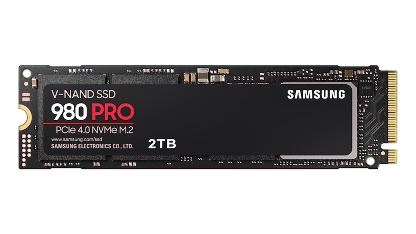
Video Review
HP FX900 Pro 2TB NVMe M.2 2280 Gen4 Gaming SSD - PCIe 4.0, 16 Gb/s, 3D TLC NAND Internal Soli Review