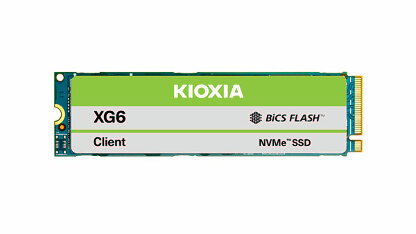
Intel SSD 760P 512GB NVMe SSD Review (2026)
Quick answer
The Intel 760P 512 GB is a solid mainstream NVMe SSD that delivers competitive PCIe 3.0 performance with a DRAM cache and AES 256 encryption.
Read: 3230 MB/s Write: 1625 MB/s Endurance: 288 TBW Warranty: 5 years Interface: M.2 3.0 x 4
The Intel 760P 512GB is the flagship capacity of Intel's mainstream NVMe line, pairing the Silicon Motion SM2262 controller with Intel 64-layer TLC NAND at the performance sweet spot where sequential throughput nearly maxes out the PCIe 3.0 x4 bus.
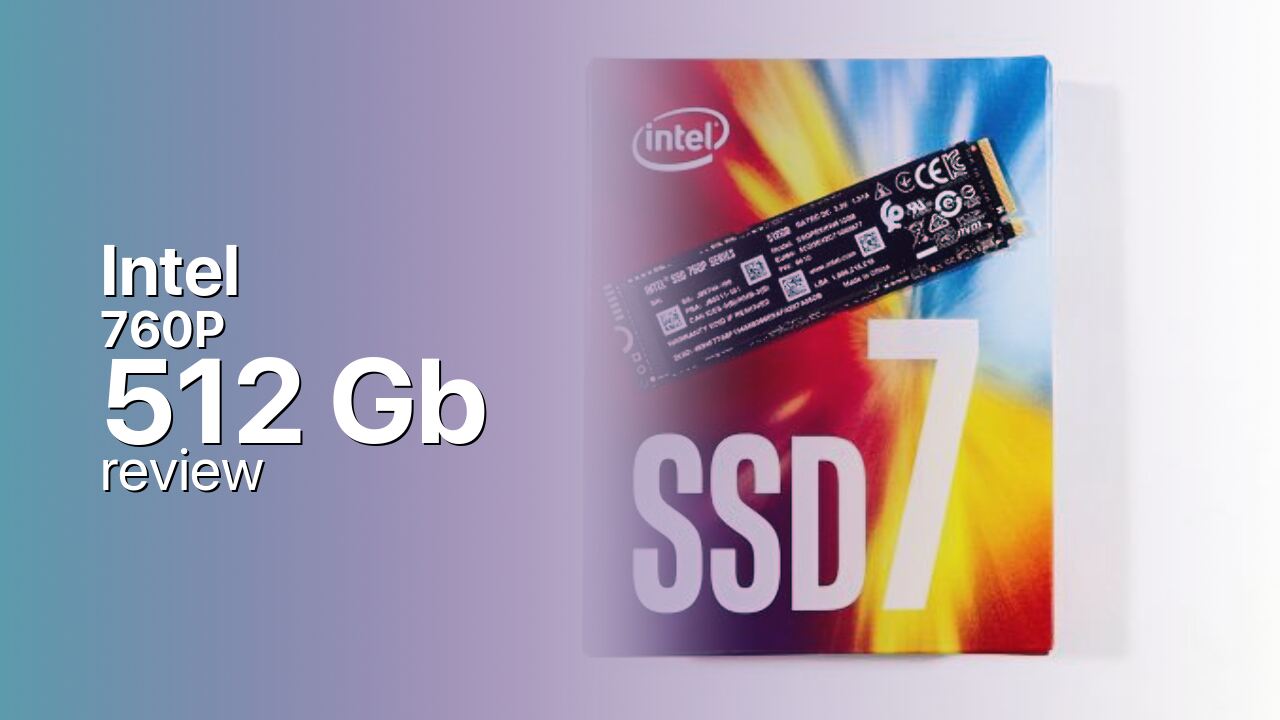
Controller & Memory
Under the label, the 760P 512 GB combines an Intel-tuned Silicon Motion SM2262 eight-channel controller with Intel 64 layer 256 Gb 3D TLC NAND flash. A Micron DDR3 DRAM chip caches the flash translation layer. The drive is single-sided M.2 2280, though the 1 TB and 2 TB variants use both sides of the PCB.
This is the capacity where the 760P hits its stride: 3,230 MB/s sequential reads and 1,625 MB/s writes, along with 340,000 random read IOPS and 275,000 random write IOPS. The smaller 128 GB and 256 GB models have fewer NAND dies and cannot reach these numbers. Endurance is 288 TBW, translating to roughly 160 GB of writes per day over five years.
The 760P 512 GB launched at an MSRP of $199 and competes with other mainstream PCIe 3.0 NVMe drives like the Samsung 970 EVO, ADATA SX8200 Pro, and Western Digital Blue SN550. It offers DRAM cache and AES 256-bit encryption, both of which are sometimes absent on budget NVMe drives.
Storage Comparisons:
760P Performance & Benchmarks
With 3,230 MB/s sequential reads and 1,625 MB/s writes, the 512 GB 760P comes close to saturating the PCIe 3.0 x4 interface (theoretical maximum around 3,900 MB/s after protocol overhead). Random IOPS reach 340,000 reads and 275,000 writes, numbers that were competitive for a mainstream NVMe drive at launch.
Intel 760P 512 GB vs M.2 3.0 x 4 peers
Switch between sequential throughput and random IOPS to see how this drive stacks up against other M.2 3.0 x 4 SSDs in our database. The highlighted bar is the drive on this page — click any other bar to open that drive.
- ADATA SX 8800 Pro 512 GB: 3,500 MB/s read, 2,700 MB/s write
- ADATA SX 8800 Pro 1 TB: 3,500 MB/s read, 2,700 MB/s write
- ADATA XPG Spectrix S40G RGB 256 GB: 3,500 MB/s read, 3,000 MB/s write
- ADATA XPG Spectrix S40G RGB 512 GB: 3,500 MB/s read, 3,000 MB/s write
- Intel 760P 512 GB (this drive): 3,230 MB/s read, 1,625 MB/s write
Independent reviewers found the 760P delivers consistent real-world performance. AnandTech noted that it outperformed the older Intel 600p by a wide margin across all workloads and traded blows with Samsung's 960 EVO in many tests. The SLC cache on the 512 GB model is large enough to absorb typical consumer burst writes, though sustained writes beyond the cache slow to native TLC speed.
Compared to SATA SSDs, the 760P 512 GB is roughly six times faster on sequential reads, which translates to noticeably faster game loads, application installs, and large-file transfers.
Intel 760P vs Competitors
See how the 760P stacks up against other M.2 3.0 x 4 drives in our database:
Compare with rival drives:
Endurance, TBW & Warranty
Intel backs the 760P 512 GB with a 5-year warranty and a 288 TBW endurance rating. At 288 TBW, the drive can sustain approximately 158 GB of writes per day for five consecutive years before hitting the rated limit. Typical consumer workloads rarely exceed 30 GB per day, so the endurance ceiling is largely academic. The 1.5 million hour MTBF is a population-level statistic indicating expected reliability across a large deployment, not a guarantee for any single drive. Warranty claims are handled through Intel's standard RMA process.
Intel 760P 512 GB Specifications
| Category | Value |
|---|---|
| Capacity [?] | 512 GB |
| Interface [?] | M.2 3.0 x 4 |
| Controller [?] | Silicon Motion SM2262 |
| Memory type [?] | Intel TLC |
| DRAM [?] | Micron 256 - 1TB DDR3 |
| Read speed (MB/s) [?] | 3230 |
| Write speed (MB/s) [?] | 1625 |
| Read IOPS [?] | 340000 |
| Write IOPS [?] | 275000 |
| Endurance (TBW) [?] | 288 |
| MTBF (million hours) [?] | 1.5 |
| Warranty (years) [?] | 5 |
Verdict: Is the 760P Worth It in 2026?
The Intel 760P 512 GB is a solid mainstream NVMe SSD that delivers competitive PCIe 3.0 performance with a DRAM cache and AES 256 encryption. It is best suited for builders who want reliable NVMe performance without paying the premium for high-end drives like the Samsung 970 EVO Plus. The main drawback is age: the 760P launched in early 2018 and newer PCIe 3.0 and 4.0 drives offer better value. Anyone buying fresh should compare it against the Crucial P3 Plus or Kingston NV2 at similar price points before committing.
+ Pros
- 3,230 MB/s sequential reads near PCIe 3.0 ceiling
- 1,625 MB/s sequential writes
- 340,000 random read IOPS
- DRAM cache for consistent random I/O
- Single-sided M.2 2280 fits laptops
- AES 256-bit hardware encryption
- 288 TBW endurance rating
- Cons
- PCIe 3.0 only, no upgrade path to 4.0
- Released in 2018, surpassed by newer designs
- No included heatsink
- SLC cache performance drops on sustained writes
Buy this or similar SSD Storage:
Video Review
Intel 760p NVMe M.2 SSD - Performance on a Budget - Review