Kingston Fury Renegade 4TB - PCIe 4.0 NVMe SSD (2026)
Quick answer
The Kingston Fury Renegade 4 TB is one of the strongest flagship PCIe 4.0 picks at peak consumer capacity - high TBW endurance, mature E18 platform, integrated graphene heatspreader, and global tier-one Kingston warranty support.
Read: 7300 MB/s Write: 7000 MB/s Endurance: 4000 TBW Warranty: 5 years Interface: M.2 4.0 x 4
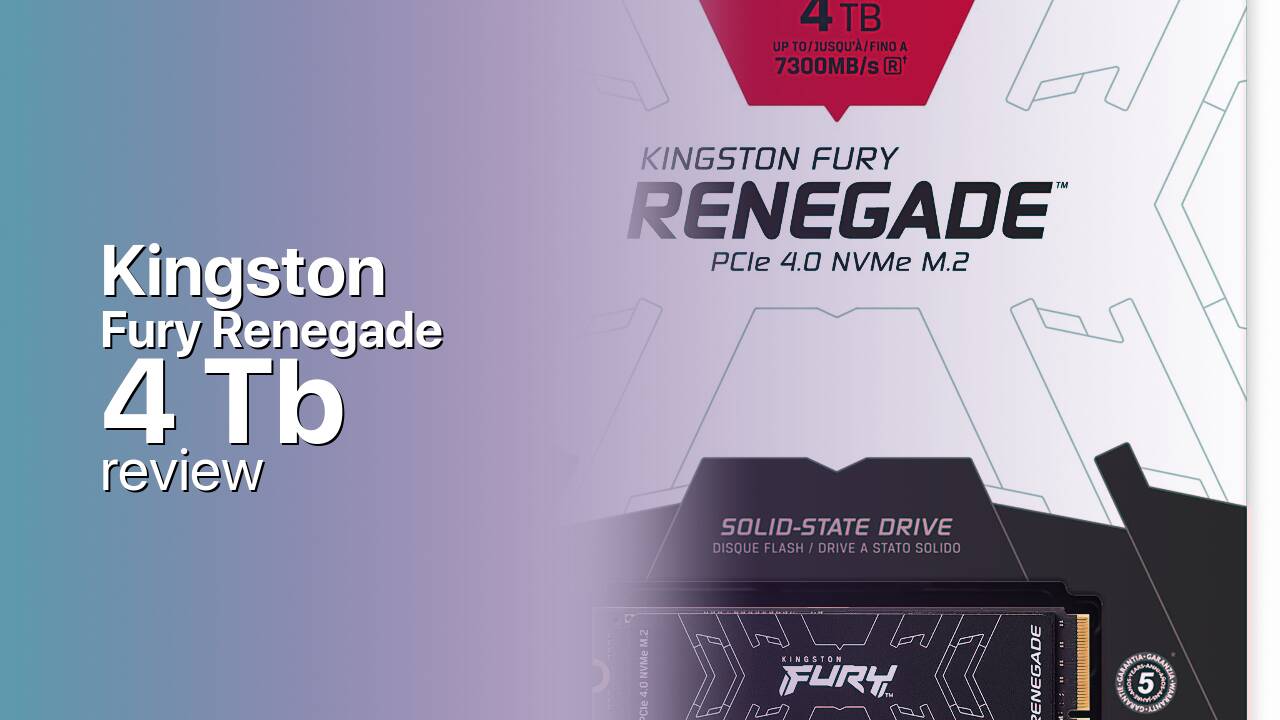
The Kingston Fury Renegade 4TB is a flagship Phison E18 PCIe 4.0 NVMe at peak consumer capacity - 7,300 MB/s reads, Micron 176-layer TLC NAND, 4 GB DDR4 DRAM cache, and a 4,000 TBW endurance budget over five years.
Controller & Memory
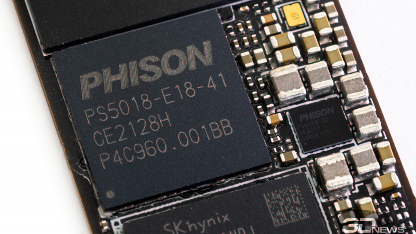
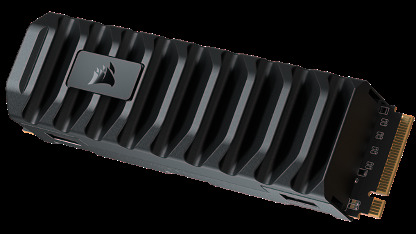
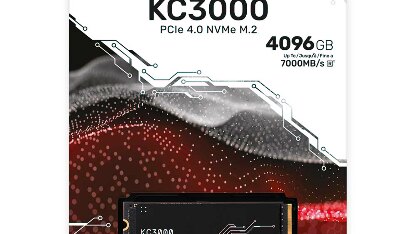
The Kingston Fury Renegade 4 TB pairs Phison's PS5018-E18 eight-channel PCIe 4.0 controller with Micron's 176-layer B47R 3D TLC NAND and 4 GB of DDR4 DRAM cache (1 GB per terabyte of capacity). The platform is essentially a refined version of Kingston's KC3000 with firmware tuning aimed at the gaming and creator market - the underlying hardware is the same flagship E18 + Micron TLC recipe used by the Seagate FireCuda 530, Corsair MP600 Pro XT, and Sabrent Rocket 4 Plus. The PCB is M.2 2280 with a low-profile graphene heatspreader bonded to it, which keeps the controller cool enough for most desktop and PS5 installations without an additional aluminium heatsink.
Kingston ships the Fury Renegade in 500 GB, 1 TB, 2 TB, and 4 TB capacities, with separate SKUs for bare-PCB and bundled-heatsink variants on the 1 TB, 2 TB, and 4 TB tiers. The 4 TB SKU on this page reaches the highest peak speeds in the line and carries the largest absolute SLC pseudocache, which lets it sustain longer continuous writes than the smaller siblings. Kingston is one of the largest memory and storage brands globally, with strong retail distribution and consistent warranty support across North America, Europe, Asia-Pacific, and Latin America.
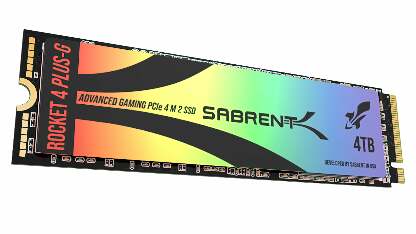
The Fury Renegade 4 TB targets enthusiast gamers and creators who want the largest practical PCIe 4.0 capacity from a tier-one brand. Direct rivals are the Seagate FireCuda 530 4 TB (same E18 platform, higher 5,100 TBW endurance, bundled Rescue service), the WD Black SN850X 4 TB (in-house controller, lower 2,400 TBW endurance), the Sabrent Rocket 4 Plus-G 4 TB (DirectStorage firmware), and the Samsung 990 Pro 4 TB (in-house controller, recently launched). Within that field the Fury Renegade is the value-flagship pick - similar peak performance to the FireCuda 530, slightly lower TBW, more competitive retail pricing.
Storage Comparisons:
Fury Renegade Performance & Benchmarks
Manufacturer ratings for the Fury Renegade 4 TB land at 7,300 MB/s sequential reads and 7,000 MB/s sequential writes, with random performance up to 1,000,000 read and 1,000,000 write IOPS at high queue depths. Independent reviewers at Tom's Hardware, PCWorld, TechPowerUp and Aphnetworks consistently rate the drive inside the top three flagship PCIe 4.0 picks of the E18 era - Tom's Hardware described the Fury Renegade as a refined KC3000 with measurably improved consistency under sustained workloads.
Kingston Fury Renegade 4 TB vs M.2 4.0 x 4 peers
Switch between sequential throughput and random IOPS to see how this drive stacks up against other M.2 4.0 x 4 SSDs in our database. The highlighted bar is the drive on this page — click any other bar to open that drive.
- Patriot Viper PV593 1 TB: 14,500 MB/s read, 14,000 MB/s write
- Patriot Viper PV593 2 TB: 14,500 MB/s read, 14,000 MB/s write
- Patriot Viper PV593 4 TB: 14,500 MB/s read, 14,000 MB/s write
- Patriot Viper PV573 2 TB: 14,000 MB/s read, 12,000 MB/s write
- Kingston Fury Renegade 4 TB (this drive): 7,300 MB/s read, 7,000 MB/s write
Sustained writes are exceptional at the 4 TB capacity. The 4 GB DRAM and massive SLC pseudocache allow the drive to absorb roughly 600-800 GB of continuous writes before the cache exhausts, after which writes fall toward the Micron 176-layer TLC direct-write rate around 1,800-2,200 MB/s. For boot, gaming, and application workloads that profile is invisible; for large video transfers or 4K capture the 4 TB Fury Renegade is one of the most capable consumer drives on the market - the SLC cache alone is larger than most laptops' entire SSD capacity. The Phison E18 runs warm under sustained load; the integrated graphene heatspreader handles most scenarios but reviewers recommend the heatsink-bundle SKU for sustained creator workloads or PS5 installation. DirectStorage operates as expected on a supported PCIe 4.0 platform.
Kingston Fury Renegade vs Competitors
See how the Fury Renegade stacks up against other M.2 4.0 x 4 drives in our database:
Compare with rival drives:
Endurance, TBW & Warranty
Kingston backs the Fury Renegade 4 TB with a five-year limited warranty and a 4,000 TBW endurance budget - 1,000 TBW per terabyte of capacity, one of the higher figures in the consumer PCIe 4.0 segment. At a heavy 50 GB/day sustained write workload that budget lasts roughly 219 years, far past the warranty period and any realistic service life. The TBW scales linearly across the range: 500 TBW (500 GB), 1,000 TBW (1 TB), 2,000 TBW (2 TB), 4,000 TBW (4 TB). The Seagate FireCuda 530 4 TB rates higher at 5,100 TBW; the WD Black SN850X 4 TB rates lower at 2,400 TBW. Kingston handles consumer RMA directly through kingston.com's support portal with serial-number registration - one of the smoother global support channels in the consumer storage market. The five-year warranty with the high TBW figure makes the Fury Renegade 4 TB a credible choice for write-heavy workloads.
Kingston Fury Renegade 4 TB Specifications
| Category | Value |
|---|---|
| Capacity [?] | 4 TB |
| Interface [?] | M.2 4.0 x 4 |
| Controller [?] | Phison PS5018-E18 |
| Memory type [?] | Micron 176-L TLC |
| DRAM [?] | DDR4 |
| Read speed (MB/s) [?] | 7300 |
| Write speed (MB/s) [?] | 7000 |
| Read IOPS [?] | 1000000 |
| Write IOPS [?] | 1000000 |
| Endurance (TBW) [?] | 4000 |
| MTBF (million hours) [?] | 2000000 |
| Warranty (years) [?] | 5 |
Verdict: Is the Fury Renegade Worth It in 2026?
The Kingston Fury Renegade 4 TB is one of the strongest flagship PCIe 4.0 picks at peak consumer capacity - high TBW endurance, mature E18 platform, integrated graphene heatspreader, and global tier-one Kingston warranty support. Buyers chasing the absolute highest endurance should look at the Seagate FireCuda 530 4 TB (5,100 TBW + Rescue service) instead. PS5 owners benefit specifically from the bundled-heatsink SKU which slots into the expansion bay without separately sourcing thermal hardware. Skip the Fury Renegade if you do not need 4 TB - the 2 TB capacity is the price-performance sweet spot in this generation - or if your workload includes specific DirectStorage tuning, where the Sabrent Rocket 4 Plus-G has the firmware advantage. As a flagship PCIe 4.0 NVMe at 4 TB for gamers and creators, the Fury Renegade holds its own against any current rival.
+ Pros
- 7,300 MB/s rated sequential reads on PCIe 4.0
- 4,000 TBW endurance, top tier at this capacity
- 4 GB DDR4 DRAM cache
- 1,000,000 IOPS rated random reads and writes
- 5-year warranty with global Kingston RMA support
- Integrated graphene heatspreader, heatsink SKU available
- Cons
- TBW lower than Seagate FireCuda 530 4 TB (5,100 TBW)
- Phison E18 runs warm under sustained workloads
- Premium pricing at 4 TB capacity
- No DirectStorage firmware tuning versus Sabrent Plus-G
- No hardware encryption advertised on consumer spec sheet
Buy this or similar SSD Storage:



Video Review
And the Winner Is - Kingston Fury Renegade PCIe 4 SSD Review (vs 8 Others)