Samsung 970 Pro 512GB MLC NVMe SSD (2026)
Quick answer
The Samsung 970 Pro 512GB remains relevant for users who need consistent write speeds without SLC cache dependency, but it has been effectively superseded by the 970 EVO Plus for most consumer workloads.
Read: 3500 MB/s Write: 2300 MB/s Endurance: 600 TBW Warranty: 5 years Interface: M.2 3.0 x 4
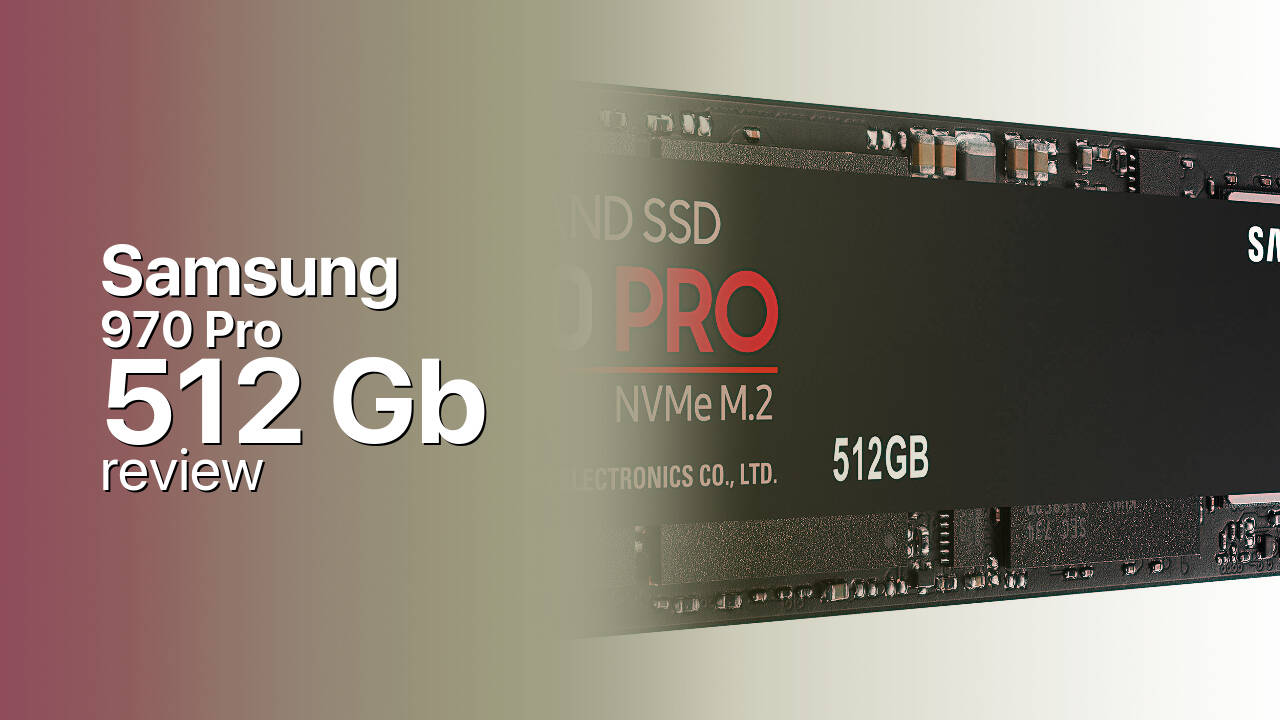
The Samsung 970 Pro 512GB is one of the last consumer NVMe SSDs built on true MLC NAND, delivering consistent 2,300 MB/s writes without relying on an SLC cache.
Controller & Memory
Samsung's 970 Pro 512GB uses the Phoenix controller paired with Samsung 64-layer 3D MLC (2-bit-per-cell) V-NAND and 512 MB of LPDDR4 DRAM. Unlike the TLC-based 970 EVO and EVO Plus, the Pro writes directly to MLC at full speed with no SLC cache layer, which means its rated write speed does not collapse after a certain transfer threshold.
The 512 GB model is rated at 3,500 MB/s sequential reads and 2,300 MB/s sequential writes, with 500,000 random read IOPS and 500,000 random write IOPS. Endurance is rated at 600 TBW, notably higher per GB than the TLC-based EVO models. Samsung covers the drive with a five-year warranty, terminated by either the warranty period or the TBW ceiling.
The M.2 2280 single-sided PCB fits laptops and desktops alike. Samsung includes AES 256-bit hardware encryption, TCG Opal 2.0, and Microsoft eDrive support. The 970 Pro was Samsung's PCIe 3.0 flagship before the 970 EVO Plus arrived with faster TLC that matched or exceeded it in cached writes; the Pro's advantage is consistency under sustained workloads. Direct competitors at the time included the WD Black SN750 and the Intel Optane 900P, though the Optane traded capacity for latency.
Storage Comparisons:
970 Pro Performance & Benchmarks
Samsung rates the 512 GB 970 Pro at 3,500 MB/s sequential reads and 2,300 MB/s sequential writes, both of which are sustained numbers rather than cache-limited peaks. Random performance reaches 500,000 IOPS for both reads and writes. The absence of an SLC cache means the drive writes at the same speed regardless of transfer size, a property that distinguishes it from every TLC-based competitor.
Samsung 970 Pro 512 GB vs M.2 3.0 x 4 peers
Switch between sequential throughput and random IOPS to see how this drive stacks up against other M.2 3.0 x 4 SSDs in our database. The highlighted bar is the drive on this page — click any other bar to open that drive.
- Samsung 970 Pro 512 GB (this drive): 3,500 MB/s read, 2,300 MB/s write
- ADATA SX 8800 Pro 512 GB: 3,500 MB/s read, 2,700 MB/s write
- ADATA SX 8800 Pro 1 TB: 3,500 MB/s read, 2,700 MB/s write
- ADATA XPG Spectrix S40G RGB 256 GB: 3,500 MB/s read, 3,000 MB/s write
- ADATA XPG Spectrix S40G RGB 512 GB: 3,500 MB/s read, 3,000 MB/s write
In mixed and real-world workloads, independent reviewers found the 970 Pro 512GB consistently near the top of PCIe 3.0 charts, though the later 970 EVO Plus sometimes matched or exceeded it in burst-mode tests thanks to its faster 92-layer TLC and larger SLC cache. The Pro retains a clear advantage only in sustained write scenarios that exceed any TLC drive's cache capacity. For typical gaming and desktop use, the performance difference between the Pro and the EVO Plus is negligible.
Samsung 970 Pro vs Competitors
See how the 970 Pro stacks up against other M.2 3.0 x 4 drives in our database:
Compare with rival drives:
Endurance, TBW & Warranty
Samsung backs the 970 Pro 512GB with a five-year limited warranty and a 600 TBW endurance rating. At a typical consumer write workload of 20 GB per day, 600 TBW translates to approximately 82 years of use. The MLC NAND in the 970 Pro generally has higher write endurance than TLC, which is reflected in the generous TBW rating for a 512 GB drive. Samsung's Magician software monitors health and TBW consumption, and firmware updates can be applied in-place. Warranty claims are handled through Samsung's support portal or the original retailer.
Samsung 970 Pro 512 GB Specifications
| Category | Value |
|---|---|
| Capacity [?] | 512 GB |
| Interface [?] | M.2 3.0 x 4 |
| Controller [?] | Samsung Phoenix |
| Memory type [?] | Samsung MLC |
| DRAM [?] | 512MB LPDDR4 |
| Read speed (MB/s) [?] | 3500 |
| Write speed (MB/s) [?] | 2300 |
| Read IOPS [?] | 500000 |
| Write IOPS [?] | 500000 |
| Endurance (TBW) [?] | 600 |
| MTBF (million hours) [?] | 1.5 |
| Warranty (years) [?] | 5 |
Verdict: Is the 970 Pro Worth It in 2026?
The Samsung 970 Pro 512GB remains relevant for users who need consistent write speeds without SLC cache dependency, but it has been effectively superseded by the 970 EVO Plus for most consumer workloads. The 970 EVO Plus 500GB offers higher burst writes at a lower price, while the 970 Pro delivers steadier performance under sustained loads. Anyone building a new system today should consider a PCIe 4.0 or 5.0 drive instead, as the 970 Pro's PCIe 3.0 interface caps performance at 3,500 MB/s.
+ Pros
- True MLC NAND for consistent sustained writes
- 2,300 MB/s write speed with no SLC cache dependency
- 600 TBW endurance on 512 GB capacity
- 512 MB LPDDR4 DRAM cache
- Five-year warranty with Samsung Magician
- Cons
- PCIe 3.0 limits reads to 3,500 MB/s
- Lower peak writes than 970 EVO Plus in burst mode
- Only available in 512 GB and 1 TB capacities
- End-of-life product with no successor in the PRO line
Buy this or similar SSD Storage:



Video Review
Samsung SSD 970 PRO 512GB M.2 Review