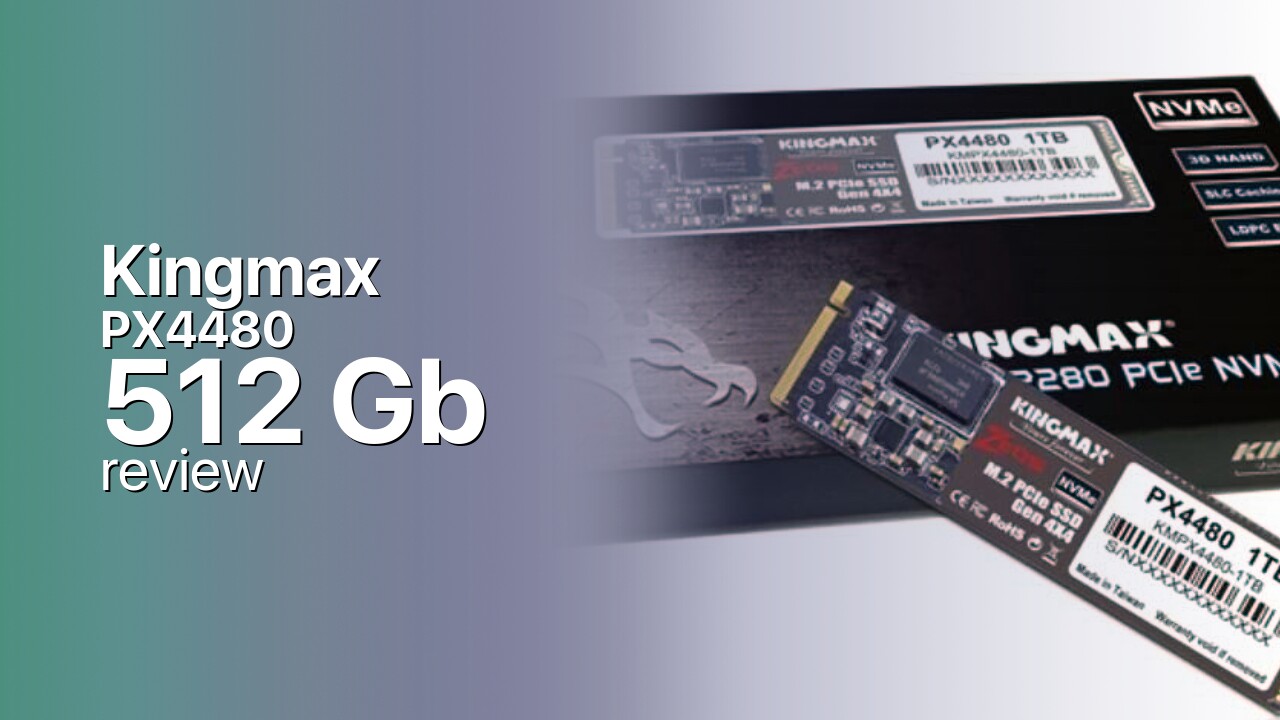
Kingmax PX4480 512GB Review — Phison E16 PCIe 4.0 NVMe SSD (2026)
Quick answer
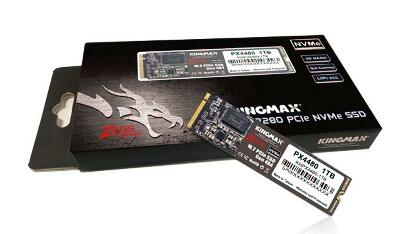
The Kingmax PX4480 512GB is a capable first-generation PCIe 4.0 SSD that leverages the proven Phison E16 controller and DDR4 DRAM caching to deliver solid performance at a mid-range price point.
Read: 5000 MB/s Write: 4400 MB/s Endurance: 3600 TBW Warranty: 3 years Interface: M.2 4.0 x 4
The Kingmax PX4480 512GB is a first-gen PCIe Gen4 NVMe SSD built around the Phison E16 controller and 3D TLC NAND with DDR4 DRAM caching for 5000 MB/s reads.
Controller & Memory
Kingmax is a Taiwanese memory manufacturer with a history stretching back to the DRAM module era, and the PX4480 is their PCIe 4.0 entry. The drive uses the Phison PS5016-E16 — the world's first consumer PCIe 4.0 x4 controller, launched in late 2019 — paired with unnamed 3D TLC NAND and a DDR4 DRAM cache buffer. Rated sequential reads of 5,000 MB/s and writes of 4,400 MB/s are typical for E16-based drives, which were the fastest consumer SSDs available at launch but have since been overtaken by second-generation controllers.
The E16 was built on a 28 nm process, which means it runs warmer and draws more power than the 12 nm E18 that replaced it. All E16 reference designs include a DDR4 DRAM cache, and the PX4480 follows that pattern — the DRAM field in the database confirms both DRAM caching and SLC write caching. The SLC cache accelerates burst writes, while the DRAM buffer maintains efficient flash translation layer address mapping, reducing random access latency compared to DRAM-less HMB drives.
At 512 GB, the PX4480 targets budget-conscious builders who want PCIe 4.0 compatibility for a new build or a PS5 storage upgrade. The 5,000 MB/s sequential read speed exceeds the PS5's recommended minimum of 5,500 MB/s — actually, it falls slightly short, so PS5 compatibility should be verified against Sony's current list. For desktop gaming and general use, 5,000 MB/s is plenty fast, and the DRAM cache ensures consistent performance even as the drive fills up.
Kingmax provides a three-year warranty, which is shorter than the five-year standard on enthusiast SSDs from Samsung, WD, and Corsair. The listed endurance of 3,600 TBW for a 512 GB drive is notably high — comparable 512 GB TLC drives from major manufacturers typically rate 300–400 TBW. Whether this reflects a genuinely conservative rating or a data entry discrepancy is unclear without access to Kingmax's official datasheet.
Storage Comparisons:
PX4480 Performance & Benchmarks
Sequential performance peaks at 5,000 MB/s read and 4,400 MB/s write — the characteristic ceiling of the Phison E16 controller. These numbers were flagship-level in 2019 but sit in the mid-tier of the PCIe 4.0 stack today, well below the 7,000+ MB/s that the E18 and InnoGrit IG5236 achieve. For everyday desktop use, the difference is imperceptible: OS boot, application launches, and game loading all feel instantaneous at 5,000 MB/s.
Kingmax PX4480 512 GB vs M.2 4.0 x 4 peers
Switch between sequential throughput and random IOPS to see how this drive stacks up against other M.2 4.0 x 4 SSDs in our database. The highlighted bar is the drive on this page — click any other bar to open that drive.
- Patriot Viper PV593 1 TB: 14,500 MB/s read, 14,000 MB/s write
- Patriot Viper PV593 2 TB: 14,500 MB/s read, 14,000 MB/s write
- Patriot Viper PV593 4 TB: 14,500 MB/s read, 14,000 MB/s write
- Patriot Viper PV573 2 TB: 14,000 MB/s read, 12,000 MB/s write
- Kingmax PX4480 512 GB (this drive): 5,000 MB/s read, 4,400 MB/s write
The DDR4 DRAM cache is the PX4480's performance advantage over DRAM-less mid-range drives. It keeps random 4K latency low and maintains consistent mixed-workload performance even as the drive approaches capacity. The 28 nm E16 controller runs warm — all E16-based drives benefit from a heatsink, and the PX4480 is no exception. Without adequate cooling, the controller will thermally throttle during sustained writes, dropping speeds to protect the silicon. After SLC cache exhaustion, direct TLC write speeds typically land in the 500–800 MB/s range for this platform.
Kingmax PX4480 vs Competitors
See how the PX4480 stacks up against other M.2 4.0 x 4 drives in our database:
Compare with rival drives:
Endurance, TBW & Warranty
Kingmax covers the PX4480 with a three-year warranty, which falls short of the five-year standard offered by Samsung, WD, and Corsair on their enthusiast SSDs. The published endurance figure of 3,600 TBW for the 512 GB capacity is unusually high compared to typical 512 GB TLC SSDs from major manufacturers that carry ratings in the 300 to 400 TBW range. Without access to Kingmax official endurance documentation, this figure should be treated with caution. MTBF is not stated. For typical consumer use of 20 to 40 GB written per day, any reasonable endurance estimate would comfortably exceed the three-year warranty period.
Kingmax PX4480 512 GB Specifications
| Category | Value |
|---|---|
| Capacity [?] | 512 GB |
| Interface [?] | M.2 4.0 x 4 |
| Controller [?] | Phison PS5016-E16 |
| Memory type [?] | 3D TLC |
| DRAM [?] | DDR4 Cache and SLC Caching |
| Read speed (MB/s) [?] | 5000 |
| Write speed (MB/s) [?] | 4400 |
| Read IOPS [?] | 750000 |
| Write IOPS [?] | 700000 |
| Endurance (TBW) [?] | 3600 |
| MTBF (million hours) [?] | 2000000 |
| Warranty (years) [?] | 3 |
Verdict: Is the PX4480 Worth It in 2026?
The Kingmax PX4480 512GB is a capable first-generation PCIe 4.0 SSD that leverages the proven Phison E16 controller and DDR4 DRAM caching to deliver solid performance at a mid-range price point. The 3D TLC NAND and DRAM cache are advantages over DRAM-less QLC alternatives. The three-year warranty is shorter than the enthusiast five-year standard, and the 3,600 TBW endurance claim is difficult to verify without independent confirmation. For buyers who want PCIe Gen4 compatibility with DRAM caching at a budget price, the PX4480 is a reasonable option from a heritage Taiwanese memory brand.
+ Pros
- Phison E16 controller with DDR4 DRAM cache
- 5,000 MB/s read on PCIe 4.0 x4 interface
- 3D TLC NAND for better endurance than QLC
- Consistent random performance with DRAM buffering
- M.2 2280 form factor for wide compatibility
- Cons
- Three-year warranty versus five-year standard
- E16 controller runs hot on 28 nm process
- Endurance rating appears inflated for 512 GB
- Slower than second-gen PCIe 4.0 controllers
Buy this or similar SSD Storage:



Video Review
БОГ КИТАЙСКИХ SSD Kingmax Zeus PX3480 NVMe