Corsair Force MP400 4TB QLC NVMe SSD Review (2026)
Quick answer
The Corsair Force MP400 4 TB targets users who need maximum NVMe capacity in a single M.2 slot and are willing to accept QLC trade-offs to get it.
Read: 3480 MB/s Write: 3000 MB/s Endurance: 800 TBW Warranty: 5 years Interface: M.2 3.0 x 4
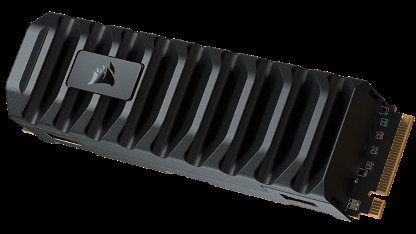
The Corsair Force MP400 4 TB is the capacity-focused variant of Corsair's QLC lineup, switching to the Phison E12S controller to pack Micron 96-layer QLC into a double-sided M.2 2280 with 800 TBW endurance.
Controller & Memory
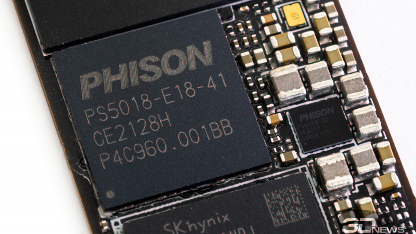
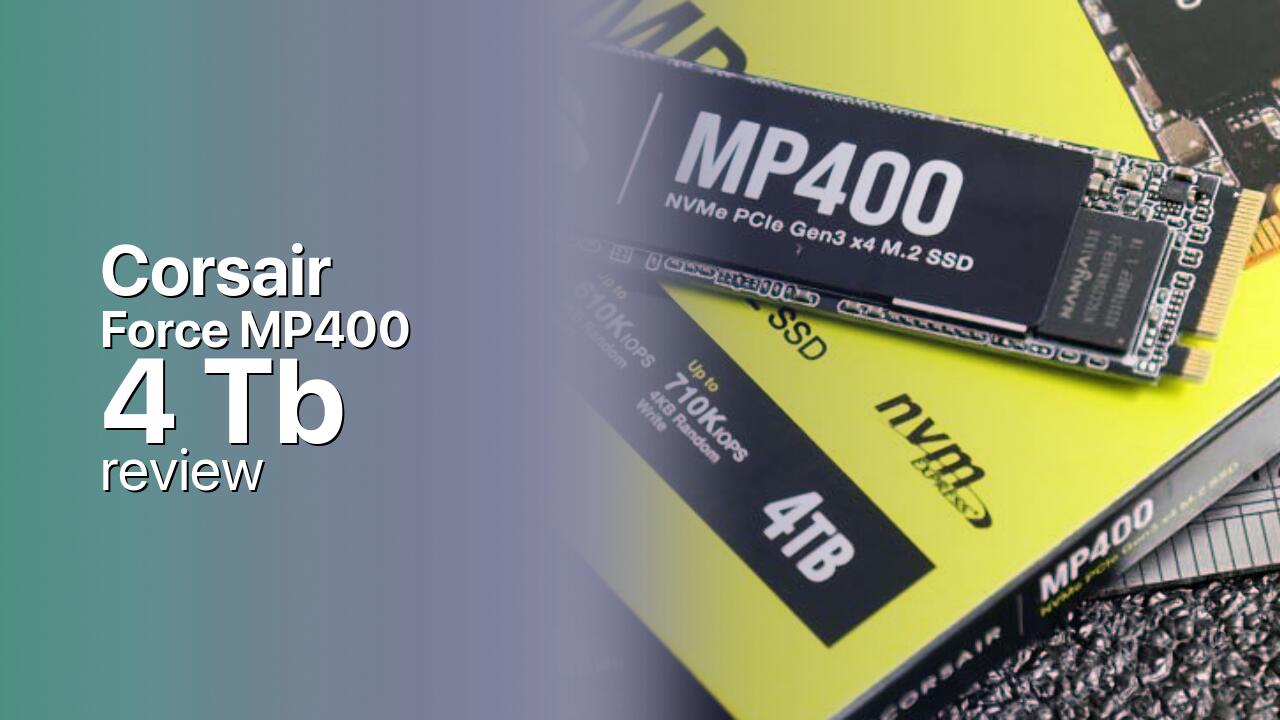
The 4 TB MP400 differs from the smaller 1 TB and 2 TB models under the hood. Corsair switched from the Phison E16 PCIe 4.0 controller to the Phison PS5012-E12S, a PCIe 3.0 x4 design built on TSMC's 12nm process with two Arm Cortex R5 cores and dual CoXProcessor 2.0 co-processors. The E12S shares the same basic eight-channel architecture as the older E12 but in a smaller, more thermally efficient package. It is paired with Micron 96-layer 3D QLC NAND and a Nanya DDR3L DRAM buffer.
The switch to the E12S means the 4 TB runs on PCIe 3.0 x4, not PCIe 4.0, despite what the series branding might suggest. In return, the E12S delivers higher random IOPS ratings of 610K read and 710K write, well above the E16-based 2 TB's 380K/560K. Sequential throughput remains 3,480/3,000 MB/s, identical to the rest of the series. The 4 TB uses a double-sided PCB, which means it will not fit in some thin laptops or PS5 slots that only accept single-sided drives.
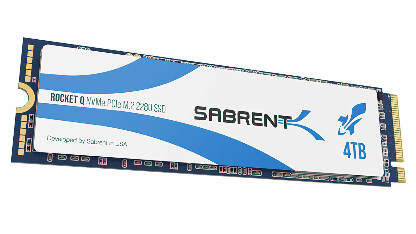
The MP400 4 TB competes against other high-capacity QLC drives like the Sabrent Rocket Q 4TB and the Crucial P3 Plus 4TB. Against TLC drives in the same capacity class, such as the Samsung 870 EVO (SATA) or the WD Black SN850X 4TB, the MP400 trades sustained write performance and endurance for a lower price point. The NX500 and MP500 from Corsair's own lineup are entirely different products, using MLC NAND in much smaller capacities.
Storage Comparisons:
Force MP400 Performance & Benchmarks
Corsair rates the Force MP400 4 TB at 3,480 MB/s sequential read and 3,000 MB/s sequential write. The Phison E12S controller pushes random performance to 610,000 read IOPS and 710,000 write IOPS, the highest in the MP400 family. These are burst figures through the drive's dynamic SLC cache, which spans approximately one-quarter of the 4 TB NAND array.
Corsair Force MP400 4 TB vs M.2 3.0 x 4 peers
Switch between sequential throughput and random IOPS to see how this drive stacks up against other M.2 3.0 x 4 SSDs in our database. The highlighted bar is the drive on this page — click any other bar to open that drive.
- ADATA SX 8800 Pro 512 GB: 3,500 MB/s read, 2,700 MB/s write
- ADATA SX 8800 Pro 1 TB: 3,500 MB/s read, 2,700 MB/s write
- ADATA XPG Spectrix S40G RGB 256 GB: 3,500 MB/s read, 3,000 MB/s write
- ADATA XPG Spectrix S40G RGB 512 GB: 3,500 MB/s read, 3,000 MB/s write
- Corsair Force MP400 4 TB (this drive): 3,480 MB/s read, 3,000 MB/s write
Independent reviewers consistently find the 4 TB model maintains its rated burst speeds for large data transfers, with the SLC cache covering roughly 1 TB of writes before the drive falls back to native QLC write speeds. The QLC post-cache write speed typically lands between 80 and 160 MB/s depending on workload. Guru3D's testing of the 4 TB model showed that thanks to the large NAND array and full channel utilization, the drive performed comparably to premium PCIe 3.0 x4 NVMe SSDs in most synthetic benchmarks. The larger SLC cache compared to smaller capacities means the 4 TB handles mixed workloads particularly well.
Corsair Force MP400 vs Competitors
See how the Force MP400 stacks up against other M.2 3.0 x 4 drives in our database:
Compare with rival drives:
Endurance, TBW & Warranty
Corsair backs the Force MP400 4 TB with a five-year limited warranty, ending at either the warranty period or 800 TBW of writes. At 20 GB of writes per day, the 800 TBW budget translates to roughly 109 years of use, far beyond any realistic consumer scenario. Even at a heavy 100 GB per day, the endurance lasts over 21 years. The MP400 incorporates Phison's SmartECC third-generation LDPC error correction, SmartRefresh for periodic block refresh, and end-to-end data protection. Factory overprovisioning of approximately 9 percent of the raw NAND capacity adds a reliability buffer. For comparison, the TLC-based Samsung 870 EVO 4 TB carries a 2,400 TBW rating, triple the MP400's endurance, reflecting the fundamental QLC versus TLC program-erase cycle difference.
Corsair Force MP400 4 TB Specifications
| Category | Value |
|---|---|
| Capacity [?] | 4 TB |
| Interface [?] | M.2 3.0 x 4 |
| Controller [?] | Phison PS5012-E12S |
| Memory type [?] | Micron 96L QLC |
| DRAM [?] | DDR3L |
| Read speed (MB/s) [?] | 3480 |
| Write speed (MB/s) [?] | 3000 |
| Read IOPS [?] | 610000 |
| Write IOPS [?] | 710000 |
| Endurance (TBW) [?] | 800 |
| MTBF (million hours) [?] | 1.8 |
| Warranty (years) [?] | 5 |
Verdict: Is the Force MP400 Worth It in 2026?
The Corsair Force MP400 4 TB targets users who need maximum NVMe capacity in a single M.2 slot and are willing to accept QLC trade-offs to get it. Content creators working with large media archives, gamers with extensive libraries, and NAS builders upgrading to all-NVMe storage will find the capacity compelling. Anyone doing frequent sustained writes of hundreds of gigabytes should consider TLC alternatives like the Samsung 980 Pro 2TB or WD Black SN850X, which maintain speed after their caches fill. The MP400 4 TB is a niche product that fills its niche well: maximum NVMe capacity at a lower cost per GB than TLC competitors.
+ Pros
- 4 TB capacity in a single M.2 2280 slot
- 610K/710K random IOPS highest in MP400 line
- 3,480/3,000 MB/s sequential throughput
- 800 TBW endurance rating
- Large 1 TB dynamic SLC cache
- 5-year warranty included
- Cons
- Double-sided PCB limits laptop compatibility
- PCIe 3.0 x4 only, not PCIe 4.0
- QLC slowdown after 1 TB SLC cache fills
- No AES 256 hardware encryption
- Endurance per GB below TLC alternatives
Buy this or similar SSD Storage:
Video Review
Corsair MP400 Review - Up to 8TB of FAST SSD - TechteamGB