Gigabyte Aorus Gen5 10000 4TB PCIe 5.0 NVMe SSD Specifications (2026)
Quick answer
The Gigabyte Aorus Gen5 10000 4TB delivers compelling PCIe 5.0 performance with the Phison PS5026-E26 controller, Micron 232-layer 3D TLC NAND, and LPDDR4 DRAM cache.
Read: 10000 MB/s Write: 9500 MB/s Endurance: 3000 TBW Warranty: 5 years Interface: M.2 5.0
Gigabyte Aorus Gen5 10000 4TB uses a Phison E26 controller with Micron 232-layer 3D TLC NAND and LPDDR4 DRAM for PCIe Gen5 reads up to 10000 MB/s and writes of 9500 MB/s.
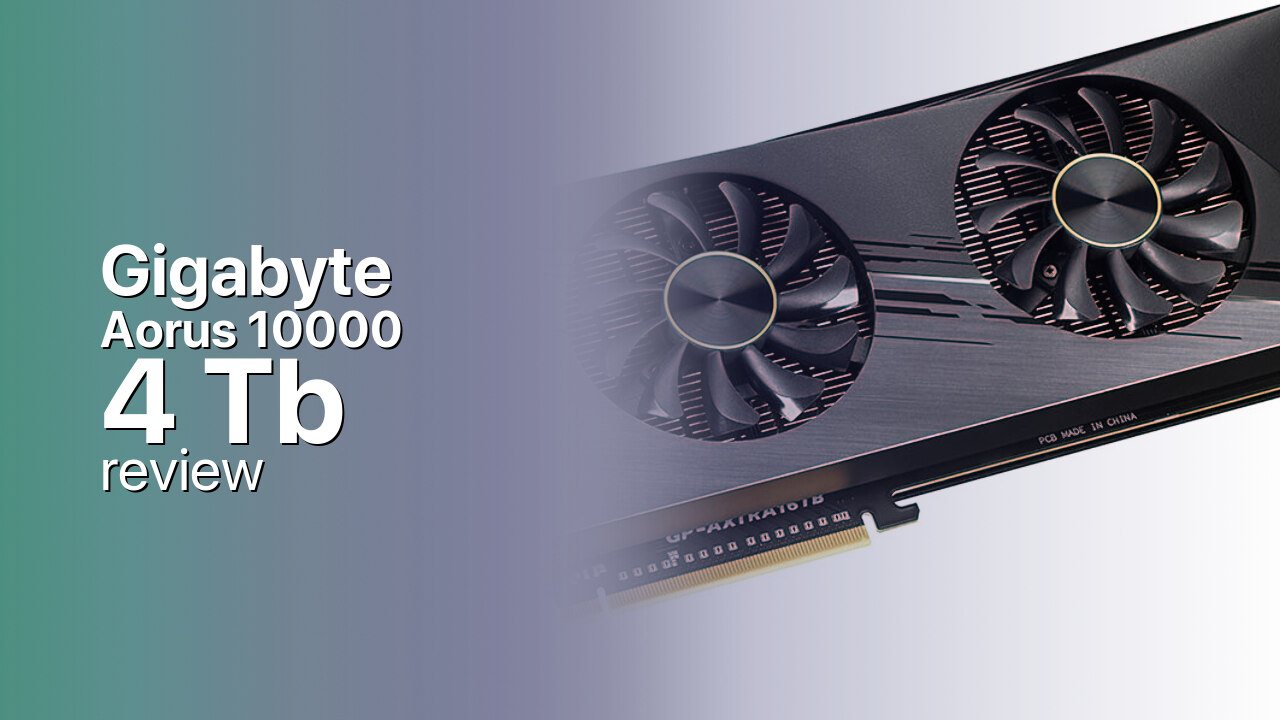
Controller & Memory
The Gigabyte Aorus Gen5 10000 4TB is a PCIe 5.0 x4 NVMe SSD built on the Phison PS5026-E26 controller platform with Micron 232-layer 3D TLC NAND flash. The 4TB model achieves sequential read speeds up to 10000 MB/s and writes up to 9500 MB/s, making it one of the faster retail Gen5 drives available.
The Phison E26 controller is an eight-channel NVMe 2.0 design purpose-built for PCIe 5.0 bandwidth. It pairs with an LPDDR4 DRAM cache for efficient NAND mapping table management, and the 4TB Aorus 10000 includes sufficient DRAM to maintain strong random 4K performance across mixed workloads. Random IOPS reach up to 1.5 million for reads and 2 million for writes on the 2TB model.
Gigabyte bundles the Aorus 10000 with its M.2 Thermal Guard XTREME cooler, a substantial passive heatsink using two heat pipes and a stacked fin array to dissipate the considerable heat generated by the E26 controller under load. This cooling solution is essential because PCIe 5.0 SSDs without adequate thermal management can exceed 80 degrees Celsius and throttle within minutes of sustained activity.
Endurance for the 4TB model is rated at 3000 TBW, backed by Gigabyte five-year warranty. The drive uses the standard M.2 2280 form factor, though the included Thermal Guard heatsink adds significant height that may not fit in all motherboard M.2 slots or compact cases.
Storage Comparisons:
Aorus 10000 Performance & Benchmarks
The 4TB Aorus Gen5 10000 delivers 10000 MB/s sequential read and 9500 MB/s write throughput over PCIe 5.0 x4. While Gigabyte initially teased 12.5 GB/s speeds before launch, the retail firmware was tuned more conservatively for stability and thermal headroom. Later firmware revisions from other E26 manufacturers pushed drives past 14,000 MB/s, but the Aorus 10000 remains competitive in the Gen5 segment.
Gigabyte Aorus 10000 4 TB vs M.2 5.0 peers
Switch between sequential throughput and random IOPS to see how this drive stacks up against other M.2 5.0 SSDs in our database. The highlighted bar is the drive on this page — click any other bar to open that drive.
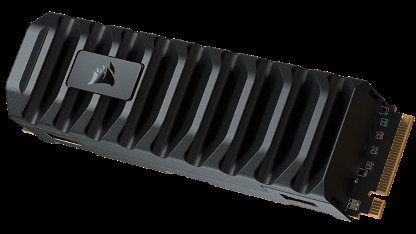
- Corsair MP700 Pro XT 1 TB: 14,900 MB/s read, 14,200 MB/s write
- Corsair MP700 Pro XT 2 TB: 14,900 MB/s read, 14,500 MB/s write
- Corsair MP700 Pro XT 4 TB: 14,900 MB/s read, 14,400 MB/s write
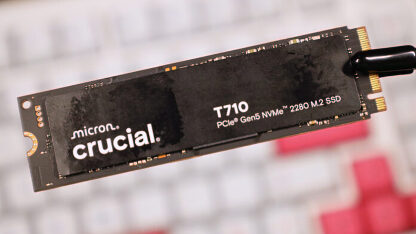
- Crucial T710 1 TB: 14,900 MB/s read, 13,800 MB/s write
- Gigabyte Aorus 10000 4 TB (this drive): 10,000 MB/s read, 9,500 MB/s write
Random 4K performance reaches 1.5 million read IOPS and up to 2 million write IOPS on the 2TB model, delivering excellent desktop responsiveness and fast application loading. The LPDDR4 DRAM cache ensures consistent performance under mixed workloads without the penalties of HMB-based DRAMless designs.
The M.2 Thermal Guard XTREME cooler with dual heat pipes and stacked fins is the key enabler for sustained performance. In testing, the Aorus 10000 maintains its rated speeds through extended file transfers without throttling, thanks to the effective passive cooling. The trade-off is the cooler physical size, which occupies more than the standard M.2 slot height and may interfere with large graphics cards installed in adjacent PCIe slots.
For gaming and content creation, the 4TB capacity provides ample room for modern game libraries and video project files. DirectStorage-enabled games benefit from the Gen5 bandwidth, and video editors working with high-bitrate 4K or 8K footage experience smooth timeline performance.
Gigabyte Aorus 10000 vs Competitors
See how the Aorus 10000 stacks up against other M.2 5.0 drives in our database:
Compare with rival drives:
Endurance, TBW & Warranty
Gigabyte covers the Aorus Gen5 10000 4TB with a five-year limited warranty from the date of purchase. The endurance rating of 3000 TBW means Gigabyte guarantees the drive can handle at least 3000 terabytes of total written data before the warranty expires, whichever limit comes first. This works out to approximately 2 GB of writes per day sustained over five years of continuous operation. Gigabyte global support network handles warranty claims through authorized retailers and regional service centers. The five-year warranty and 3000 TBW endurance are consistent with other premium E26 platform drives, reflecting confidence in the longevity of Micron 232-layer 3D TLC NAND under normal consumer workloads.
Gigabyte Aorus 10000 4 TB Specifications
| Category | Value |
|---|---|
| Capacity [?] | 4 TB |
| Interface [?] | M.2 5.0 |
| Controller [?] | Phison PS5026-E26 |
| Memory type [?] | 232L 3D TLC |
| DRAM [?] | LPDDR4 |
| Read speed (MB/s) [?] | 10000 |
| Write speed (MB/s) [?] | 9500 |
| Read IOPS [?] | 1300000 |
| Write IOPS [?] | 1300000 |
| Endurance (TBW) [?] | 3000 |
| MTBF (million hours) [?] | 1800000 |
| Warranty (years) [?] | 5 |
Verdict: Is the Aorus 10000 Worth It in 2026?
The Gigabyte Aorus Gen5 10000 4TB delivers compelling PCIe 5.0 performance with the Phison PS5026-E26 controller, Micron 232-layer 3D TLC NAND, and LPDDR4 DRAM cache. At 10000 MB/s read and 9500 MB/s write, it provides a meaningful generational improvement over PCIe 4.0 storage and backs it with effective Thermal Guard XTREME passive cooling.
The 3000 TBW endurance and five-year warranty from Gigabyte give long-term confidence. The substantial heatsink is excellent for thermal management but requires clearance consideration in compact builds. If you are building a high-end PCIe 5.0 desktop system and want proven Gen5 storage with strong cooling, the Aorus 10000 4TB is a solid option worth considering.
+ Pros
- 10000 MB/s reads deliver strong PCIe Gen5 performance
- Micron 232-layer 3D TLC NAND for high reliability
- LPDDR4 DRAM cache for sustained random IOPS
- M.2 Thermal Guard XTREME cooler with heat pipes prevents throttling
- Five-year warranty with 3000 TBW endurance
- Cons
- Large heatsink may not fit in compact cases or under some GPUs
- Retail speeds below the 14,000 MB/s ceiling of later E26 firmware
- Passive cooling may struggle in poorly ventilated cases
- Premium pricing over mature PCIe 4.0 alternatives
Buy this or similar SSD Storage:
Video Review
Gigabyte Aorus NVMe M.2 vs ASUS Hyper M.2 x16 PCIe 4.0 AICs