Mushkin Delta 4TB Review — Budget 4TB PCIe 4.0 QLC Mass Storage (2026)
Quick answer
The Mushkin Delta 4TB serves a specific niche: buyers who need maximum NVMe storage at the lowest price per gigabyte.
Read: 4975 MB/s Write: 3975 MB/s Endurance: 800 TBW Warranty: 5 years Interface: M.2 4.0 x 4
The Mushkin Delta 4TB is the highest-capacity model in Mushkin's budget PCIe 4.0 lineup, targeting buyers who need massive NVMe storage at the lowest possible price per gigabyte — even if it means accepting QLC NAND's performance trade-offs.
Controller & Memory
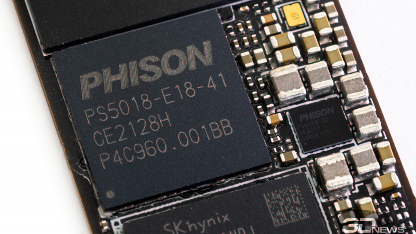
The Mushkin Delta 4TB pairs a Phison PS5016-E16 controller with 3D QLC NAND flash in the standard M.2 2280 form factor. At 4TB, this drive is positioned as a bulk storage solution — a secondary drive for game libraries, media archives, and large file collections where capacity matters more than sustained write speed.
The Phison E16 was the first consumer PCIe 4.0 controller, launched in 2019. It's since been superseded by the E18 (7,000+ MB/s) and E21T (7,400+ MB/s) designs, but the E16 still delivers adequate performance for everyday use. The 4,975 MB/s read speed feels fast for booting, loading applications, and accessing files.
QLC NAND stores four bits per cell, enabling the 4TB capacity at a budget price. PCMag noted the Delta 4TB was priced at roughly 12 cents per gigabyte at launch — among the most affordable high-capacity NVMe drives available. The trade-offs are inherent to QLC architecture: a smaller SLC cache buffer, dramatically slower sustained writes (dropping to 80–150 MB/s after cache exhaustion), and lower endurance relative to TLC drives.
The 4TB capacity is the Delta line's defining feature. While the 1TB and 2TB models compete in a crowded budget segment, the 4TB variant serves a specific audience: NAS builders, homelab enthusiasts, content creators with large media libraries, and anyone who needs bulk NVMe storage without paying flagship prices.
The drive is rated at 800 TBW endurance — the same figure listed for the 1TB and 2TB models in the source data. For a 4TB QLC drive, this endurance rating seems conservative. Mushkin backs the Delta with a 5-year limited warranty, which is generous for a QLC-based SSD.
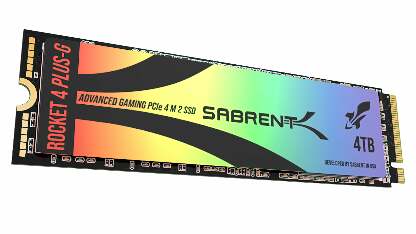
Competitors in the 4TB budget segment include the Sabrent Rocket Q 4TB (QLC, similar platform), the Corsair MP600 Core 4TB (QLC), and the Team Group MP34Q 4TB (QLC).
Storage Comparisons:
Delta Performance & Benchmarks
The Mushkin Delta 4TB is rated at up to 4,975 MB/s sequential reads and 3,975 MB/s sequential writes, with 700,000 IOPS random reads and 650,000 IOPS random writes. On paper, these numbers suggest a competent PCIe 4.0 drive. In practice, the QLC NAND architecture tells a different story.
Mushkin Delta 4 TB vs M.2 4.0 x 4 peers
Switch between sequential throughput and random IOPS to see how this drive stacks up against other M.2 4.0 x 4 SSDs in our database. The highlighted bar is the drive on this page — click any other bar to open that drive.
- Patriot Viper PV593 1 TB: 14,500 MB/s read, 14,000 MB/s write
- Patriot Viper PV593 2 TB: 14,500 MB/s read, 14,000 MB/s write
- Patriot Viper PV593 4 TB: 14,500 MB/s read, 14,000 MB/s write
- Patriot Viper PV573 2 TB: 14,000 MB/s read, 12,000 MB/s write
- Mushkin Delta 4 TB (this drive): 4,975 MB/s read, 3,975 MB/s write
The 4,975 MB/s read speed is genuinely useful. The Phison E16 controller handles sequential reads efficiently, and 4K random reads at 700K IOPS deliver snappy OS responsiveness and fast application launches. For the Delta 4TB's target audience — users who store large amounts of data and read it frequently — the read performance is entirely adequate.
The write performance is where QLC limitations dominate. The 3,975 MB/s burst write speed is achieved only while the SLC cache is active. On a 4TB drive, the dynamic SLC cache is larger in absolute terms than on smaller capacities — potentially several hundred gigabytes on a fresh drive with plenty of free space. This means the 4TB Delta can sustain burst-speed writes longer than its 1TB and 2TB siblings before the cache fills.
Once the SLC cache exhausts, direct-QLC write speeds on the Phison E16 platform typically fall to 80–150 MB/s. This is slower than a 7,200 RPM mechanical hard drive. Copying a 200 GB video project to this drive will start at nearly 4,000 MB/s and eventually slow to a crawl. For users who understand this limitation and plan their workflows around it — moving large files in smaller batches, or using the drive primarily for read-heavy access — the 4TB Delta remains a functional choice.
The 4TB capacity's advantage is its massive SLC cache buffer in absolute terms. A nearly empty 4TB drive may have 800 GB or more of pseudo-SLC space, enough for most consumer transfers without hitting the direct-QLC wall. But as the drive fills up, the cache shrinks proportionally, and sustained write performance degrades.
Mushkin Delta vs Competitors
See how the Delta stacks up against other M.2 4.0 x 4 drives in our database:
Compare with rival drives:
Endurance, TBW & Warranty
Mushkin covers the Delta 4TB with a 5-year limited warranty and an 800 TBW endurance rating. The 800 TBW figure is listed identically across all Delta capacities in the source data, which is unusual — a 4TB drive with four times the NAND cells should logically have four times the endurance of a 1TB model. At 800 TBW, the 4TB model could handle roughly 438 GB of writes per day across the five-year warranty period. For a bulk storage drive generating 20–50 GB per day, the 4TB Delta would take 44 to 110 years to reach 800 TBW. Even if the actual endurance is lower than stated, the 4TB capacity's sheer size means most users will never approach the TBW limit. The 5-year warranty is generous for a QLC drive. Mushkin handles warranty claims directly as a retail brand.
Mushkin Delta 4 TB Specifications
| Category | Value |
|---|---|
| Capacity [?] | 4 TB |
| Interface [?] | M.2 4.0 x 4 |
| Controller [?] | Phison E16 |
| Memory type [?] | 3D QLC |
| DRAM [?] | 4GB DDR4 |
| Read speed (MB/s) [?] | 4975 |
| Write speed (MB/s) [?] | 3975 |
| Read IOPS [?] | 700000 |
| Write IOPS [?] | 650000 |
| Endurance (TBW) [?] | 800 |
| MTBF (million hours) [?] | 1.8 |
| Warranty (years) [?] | 5 |
Verdict: Is the Delta Worth It in 2026?
The Mushkin Delta 4TB serves a specific niche: buyers who need maximum NVMe storage at the lowest price per gigabyte. The 4TB capacity holds enormous game libraries, media collections, and file archives. The 5-year warranty is reassuring for a QLC drive. But the Phison E16 controller and QLC NAND combination means this drive is not suitable as a primary system drive or for write-heavy workloads — the sustained write speed collapse after SLC cache exhaustion is a genuine limitation. As a secondary bulk storage drive in a desktop or NAS, the Delta 4TB delivers on its capacity promise. For primary storage, invest in a TLC-based alternative like the Mushkin Gamma 2TB or the WD Black SN850X.
+ Pros
- 4TB capacity for massive game and media libraries
- Competitive price per gigabyte at roughly 12 cents/GB
- 5-year limited warranty
- Adequate read performance for everyday workloads
- Large absolute SLC cache on a nearly empty 4TB drive
- Cons
- QLC NAND — sustained writes drop to ~80-150 MB/s after cache fills
- Phison E16 is a superseded first-gen PCIe 4.0 controller
- 800 TBW endurance seems low for a 4TB drive
- Not suitable as a primary system drive
- Double-sided PCB may not fit thin laptops
Buy this or similar SSD Storage:



Video Review
Best SSD for Gaming 2021 & Best Solid State Drives 2021!