Corsair MP600 Pro LPX 1TB: PS5-optimized PCIe 4.0 NVMe review (2026)
Quick answer
The 1 TB MP600 Pro LPX is the capacity to buy in this lineup for most PS5 and desktop buyers alike.
Read: 7100 MB/s Write: 6800 MB/s Endurance: 700 TBW Warranty: 5 years Interface: M.2 4.0 x 4
The Corsair MP600 Pro LPX 1 TB sits at the practical sweet spot of the Phison E18-powered LPX lineup, delivering full 6,800 MB/s write speed alongside Gen4 reads in a PS5-optimized form factor.
Controller & Memory
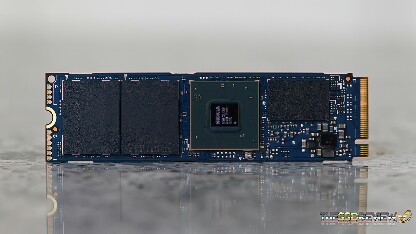
The 1 TB LPX delivers the full Phison E18 performance envelope: 7,100 MB/s reads and 6,800 MB/s writes, matching the 2 TB and 4 TB variants on throughput while scaling endurance to 700 TBW. The eight-channel E18 controller is fully populated at 1 TB, backed by 1 GB of DRAM, so there is no write-speed compromise versus larger capacities - only the 512 GB model in the line steps down on sustained write performance.
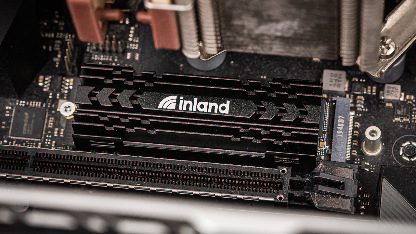
The factory-installed low-profile aluminium heatsink makes the LPX a drop-in PS5 upgrade without needing to source a separate heatsink or worry about clearance, and 1 TB provides room for several large modern titles alongside the console's internal storage. For desktop use, the heatsink provides adequate cooling for gaming and general productivity, though it can't be removed if a motherboard's own M.2 heatsink would otherwise be preferred. The drive uses a single-sided PCB at 1 TB, maintaining thin-laptop compatibility.
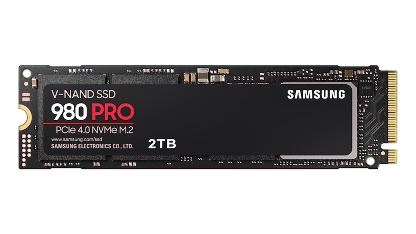
At this speed and price it sits alongside other DRAM-equipped Phison E18-class flagships like the Samsung 990 Pro and WD Black SN850X, both of which require buying a separate heatsink kit for PS5 use rather than including one from the factory like the LPX does. That factory-fit heatsink is the LPX's main differentiator within an otherwise crowded field of near-identical E18 drives.
Storage Comparisons:
MP600 Pro LPX Performance & Benchmarks
The 1 TB LPX delivers 7,100/6,800 MB/s sequential throughput with the E18's generous pseudo-SLC cache - roughly 150-200 GB of burst writes at full speed before the drive settles into its native TLC ceiling. The DRAM-equipped E18 controller keeps random I/O latency consistent under multitasking, and gaming load times are indistinguishable from any PCIe 4.0 flagship in the same tier, whether on PS5 or a desktop PC.
Corsair MP600 Pro LPX 1 TB vs M.2 4.0 x 4 peers
Switch between sequential throughput and random IOPS to see how this drive stacks up against other M.2 4.0 x 4 SSDs in our database. The highlighted bar is the drive on this page — click any other bar to open that drive.
- Patriot Viper PV593 1 TB: 14,500 MB/s read, 14,000 MB/s write
- Patriot Viper PV593 2 TB: 14,500 MB/s read, 14,000 MB/s write
- Patriot Viper PV593 4 TB: 14,500 MB/s read, 14,000 MB/s write
- Patriot Viper PV573 2 TB: 14,000 MB/s read, 12,000 MB/s write
- Corsair MP600 Pro LPX 1 TB (this drive): 7,100 MB/s read, 6,800 MB/s write
For content creators, the large SLC cache comfortably absorbs most everyday video-editing transfers without a visible slowdown, though anyone moving several hundred gigabytes in one sustained session will eventually see write speed drop toward the post-cache TLC rate, a limitation shared by every drive in this class rather than a weakness specific to the LPX. Random IOPS remain strong throughout thanks to the onboard DRAM, which is especially noticeable when multiple applications or background processes are competing for storage access at once, and it's a big part of why this drive still feels current against newer, nominally faster releases.
Corsair MP600 Pro LPX vs Competitors
See how the MP600 Pro LPX stacks up against other M.2 4.0 x 4 drives in our database:
Compare with rival drives:
Endurance, TBW & Warranty
Corsair covers the LPX 1 TB with a five-year warranty limited by 700 TBW, whichever comes first. At a typical 20-30 GB/day of writes, that endurance budget spans roughly 64 to 96 years, far beyond any realistic ownership period. The MTBF rating is 2,000,000 hours, a statistical reliability figure describing failure rates across a large population of drives rather than a promise for any individual unit.
Endurance scales across the LPX line: the 512 GB model carries 350 TBW, 2 TB steps up to 1,400 TBW, and the 4 TB and 8 TB capacities reach 3,000 TBW, all under the same 5-year warranty term.
Corsair MP600 Pro LPX 1 TB Specifications
| Category | Value |
|---|---|
| Capacity [?] | 1 TB |
| Interface [?] | M.2 4.0 x 4 |
| Controller [?] | Phison PS5018-E18 |
| Memory type [?] | Micron 3D TLC |
| DRAM [?] | 1GB DRAM |
| Read speed (MB/s) [?] | 7100 |
| Write speed (MB/s) [?] | 6800 |
| Read IOPS [?] | 1000000 |
| Write IOPS [?] | 1200000 |
| Endurance (TBW) [?] | 700 |
| MTBF (million hours) [?] | 2000000 |
| Warranty (years) [?] | 5 |
Verdict: Is the MP600 Pro LPX Worth It in 2026?
The 1 TB MP600 Pro LPX is the capacity to buy in this lineup for most PS5 and desktop buyers alike. It delivers the full E18 write speed, enough endurance for any consumer workload, and a capacity that fits a respectable game library without overspending on space you won't use. The PS5-optimized heatsink eliminates compatibility guesswork, which matters most for console buyers who don't want to shop for a separate cooling solution. For desktop-only builds, non-LPX E18 alternatives like the Samsung 990 Pro offer identical core performance without the fixed heatsink, which may suit buyers who prefer their own cooling setup. Overall, the LPX 1TB is a strong, low-hassle pick for anyone prioritizing PS5 compatibility over choice of heatsink.
+ Pros
- 7,100/6,800 MB/s, full E18 throughput
- Pre-installed PS5-compatible heatsink
- Single-sided PCB fits thin laptops
- 700 TBW endurance with 5-year warranty
- Cons
- Heatsink is permanently attached, no bare option
- Performance identical to cheaper non-LPX E18 alternatives
- 512GB model in the line has reduced write speed
Buy this or similar SSD Storage:
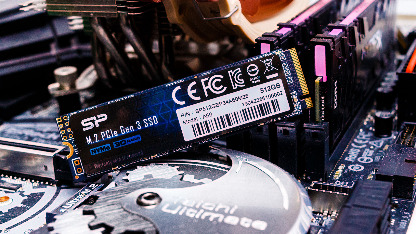
Video Review
This the BEST PS5 SSD you can buy | Corsair MP600 Pro LPX Review & Test