ADATA XPG Gammix S70 1TB Review — A Heatsinked PCIe 4.0 Flagship (2026)
Quick answer
The ADATA XPG Gammix S70 1 TB is a strong pick for desktop builders who want flagship PCIe 4.0 sequential performance and above-average endurance at a price that usually undercuts the Samsung 980 Pro.
Read: 7400 MB/s Write: 6400 MB/s Endurance: 740 TBW Warranty: 5 years Interface: M.2 4.0 x 4
The ADATA XPG Gammix S70 1 TB is a PCIe 4.0 flagship that matches the Samsung 980 Pro on sequential throughput while out-enduring it by a comfortable margin — just be ready for the oversized factory heatsink.
Controller & Memory
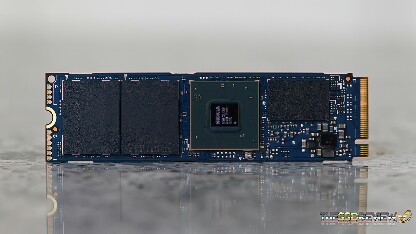
The ADATA XPG Gammix S70 pairs the Innogrit IG5236 Rainier controller — an eight-channel, TSMC 12nm PCIe 4.0 design — with Micron 96-layer 3D TLC NAND and 1 GB of DDR4 DRAM on a double-sided M.2 2280 PCB. The IG5236 was Innogrit's answer to the Phison E18, and it arrived with aggressive firmware tuning that pushed sequential reads to 7,400 MB/s and writes to 6,400 MB/s, numbers that at launch put it ahead of every consumer Gen4 drive except the Samsung 980 Pro. The controller supports AES 256-bit hardware encryption with TCG Opal 2.0, and ADATA factory-fits a large aluminum heatsink that extends roughly 15 mm above the PCB — effective for thermals but a compatibility headache.
That heatsink is the S70's defining physical characteristic and its biggest practical trade-off. It keeps the drive remarkably cool under sustained load — the IG5236 rarely exceeds 65 degrees Celsius during multi-hundred-gigabyte sequential writes — but the added height means the S70 will not fit into most laptops, many ITX motherboards with tight M.2 placement, and critically, the PlayStation 5 expansion bay. ADATA addressed this later with the S70 Blade variant, which swaps the chunky heatsink for a slim graphene-aluminum heat spreader that clears the PS5's 11.25 mm height limit, but the Blade also dials the write speed back to 5,500 MB/s. If your post has the original S70 (not the Blade), assume PS5 incompatibility and plan for a desktop installation with adequate clearance around the M.2 slot.
The 1 TB variant sits in the middle of the lineup and represents the best balance of speed and endurance. The 512 GB model drops write speeds noticeably, while the 2 TB variant doubles the endurance to 1,480 TBW and adds a second gigabyte of DRAM. At 1 TB, the S70 competes most directly with the Samsung 980 Pro (better random I/O, lower endurance at 600 TBW), the WD Black SN850 (faster gaming-focused performance, same 600 TBW endurance), and the Kingston KC3000 (Phison E18 with 176-layer NAND, 800 TBW, often cheaper). The S70's calling card is endurance — 740 TBW for a 1 TB drive is well above the 600 TBW norm — and if the price aligns, it makes a strong case as a write-heavy workstation scratch disk or a long-term OS drive.
Storage Comparisons:
XPG Gammix S70 Performance & Benchmarks
The ADATA XPG Gammix S70 1 TB is rated for 7,400 MB/s sequential reads and 6,400 MB/s sequential writes, with random performance of up to 650,000 IOPS reads and 740,000 IOPS writes. These numbers put it in the top tier of PCIe 4.0 drives, matching or exceeding the Samsung 980 Pro on sequential throughput while trailing it on random I/O — the 980 Pro manages 1,000,000 IOPS on both read and write due to Samsung's more optimized in-house controller. The S70's pSLC cache holds roughly 150 GB of writes before exhausting, after which direct-to-TLC writes settle at approximately 1,500 MB/s. This is solid post-cache behavior — faster than the 980 Pro's roughly 1,200 MB/s in the same regime — and makes the S70 a better pick for sustained large-file transfers than the raw sequential numbers alone would suggest.
ADATA XPG Gammix S70 1 TB vs M.2 4.0 x 4 peers
Switch between sequential throughput and random IOPS to see how this drive stacks up against other M.2 4.0 x 4 SSDs in our database. The highlighted bar is the drive on this page — click any other bar to open that drive.
- Patriot Viper PV593 1 TB: 14,500 MB/s read, 14,000 MB/s write
- Patriot Viper PV593 2 TB: 14,500 MB/s read, 14,000 MB/s write
- Patriot Viper PV593 4 TB: 14,500 MB/s read, 14,000 MB/s write
- Patriot Viper PV573 2 TB: 14,000 MB/s read, 12,000 MB/s write
- ADATA XPG Gammix S70 1 TB (this drive): 7,400 MB/s read, 6,400 MB/s write
Independent reviewers consistently found the S70 hitting its rated sequential speeds, with some benchmarking showing read throughput slightly above 7,400 MB/s in ideal conditions. Real-world tests tell a more nuanced story: the S70 excels at sequential workloads — video ingest, large project file transfers, game installations — but falls behind the 980 Pro and SN850 in PCMark 10 storage traces that emphasize low-queue-depth random access. For gaming, the gap is negligible — the S70 loads titles within a second of any other high-end Gen4 drive. Thermally, the factory heatsink does its job: sustained sequential writes at 6,400 MB/s over hundreds of gigabytes push the controller to roughly 65 degrees Celsius, well below the IG5236's throttle point. Without the heatsink — if you were to remove it, which ADATA strongly discourages due to the aggressive thermal adhesive — the controller would likely throttle within minutes of sustained load. The S70 also draws more idle power than most competitors at roughly 1.3 W, making it a poor choice for battery-constrained laptops even if the physical fit were possible.
ADATA XPG Gammix S70 vs Competitors
See how the XPG Gammix S70 stacks up against other M.2 4.0 x 4 drives in our database:
Compare with rival drives:
Endurance, TBW & Warranty
ADATA backs the XPG Gammix S70 1 TB with a 5-year limited warranty and an endurance rating of 740 TBW. At 740 TBW, the 1 TB S70 is rated to absorb roughly 405 GB of writes per day for five years — a demanding workload that few consumers will approach. At a more typical 30 GB/day pace, the endurance stretches beyond 60 years, making write exhaustion a non-issue for gaming and desktop use. The 740 TBW figure is notably higher than the 600 TBW offered by the Samsung 980 Pro and WD Black SN850 at the same capacity, though it falls short of the Seagate FireCuda 530's class-leading 1,275 TBW (achieved with Micron 176-layer NAND and more conservative firmware). The 2 TB S70 doubles endurance to 1,480 TBW, while the 512 GB variant carries 370 TBW. The MTBF is rated at 2 million hours, a standard population statistic for premium NVMe SSDs. ADATA handles warranty claims through its global RMA network, and the brand's presence in the DRAM and NAND module market gives it more infrastructure than some smaller SSD labels.
ADATA XPG Gammix S70 1 TB Specifications
| Category | Value |
|---|---|
| Capacity [?] | 1 TB |
| Interface [?] | M.2 4.0 x 4 |
| Controller [?] | Innogrit IG5236 |
| Memory type [?] | Micron 3D TLC |
| DRAM [?] | DDR4 DRAM (1GB) |
| Read speed (MB/s) [?] | 7400 |
| Write speed (MB/s) [?] | 6400 |
| Read IOPS [?] | 650000 |
| Write IOPS [?] | 740000 |
| Endurance (TBW) [?] | 740 |
| MTBF (million hours) [?] | 2000000 |
| Warranty (years) [?] | 5 |
Verdict: Is the XPG Gammix S70 Worth It in 2026?
The ADATA XPG Gammix S70 1 TB is a strong pick for desktop builders who want flagship PCIe 4.0 sequential performance and above-average endurance at a price that usually undercuts the Samsung 980 Pro. The factory heatsink is genuinely functional — it keeps the IG5236 controller cool under workloads that would thermal-throttle a bare drive — and the 740 TBW endurance rating makes the S70 suitable for write-heavy creative workflows that would push lesser drives toward their TBW limit within a few years. Buy it for a desktop workstation, a content-creation rig, or a high-end gaming PC with room around the M.2 slot. Skip it if you need laptop or PS5 compatibility — the heatsink simply will not fit, and removing it risks damaging the drive. The S70 Blade variant solves the compatibility problem at the cost of write speed. For alternatives, the Samsung 980 Pro offers stronger random I/O and universal fitment, the WD Black SN850X is faster for gaming, and the Kingston KC3000 delivers better all-around performance with 800 TBW endurance at a similar price.
+ Pros
- 7,400 MB/s sequential reads — among the fastest PCIe 4.0 drives
- 740 TBW endurance exceeds Samsung 980 Pro and WD Black SN850 at 1 TB
- Effective factory heatsink keeps controller below 65 C under sustained load
- AES 256-bit hardware encryption with TCG Opal 2.0
- Strong post-cache write speed of approximately 1,500 MB/s
- 5-year warranty matches premium competitors
- Cons
- Oversized heatsink blocks laptop and PS5 installation
- Heatsink uses aggressive thermal adhesive — difficult to remove safely
- High idle power consumption (~1.3 W) — poor for laptops even if it fit
- Random I/O trails Samsung 980 Pro and WD Black SN850 at low queue depths
- Early IG5236 firmware had stability concerns on some platforms
- Double-sided PCB may not fit all ultrabooks regardless of heatsink
Buy this or similar SSD Storage:



Video Review
ADATA XPG GAMMIX S70 SSD Review - Is This The NEW Score to Beat?