Kingston Fury Renegade 1TB PCIe 4.0 NVMe SSD (2026)
Quick answer
The Kingston Fury Renegade 1 TB is best suited for PC gamers and content creators who want PCIe 4.0 performance without paying flagship prices.
Read: 7300 MB/s Write: 7000 MB/s Endurance: 1000 TBW Warranty: 5 years Interface: M.2 4.0 x 4
The Kingston Fury Renegade 1 TB pairs the flagship Phison E18 controller with 1000 TBW endurance, making it a compelling PCIe 4.0 contender for gamers and creators seeking sustained performance without the flagship price tag.
Controller & Memory
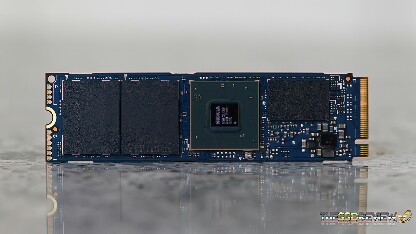
Inside the Kingston Fury Renegade 1 TB is the Phison PS5018-E18 controller, the same silicon powering many of the top-tier PCIe 4.0 drives from competing brands. Kingston pairs this with 3D TLC NAND and a DDR4 DRAM cache for consistent performance under mixed workloads. The drive ships in a standard M.2 2280 form factor with a thin 2.21mm profile—no heatsink is included in the base model, so buyers planning sustained heavy writes or PS5 expansion should budget for a third-party cooler. A heatsink-equipped variant is available for users who prefer a plug-and-play solution.
The Fury Renegade is available in 500 GB, 1 TB, 2 TB, and 4 TB capacities. The 1 TB model hits the sweet spot for most users: sequential ratings climb to 7,300 MB/s reads and 7,000 MB/s writes, with random 4K performance rated at 1,000,000 IOPS. This specific capacity delivers 1000 TBW of endurance, a significant 25% improvement over Kingston's earlier KC3000. The firmware update that distinguishes the Fury Renegade from the KC3000 is primarily responsible for this endurance boost and the slight read speed increase from 7,000 to 7,300 MB/s.
This drive slots in as Kingston's enthusiast-focused answer to mainstream heavyweights like the WD Black SN850X and Samsung 990 Pro. It matches those competitors on paper while often undercutting them on street price. Alternatives worth considering include the Sabrent Rocket 4 Plus for value seekers and the Seagate FireCuda 530 for buyers who prioritize sustained write consistency. For laptop users, the Fury Renegade's thin profile fits comfortably under most motherboard heat shields and in ultrabook M.2 slots. Gamers upgrading a PlayStation 5 should look for the heatsink model. The drive uses NVMe 1.4 protocol and supports SMART monitoring through Kingston's SSD Manager application, which also provides firmware updates and secure erase functionality.
Storage Comparisons:
Fury Renegade Performance & Benchmarks
Kingston rates the Fury Renegade 1 TB at up to 7,300 MB/s sequential reads and 7,000 MB/s writes, putting it within striking distance of the fastest PCIe 4.0 drives. The 1,000,000 IOPS random read and write ratings translate to snappy OS responsiveness and quick game load times. Independent benchmarks consistently show the E18 controller performing well across real-world workloads, from file transfers to application launches.
Kingston Fury Renegade 1 TB vs M.2 4.0 x 4 peers
Switch between sequential throughput and random IOPS to see how this drive stacks up against other M.2 4.0 x 4 SSDs in our database. The highlighted bar is the drive on this page — click any other bar to open that drive.
- Patriot Viper PV593 1 TB: 14,500 MB/s read, 14,000 MB/s write
- Patriot Viper PV593 2 TB: 14,500 MB/s read, 14,000 MB/s write
- Patriot Viper PV593 4 TB: 14,500 MB/s read, 14,000 MB/s write
- Patriot Viper PV573 2 TB: 14,000 MB/s read, 12,000 MB/s write
- Kingston Fury Renegade 1 TB (this drive): 7,300 MB/s read, 7,000 MB/s write
Like most TLC-based NVMe drives, the Fury Renegade uses an SLC caching scheme to accelerate burst writes. The drive writes quickly at first, then drops to NAND native speed once the cache fills. Independent reviews suggest the SLC cache on the 1 TB model is substantial—enough to handle typical gaming downloads without triggering slower native speeds. Large file transfers in the hundreds of gigabytes may exhaust the cache, though sustained write speeds on the E18 platform remain competitive. Gaming workloads rarely reveal this limitation, so PS5 and PC gamers will see minimal practical difference between this drive and higher-priced flagships.
Compared to SATA SSDs, the Fury Renegade delivers roughly 10-12x faster sequential transfers and 3-5x better random performance—differences that matter most when loading large open-world games or transferring multi-gigabyte files. For users upgrading from PCIe 3.0 drives like the Samsung 970 EVO, the generational jump is less dramatic but still noticeable in file copy operations.
Kingston Fury Renegade vs Competitors
See how the Fury Renegade stacks up against other M.2 4.0 x 4 drives in our database:
Compare with rival drives:
Endurance, TBW & Warranty
Kingston backs the Fury Renegade 1 TB with a 5-year limited warranty and 1000 TBW endurance rating. The TBW figure represents the total terabytes you can write before the warranty is voided, not a hard limit on drive life. At a typical enthusiast workload of 40 GB per day, 1000 TBW translates to approximately 68 years of use—far longer than the warranty period. Even heavy workloads of 100 GB per day would take over 27 years to exhaust the rating.
Endurance scales with capacity across the Fury Renegade lineup. The 500 GB model offers a lower TBW rating, while the 2 TB and 4 TB variants provide proportionally higher endurance figures. If you exhaust the 1000 TBW allowance within five years, Kingston's warranty coverage ends regardless of time elapsed. This dual-limit structure is standard across the consumer SSD industry. MTBF statistics are population-level projections rather than individual guarantees. Kingston handles RMA requests directly through their website rather than through retailers, which streamlines the process if issues arise. Users should keep their original packaging or proof of purchase, as warranty claims typically require verification of the purchase date.
Kingston Fury Renegade 1 TB Specifications
| Category | Value |
|---|---|
| Capacity [?] | 1 TB |
| Interface [?] | M.2 4.0 x 4 |
| Controller [?] | Phison PS5018-E18 |
| Memory type [?] | 3D TLC |
| DRAM [?] | DDR4 |
| Read speed (MB/s) [?] | 7300 |
| Write speed (MB/s) [?] | 7000 |
| Read IOPS [?] | 1000000 |
| Write IOPS [?] | 1000000 |
| Endurance (TBW) [?] | 1000 |
| MTBF (million hours) [?] | 2000000 |
| Warranty (years) [?] | 5 |
Verdict: Is the Fury Renegade Worth It in 2026?
The Kingston Fury Renegade 1 TB is best suited for PC gamers and content creators who want PCIe 4.0 performance without paying flagship prices. It excels as a boot drive, a game library volume, or a scratch disk for video editing workloads. The combination of the Phison E18 controller, DRAM cache, and 1000 TBW endurance makes it a well-rounded option for users upgrading from SATA or PCIe 3.0 storage. The 5-year warranty provides adequate coverage for a drive in this price class.
Buyers who need sustained write consistency for professional video production or heavy data processing should consider the Seagate FireCuda 530 or Samsung 990 Pro instead. Budget-conscious buyers can save more with the WD Blue SN770 or Kingston's own NV2, though those DRAM-less options sacrifice random performance. For the majority of users seeking a straightforward PCIe 4.0 upgrade, the Fury Renegade 1 TB hits the right notes. The lack of an included heatsink is a minor inconvenience that third-party solutions address, and the drive's performance characteristics are well-matched to current workloads.
+ Pros
- 7,300 MB/s sequential reads and 7,000 MB/s writes
- 1000 TBW endurance for the 1 TB model
- Phison E18 controller with DDR4 DRAM cache
- 5-year warranty with direct Kingston RMA support
- Competitively priced against flagship alternatives
- Thin 2.21mm profile fits most M.2 slots and laptops
- Heatsink-equipped variant available for PS5 upgraders
- Cons
- No heatsink included in base model
- SLC cache causes write speed drop during large file transfers
- Sustained write speeds trail some flagship competitors
- Double-sided PCB may block adjacent M.2 slot on some motherboards
Buy this or similar SSD Storage:



Video Review
Why the Kingston FURY Renegade 1TB is a top SSD - Review