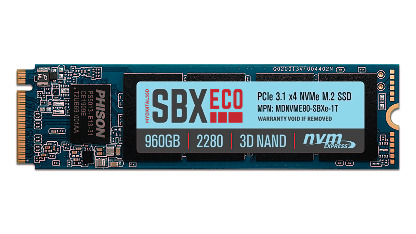
Lite-On MU X1 1TB SSD — In-Depth Review & Specs (2026)
Quick answer
The Lite-On MU X1 1TB is a hidden gem on the used SSD market.
Read: 3400 MB/s Write: 3000 MB/s Endurance: 1800 TBW Warranty: 3 years Interface: M.2 3.0 x 4
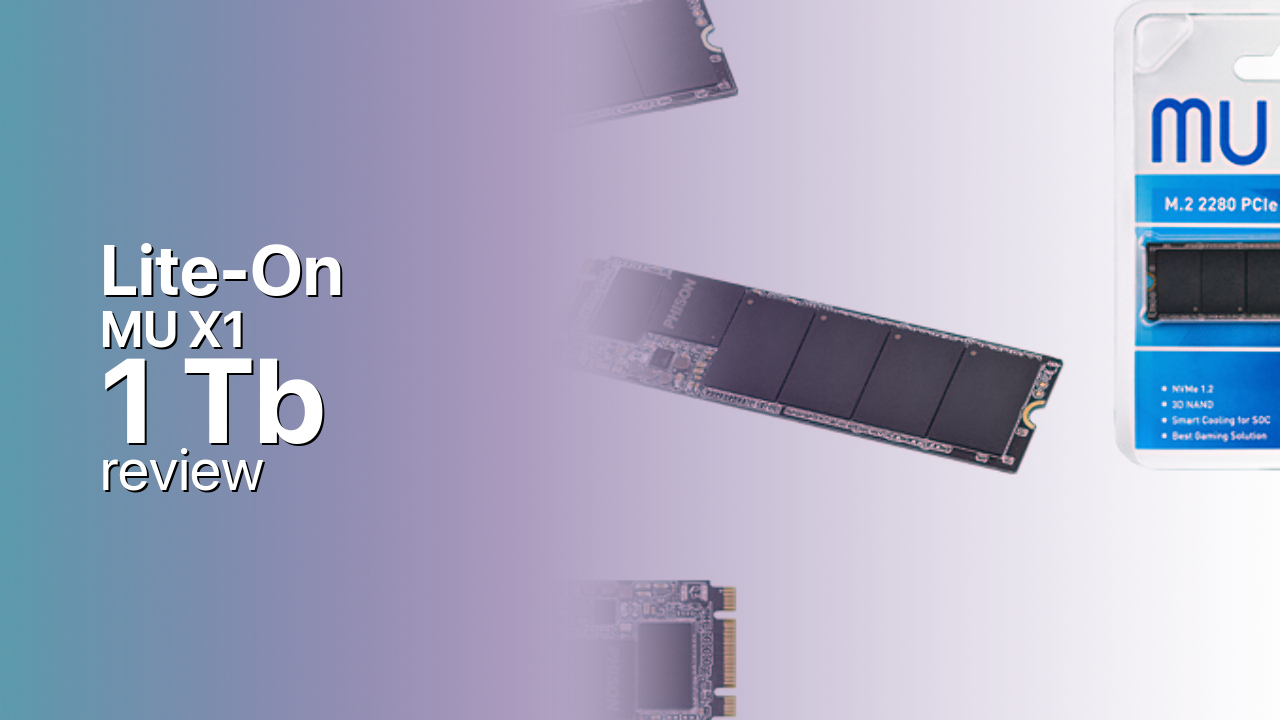
The Lite-On MU X1 1TB is the flagship capacity in Lite-On's Phison E12-based OEM NVMe lineup. It pairs the proven PS5012-E12 8-channel PCIe 3.0 controller with a full complement of 3D TLC NAND dies and 1 GB of DDR4 DRAM, delivering the platform's maximum throughput of 3,400 MB/s read and 3,000 MB/s write. On the secondary market, the MU X1 1TB is one of the most cost-effective ways to add a terabyte of DRAM-equipped NVMe storage to a PCIe 3.0 system.
Controller & Memory
The Phison PS5012-E12 represents the peak of consumer PCIe 3.0 SSD controller design. With eight NAND channels, a dedicated DDR4 DRAM buffer (1 GB on the 1TB model), and mature NVMe 1.3 firmware, it delivers the full 3,400/3,000 MB/s that the PCIe 3.0 x4 interface can practically sustain. Lite-On — a major Taiwanese OEM — outfits the MU X1 with 3D TLC NAND and a standard Nanya or SK Hynix DDR4-1866 DRAM chip. The controller is fabricated on a 28nm process, which is less power-efficient than modern 12nm designs but well-understood and stable.
As an OEM product, the MU X1 shipped inside premium laptops and workstations from Dell (XPS, Precision), HP (Spectre, ZBook), and Lenovo (ThinkPad X1, P-series). There is no retail packaging, no end-user warranty from Lite-On, and no publicly available firmware. Drives on the secondary market are typically pulls from decommissioned corporate fleets. At 1 TB, the MU X1 is large enough to serve as the only drive in a system: Windows or Linux, a full creative suite, and a substantial game library all fit without compromise.
The rated 1,800 TBW endurance works out to roughly 1 drive write per day over 5 years — a solid rating for a TLC-based Gen3 drive and more than sufficient for any consumer workload. The single-sided M.2 2280 form factor ensures compatibility with any laptop or desktop M.2 slot.
Storage Comparisons:
MU X1 Performance & Benchmarks
With a full complement of NAND dies populating all eight channels, the MU X1 1TB achieves the E12 platform's full performance envelope: 3,400 MB/s sequential read and 3,000 MB/s sequential write. Real-world large-file copies on a PCIe 3.0 system land around 3,100–3,300 MB/s read and 2,700–2,900 MB/s write — essentially saturating the interface. Random 4K performance in the 300,000–400,000 IOPS range places the MU X1 in the upper tier of Gen3 drives, competitive with the Samsung 970 EVO and WD Black SN700 of the same era.
Lite-On MU X1 1 TB vs M.2 3.0 x 4 peers
Switch between sequential throughput and random IOPS to see how this drive stacks up against other M.2 3.0 x 4 SSDs in our database. The highlighted bar is the drive on this page — click any other bar to open that drive.
- ADATA SX 8800 Pro 512 GB: 3,500 MB/s read, 2,700 MB/s write
- ADATA SX 8800 Pro 1 TB: 3,500 MB/s read, 2,700 MB/s write
- ADATA XPG Spectrix S40G RGB 256 GB: 3,500 MB/s read, 3,000 MB/s write
- ADATA XPG Spectrix S40G RGB 512 GB: 3,500 MB/s read, 3,000 MB/s write
- Lite-On MU X1 1 TB (this drive): 3,400 MB/s read, 3,000 MB/s write
The dedicated 1 GB DDR4 DRAM buffer is the key differentiator from budget DRAM-less designs. Under mixed read/write workloads — downloading a game while browsing, or running a database alongside other applications — the MU X1 maintains consistent latency where DRAM-less alternatives would stutter. The SLC write cache on the 1TB model is generous at roughly 50–100 GB, meaning most real-world write bursts never leave the fast cached zone. Post-cache native TLC writes settle around 600–800 MB/s.
Thermal performance is acceptable but not outstanding. The 28nm E12 controller reaches 65–75°C under sustained writes without a heatsink. A basic motherboard M.2 heat spreader keeps temperatures in the 55–65°C range, well within safe operating limits. Power consumption peaks at roughly 6 W under load.
Lite-On MU X1 vs Competitors
See how the MU X1 stacks up against other M.2 3.0 x 4 drives in our database:
Compare with rival drives:
Endurance, TBW & Warranty
The MU X1 is an OEM product with no direct end-user warranty from Lite-On. Original coverage was through the system manufacturer. Secondary-market units are effectively warranty-free. Verify the seller's return policy before purchase, and test the drive thoroughly upon receipt.
Lite-On MU X1 1 TB Specifications
| Category | Value |
|---|---|
| Capacity [?] | 1 TB |
| Interface [?] | M.2 3.0 x 4 |
| Controller [?] | Phison PS5012-E12 |
| Memory type [?] | Toshiba 3D TLC |
| DRAM [?] | DDR4 |
| Read speed (MB/s) [?] | 3400 |
| Write speed (MB/s) [?] | 3000 |
| Read IOPS [?] | 440000 |
| Write IOPS [?] | 380000 |
| Endurance (TBW) [?] | 1800 |
| MTBF (million hours) [?] | 1.5 |
| Warranty (years) [?] | 3 |
Verdict: Is the MU X1 Worth It in 2026?
The Lite-On MU X1 1TB is a hidden gem on the used SSD market. For the price of a new budget DRAM-less 1TB NVMe drive, you can often find a low-hours MU X1 that offers the E12's full 3,400/3,000 MB/s throughput, a dedicated 1 GB DDR4 DRAM buffer, and 1,800 TBW of endurance. The trade-offs are the usual OEM caveats — no warranty, no firmware updates, unknown history — but the underlying hardware is proven and reliable. If you are comfortable checking S.M.A.R.T. data and buying from a seller with a reasonable return policy, the MU X1 1TB is one of the best performance-per-dollar SSD deals available for PCIe 3.0 systems.
+ Pros
- Full E12 performance — 3,400/3,000 MB/s with 1 GB DDR4 DRAM
- 1 TB capacity — viable as a standalone system drive
- 1,800 TBW endurance — strong for a Gen3 TLC drive
- Exceptional used-market value compared to retail alternatives
- Single-sided M.2 2280 — universal compatibility
- Cons
- OEM product — no end-user warranty or firmware updates
- 28nm controller runs warmer than modern alternatives
- Unknown usage history on secondary market
- No retail packaging, documentation, or support
- Firmware locked — cannot be updated by end users
Buy this or similar SSD Storage:



Video Review
Lite-On MU X1 - najbardziej opłacalny dysk M.2 Nvme? Test + porównanie