Patriot Viper VP4100 2TB PCIe 4.0 NVMe SSD (2026)
Quick answer
The Patriot Viper VP4100 2 TB is a first-generation PCIe 4.0 SSD that delivers solid 5,000 MB/s reads and 4,400 MB/s writes with a generous 3,600 TBW endurance rating and included heatsink.
Read: 5000 MB/s Write: 4400 MB/s Endurance: 3600 TBW Warranty: 5 years Interface: M.2 4.0 x 4
The Patriot Viper VP4100 2 TB was Patriot's first-generation PCIe 4.0 flagship, pairing Phison's E16 controller with Kioxia 96-layer TLC and a massive 3,600 TBW endurance rating.
Controller & Memory
The VP4100 2 TB is the largest capacity in Patriot's first PCIe 4.0 SSD lineup, which launched alongside AMD's X570 chipset in late 2019. The Phison PS5016-E16 eight-channel controller manages Kioxia BiCS4 96-layer 3D TLC NAND with a 2 GB DDR4-2400 DRAM cache, the largest cache allocation in the VP4100 family. The 500 GB model gets 512 MB and the 1 TB gets 1 GB, so the 2 TB has the most resources for flash translation table lookups.
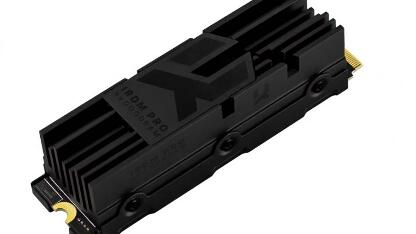
The drive ships with an integrated black aluminum heatsink featuring raised fins and thermal tubes, permanently attached with strong thermal adhesive. Patriot also bundles their PCIe Toolbox software for health monitoring, secure erase, and firmware updates. The M.2 2280 form factor is standard, though the heatsink adds height that may interfere with some motherboard VRM heatsinks or laptop slots.
As a first-generation PCIe 4.0 product, the VP4100 uses Phison's E16 controller, which was adapted from a PCIe 3.0 design rather than built from scratch for PCIe 4.0. The successor VP4300 moved to InnoGrit's clean-sheet IG5236 controller and achieved substantially higher sequential speeds. Against other E16-based drives like the Corsair MP600 and Sabrent Rocket 4.0, the VP4100 offers identical hardware under the hood, with Patriot's heatsink and toolbox as the differentiating factors.
Storage Comparisons:
Viper VP4100 Performance & Benchmarks
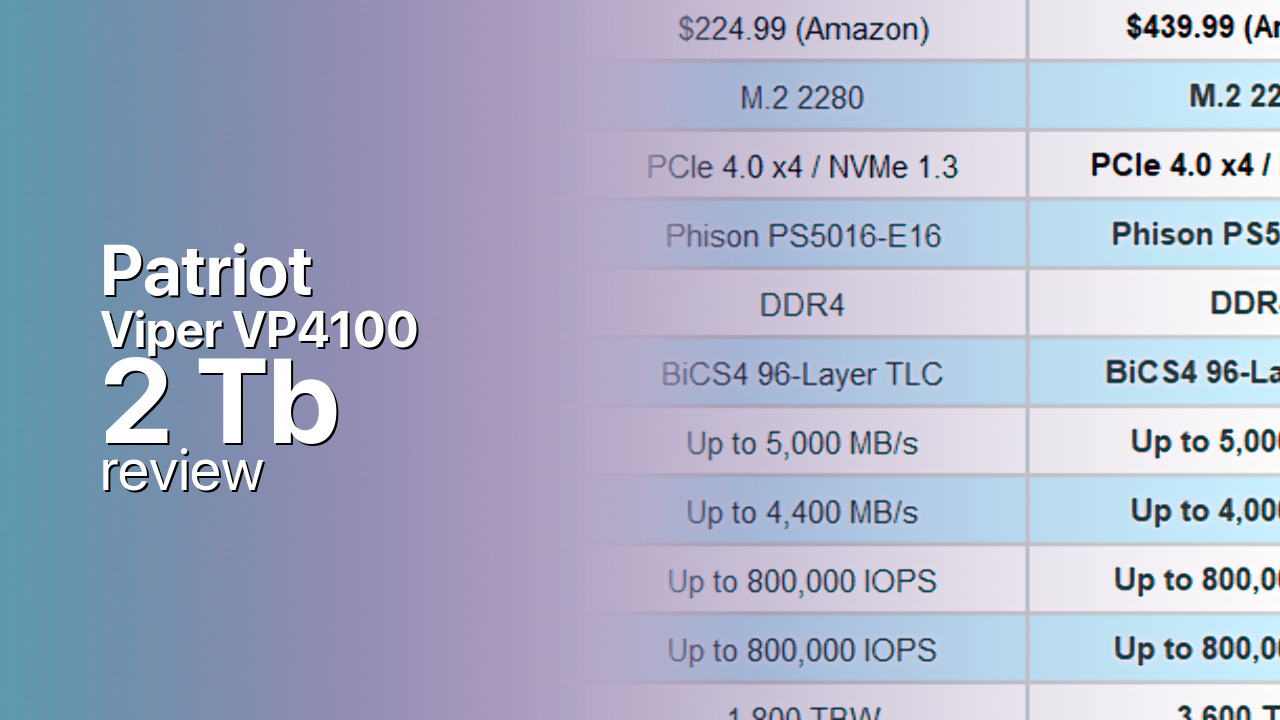
Patriot rates the 2 TB VP4100 at up to 5,000 MB/s sequential reads and up to 4,400 MB/s sequential writes, with up to 800,000 random read and write IOPS. The 2 TB model's 16 NAND dies give it better sustained write performance than the smaller capacities after the SLC cache exhausts.
Patriot Viper VP4100 2 TB vs M.2 4.0 x 4 peers
Switch between sequential throughput and random IOPS to see how this drive stacks up against other M.2 4.0 x 4 SSDs in our database. The highlighted bar is the drive on this page — click any other bar to open that drive.
- Patriot Viper PV593 1 TB: 14,500 MB/s read, 14,000 MB/s write
- Patriot Viper PV593 2 TB: 14,500 MB/s read, 14,000 MB/s write
- Patriot Viper PV593 4 TB: 14,500 MB/s read, 14,000 MB/s write
- Patriot Viper PV573 2 TB: 14,000 MB/s read, 12,000 MB/s write
- Patriot Viper VP4100 2 TB (this drive): 5,000 MB/s read, 4,400 MB/s write
In independent testing by Legit Reviews and KitGuru, the VP4100 delivered on its rated specs on AMD X570 platforms. The drive handles game loading, file transfers, and general desktop workloads well, offering a clear step up from PCIe 3.0 NVMe drives that cap out around 3,500 MB/s. A firmware update to version 13.0 brought incremental improvements over the original shipping firmware. On Intel platforms, sequential read numbers tend to come in slightly lower due to platform-level differences in PCIe 4.0 implementation. For content creators, the 2 TB capacity provides ample room for project files and scratch disks, and the 4,400 MB/s write speed handles large file transfers comfortably.
Patriot Viper VP4100 vs Competitors
See how the Viper VP4100 stacks up against other M.2 4.0 x 4 drives in our database:
Compare with rival drives:
Endurance, TBW & Warranty
The 2 TB VP4100 carries a 3,600 TBW endurance rating within a 5-year warranty, which is the highest endurance in the VP4100 family and competitive with other Phison E16-based 2 TB drives. At a typical consumer write workload of 20 to 50 GB per day, the 3,600 TBW rating translates to roughly 197 to 493 years before reaching the rated limit. Patriot confirmed the warranty is 5 years despite early product sheets listing 3 years. The E16 platform uses LDPC error correction and end-to-end data path protection for data integrity over the drive's lifespan.
Patriot Viper VP4100 2 TB Specifications
| Category | Value |
|---|---|
| Capacity [?] | 2 TB |
| Interface [?] | M.2 4.0 x 4 |
| Controller [?] | Phison PS5016-E16 |
| Memory type [?] | Toshiba 3D TLC |
| DRAM [?] | 1GB - 2GB DDR4 |
| Read speed (MB/s) [?] | 5000 |
| Write speed (MB/s) [?] | 4400 |
| Read IOPS [?] | 800000 |
| Write IOPS [?] | 800000 |
| Endurance (TBW) [?] | 3600 |
| MTBF (million hours) [?] | 1.7 |
| Warranty (years) [?] | 5 |
Verdict: Is the Viper VP4100 Worth It in 2026?
The Patriot Viper VP4100 2 TB is a first-generation PCIe 4.0 SSD that delivers solid 5,000 MB/s reads and 4,400 MB/s writes with a generous 3,600 TBW endurance rating and included heatsink. Builders who find the VP4100 2 TB at a significant discount and need high-capacity PCIe 4.0 storage for a desktop will get reliable performance. New builders should look at the VP4300 or other current-gen PCIe 4.0 drives instead, since the InnoGrit IG5236 and Phison E18 controllers deliver 7,000 MB/s-plus speeds at comparable or lower prices today. The VP4100 remains a capable workhorse but its performance ceiling is a generation behind.
+ Pros
- 5,000 MB/s sequential read speed
- 3,600 TBW endurance on the 2 TB model
- 2 GB DDR4 DRAM cache
- Integrated aluminum heatsink
- Patriot PCIe Toolbox software included
- 5-year warranty
- Cons
- First-gen PCIe 4.0, eclipsed by newer drives
- Phison E16 is an adapted PCIe 3.0 design
- Heatsink cannot be easily removed
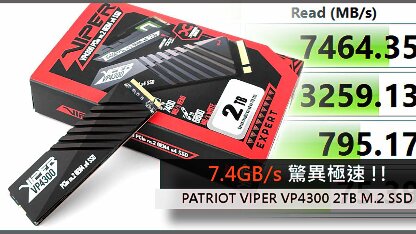
- Superseded by VP4300 with 7,400 MB/s reads
- No AES hardware encryption
Buy this or similar SSD Storage:



Video Review
5.6GB/s GEN 4 NVME! Patriot Viper VP4100 Review - TechteamGB