ADATA XPG Legend 960 2TB Review — PCIe 4.0 NVMe SSD (2026)
Quick answer
Buy the ADATA Legend 960 2 TB if you want flagship PCIe 4.0 performance without paying top-tier prices and you value the included heatsink for a PS5 upgrade or motherboard without built-in M.2 cooling.
Read: 7400 MB/s Write: 6800 MB/s Endurance: 1400 TBW Warranty: 5 years Interface: M.2 4.0 x 4
The ADATA XPG Legend 960 2 TB is a PCIe 4.0 flagship that hit the market alongside the Samsung 980 Pro, offering similar specifications at a more aggressive price point.
Controller & Memory
Inside the Legend 960 2 TB you'll find Silicon Motion's SM2264 controller paired with 176-layer 3D TLC NAND and a DRAM cache buffer. This combination delivers the sequential throughput that defines the PCIe 4.0 flagship tier: up to 7,400 MB/s reads and 6,800 MB/s writes. The drive uses NVMe 1.4 and supports SLC caching, LDPC error correction, and end-to-end data path protection.
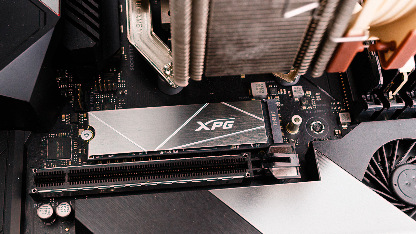
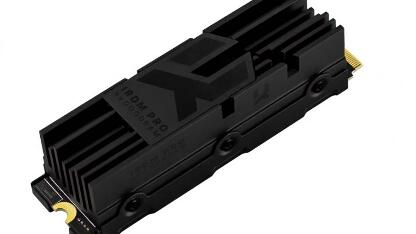
ADATA ships the Legend 960 with a thin graphene heatsink pre-installed, which provides basic thermal protection but may struggle under sustained heavy write workloads. The drive is also available in 500 GB and 1 TB capacities, though the 2 TB model offers the best balance of price, performance, and endurance. The SM2264 controller is known to run warm under load, so if your motherboard doesn't have an M.2 heat spreader, consider a third-party cooling solution.
This drive competes directly with the Samsung 980 Pro, WD Black SN850X, and Kingston KC3000. Independent reviews consistently place the Legend 960 in the same performance bracket as these flagships, with real-world gaming load times and file transfer speeds that are virtually indistinguishable from the more expensive alternatives. The included heatsink and lower launch price made it an attractive PS5 expansion option, as it easily meets Sony's 5,500 MB/s read requirement.
Storage Comparisons:
Legend 960 Performance & Benchmarks
ADATA rates the Legend 960 2 TB for up to 7,400 MB/s sequential reads and 6,800 MB/s sequential writes, with random 4K performance hitting up to 750,000 read IOPS and 630,000 write IOPS. In real-world testing, independent reviewers find the drive delivers on these claims during typical consumer workloads. Game load times on PCIe 4.0 are only marginally faster than premium PCIe 3.0 drives—think 5–10% improvements in title launches—but large file transfers, such as moving 50 GB game installs or video project assets, show more substantial gains over SATA and PCIe 3.0 NVMe.
ADATA Legend 960 2 TB vs M.2 4.0 x 4 peers
Switch between sequential throughput and random IOPS to see how this drive stacks up against other M.2 4.0 x 4 SSDs in our database. The highlighted bar is the drive on this page — click any other bar to open that drive.
- Patriot Viper PV593 1 TB: 14,500 MB/s read, 14,000 MB/s write
- Patriot Viper PV593 2 TB: 14,500 MB/s read, 14,000 MB/s write
- Patriot Viper PV593 4 TB: 14,500 MB/s read, 14,000 MB/s write
- Patriot Viper PV573 2 TB: 14,000 MB/s read, 12,000 MB/s write
- ADATA Legend 960 2 TB (this drive): 7,400 MB/s read, 6,800 MB/s write
The Legend 960 employs an SLC caching algorithm that provides burst performance well above its NAND's native write speed. Once the SLC cache is exhausted—typically after 80–100 GB of sustained writes on the 2 TB model—write speeds drop into the 1,800–2,200 MB/s range. For most users, this cache behavior is invisible during daily use, but content creators copying hundreds of gigabytes sequentially will notice the transition. Random write performance remains consistent throughout, which is what matters for OS responsiveness and application loading.
ADATA Legend 960 vs Competitors
See how the Legend 960 stacks up against other M.2 4.0 x 4 drives in our database:
Compare with rival drives:
Endurance, TBW & Warranty
ADATA backs the Legend 960 2 TB with a 5-year warranty and rates it for 1,400 TBW (terabytes written) endurance. That TBW figure translates to approximately 383 GB of writes per day over the warranty period—far beyond what typical desktop workloads generate. Even heavy users writing 100 GB daily would take over 38 years to exhaust the rated endurance. The drive is rated for 2 million hours MTBF, which is a population statistic rather than a guarantee for any single unit, but it indicates ADATA's confidence in the SM2264 controller and NAND quality. The warranty covers defects and failure under normal use, but ADATA's RMA process typically goes through the retailer, so keep your purchase receipt handy.
ADATA Legend 960 2 TB Specifications
| Category | Value |
|---|---|
| Capacity [?] | 2 TB |
| Interface [?] | M.2 4.0 x 4 |
| Controller [?] | Silicon Motion SM2264 |
| Memory type [?] | 176-layer 3D TLC NAND |
| DRAM [?] | DRAM SLC |
| Read speed (MB/s) [?] | 7400 |
| Write speed (MB/s) [?] | 6800 |
| Read IOPS [?] | 750000 |
| Write IOPS [?] | 630000 |
| Endurance (TBW) [?] | 1400 |
| MTBF (million hours) [?] | 2 |
| Warranty (years) [?] | 5 |
Verdict: Is the Legend 960 Worth It in 2026?
Buy the ADATA Legend 960 2 TB if you want flagship PCIe 4.0 performance without paying top-tier prices and you value the included heatsink for a PS5 upgrade or motherboard without built-in M.2 cooling. Skip it if you're coming from a high-end PCIe 3.0 drive and only use your PC for web browsing and office work—the jump won't feel transformative. The Samsung 980 Pro or WD Black SN850X are worth the extra $20–30 only if you prioritize brand reputation or firmware support over value. For most gamers and creators, the Legend 960 2 TB hits the sweet spot in the PCIe 4.0 market.
+ Pros
- 7,400 MB/s sequential reads compete with flagship PCIe 4.0 drives
- 1,400 TBW endurance on the 2 TB model is strong for TLC NAND
- DRAM cache ensures consistent random performance
- Included graphene heatsink works for PS5 and most motherboards
- 5-year warranty matches premium competitors
- Silicon Motion SM2264 controller has proven reliability
- Cons
- Controller runs warm under sustained writes; larger heatsink recommended
- SLC cache exhausts after ~80–100 GB, dropping write speeds
- Firmware updates less frequent than Samsung or WD alternatives
- 2 TB variant runs hotter than 1 TB under load
Buy this or similar SSD Storage:



Video Review
ADATA LEGEND 960 PCIe Gen4 x4 M.2 2280 SSD