Pioneer APS-SE20Q 1TB — Mid-Range PCIe 3.0 NVMe SSD (2026)
Quick answer
The Pioneer APS-SE20Q 1TB is a solid budget NVMe for mainstream users who want dedicated DRAM and consistent burst performance without paying TLC prices.
Read: 3400 MB/s Write: 3000 MB/s Endurance: 200 TBW Warranty: 3 years Interface: M.2 3.0 x 4
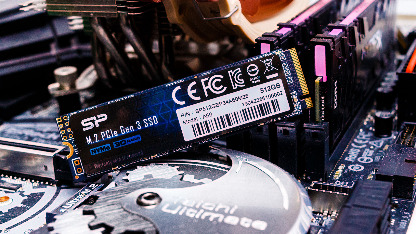
The Pioneer APS-SE20Q 1TB is the middle child of Pioneer's first QLC NVMe lineup, pairing a proven Phison E12S controller with Micron 96-layer QLC NAND and a 512 MB DRAM cache at a price point that undercuts most TLC alternatives.
Controller & Memory
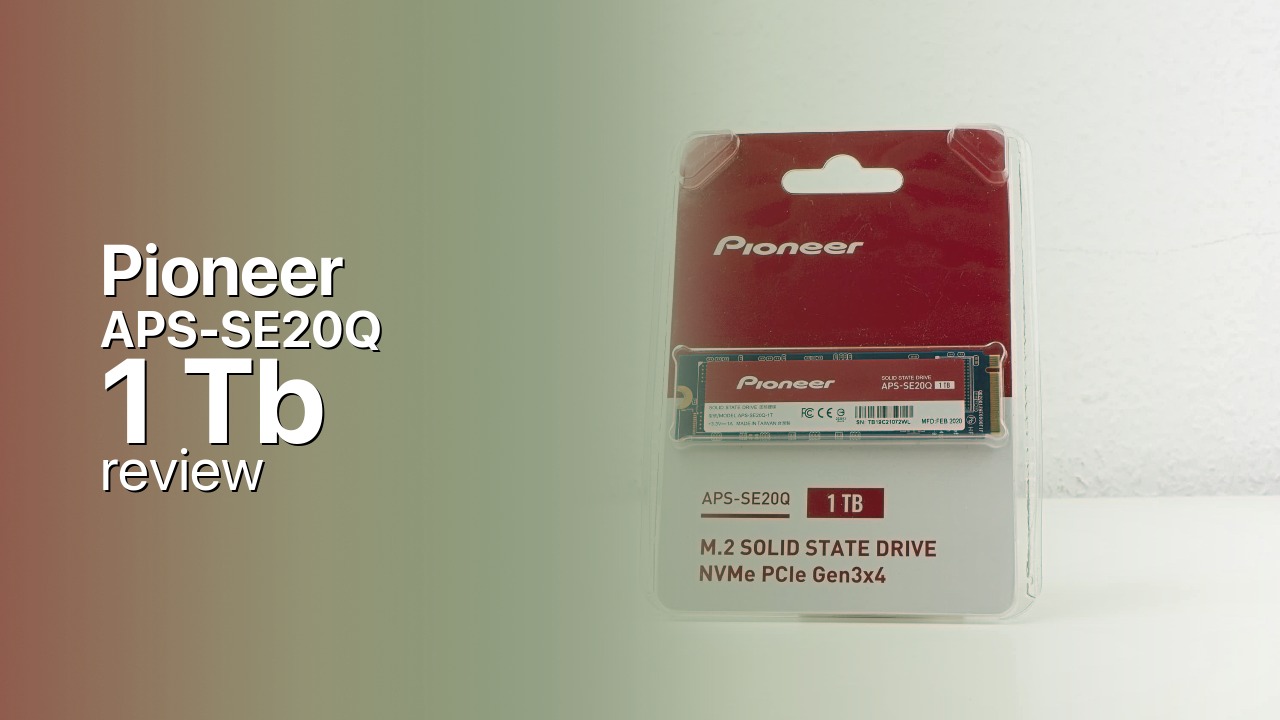
Pioneer's APS-SE20Q series marks the company's entry into the QLC NVMe market. Built around the Phison PS5012-E12S-32 controller — an 8-channel, dual-core design widely used across budget and mid-range SSDs — the drive combines 512 MB of DDR3 DRAM with Micron 3D QLC NAND built on 96 cell layers. The 1TB capacity hits the sweet spot in the lineup: enough spare area to keep the SLC cache effective under moderate workloads, without paying the premium of the 2TB model.
The single-sided 1.35 mm PCB is a practical advantage. It fits ultrabooks, compact desktops, and PlayStation 5 expansion slots from a physical-dimension standpoint, though the PCIe 3.0 interface falls short of Sony's 5,500 MB/s minimum recommendation for PS5 storage. The drive supports NVMe 1.3 over a PCIe 3.0 x4 link and includes both static and dynamic wear leveling, ECC error correction, and thermal throttling protection.
Pioneer offers the APS-SE20Q in 500GB, 1TB, and 2TB capacities. The 1TB model is the best-balanced option for most buyers — it provides more overprovisioning than the 500GB variant for better sustained-write behavior, while costing significantly less per gigabyte than the 2TB version. For users building a primary gaming or productivity drive, the 1TB hits the right capacity-to-endurance ratio.
Key competitors include the Intel 660p 1TB and Crucial P1 1TB, which share the same Phison E12 QLC platform but offer 400 TBW endurance and 5-year warranties. The WD Blue SN550 1TB is another rival, using TLC NAND with a DRAM-less HMB design that trades dedicated cache for lower cost.
Storage Comparisons:
APS-SE20Q Performance & Benchmarks
Pioneer rates the APS-SE20Q 1TB at up to 3,400 MB/s sequential reads and 3,000 MB/s sequential writes, with random reads up to 650,000 IOPS. Independent testing by Basic Tutorials on the 1TB variant confirmed sequential figures close to Pioneer's claims, and the drive posted a combined CrystalDiskMark score of 3,290 — slotting in between the WD Blue SN550 and Samsung 980 1TB.
Pioneer APS-SE20Q 1 TB vs M.2 3.0 x 4 peers
Switch between sequential throughput and random IOPS to see how this drive stacks up against other M.2 3.0 x 4 SSDs in our database. The highlighted bar is the drive on this page — click any other bar to open that drive.
- ADATA SX 8800 Pro 512 GB: 3,500 MB/s read, 2,700 MB/s write
- ADATA SX 8800 Pro 1 TB: 3,500 MB/s read, 2,700 MB/s write
- ADATA XPG Spectrix S40G RGB 256 GB: 3,500 MB/s read, 3,000 MB/s write
- ADATA XPG Spectrix S40G RGB 512 GB: 3,500 MB/s read, 3,000 MB/s write
- Pioneer APS-SE20Q 1 TB (this drive): 3,400 MB/s read, 3,000 MB/s write
Random 4K performance tells a more nuanced story. Basic Tutorials found that 4K random reads were comparable to the WD Blue SN550, which is a step below what the E12S platform is capable of on TLC drives. However, 4K-64Thrd (queue-depth 64 thread) write performance was surprisingly strong — the Pioneer nearly matched its sequential-write figure and traded blows with the Samsung 970 EVO, a TLC drive that costs significantly more. This suggests Pioneer's SLC cache implementation is well-tuned for multi-threaded write workloads.
The SLC cache absorbs burst writes effectively, keeping performance high for typical consumer tasks like game installations, OS updates, and photo imports. Once the cache is exhausted during sustained large-file transfers, write speeds drop to native QLC rates. For a 1TB drive with moderate overprovisioning, the cache is large enough that most users will never hit the floor during normal use. Under prolonged heavy writes without a heatsink, thermal throttling kicks in at around 80°C.
Pioneer APS-SE20Q vs Competitors
See how the APS-SE20Q stacks up against other M.2 3.0 x 4 drives in our database:
Compare with rival drives:
Endurance, TBW & Warranty
Pioneer provides a 3-year limited warranty on the APS-SE20Q 1TB, capped at 200 TBW of total bytes written. That endurance rating is half what competitors like the Intel 660p and Crucial P1 offer at the same capacity. In practical terms, 200 TBW means a user writing 30 GB per day would take about 18 years to reach the limit — far longer than the 3-year warranty window. For typical consumer and light productivity workloads, the warranty period is the binding constraint, not the TBW figure. Users with heavier write profiles should factor the lower endurance into their purchase decision.
Pioneer APS-SE20Q 1 TB Specifications
| Category | Value |
|---|---|
| Capacity [?] | 1 TB |
| Interface [?] | M.2 3.0 x 4 |
| Controller [?] | Phison PS5012-E12S-32 |
| Memory type [?] | Micron 3D QLC |
| DRAM [?] | 512 MB DDR3 |
| Read speed (MB/s) [?] | 3400 |
| Write speed (MB/s) [?] | 3000 |
| Read IOPS [?] | 650000 |
| Write IOPS [?] | 350000 |
| Endurance (TBW) [?] | 200 |
| MTBF (million hours) [?] | 1500000 |
| Warranty (years) [?] | 3 |
Verdict: Is the APS-SE20Q Worth It in 2026?
The Pioneer APS-SE20Q 1TB is a solid budget NVMe for mainstream users who want dedicated DRAM and consistent burst performance without paying TLC prices. It is best suited as a primary game library or productivity drive for budget-minded builders. If endurance and warranty length matter more than upfront savings, the Intel 660p 1TB offers double the TBW and a longer warranty at a similar price. For users who find the APS-SE20Q at a meaningful discount, it is a genuinely good value.
+ Pros
- 3,400 MB/s sequential reads
- Dedicated 512 MB DDR3 DRAM cache
- Strong 4K-64Thrd write performance
- Single-sided PCB fits ultrabooks and compact builds
- Well-tuned SLC cache for burst writes
- Cons
- 200 TBW — half the endurance of Intel 660p 1TB
- 3-year warranty (competitors offer 5)
- QLC NAND limits sustained write throughput
- 4K random reads trail TLC competitors
- Thermal throttling under sustained load without heatsink
Buy this or similar SSD Storage:
Video Review
Pioneer APS-SE20G-2T (2TB NVME SSD) | ThermalRight M.2 NVME Heatsink