Silicon Power P34A80 256GB NVMe SSD Review (2026)
Quick answer
The Silicon Power P34A80 256GB is a competent PCIe 3.0 boot drive built on proven Phison E12 and Toshiba TLC hardware.
Read: 3200 MB/s Write: 3000 MB/s Endurance: 125 TBW Warranty: 5 years Interface: M.2 3.0 x 4
The Silicon Power P34A80 256GB is an entry-level PCIe 3.0 NVMe SSD built on the well-regarded Phison E12 controller and Toshiba 64-layer 3D TLC NAND — a solid hardware foundation for a boot drive.
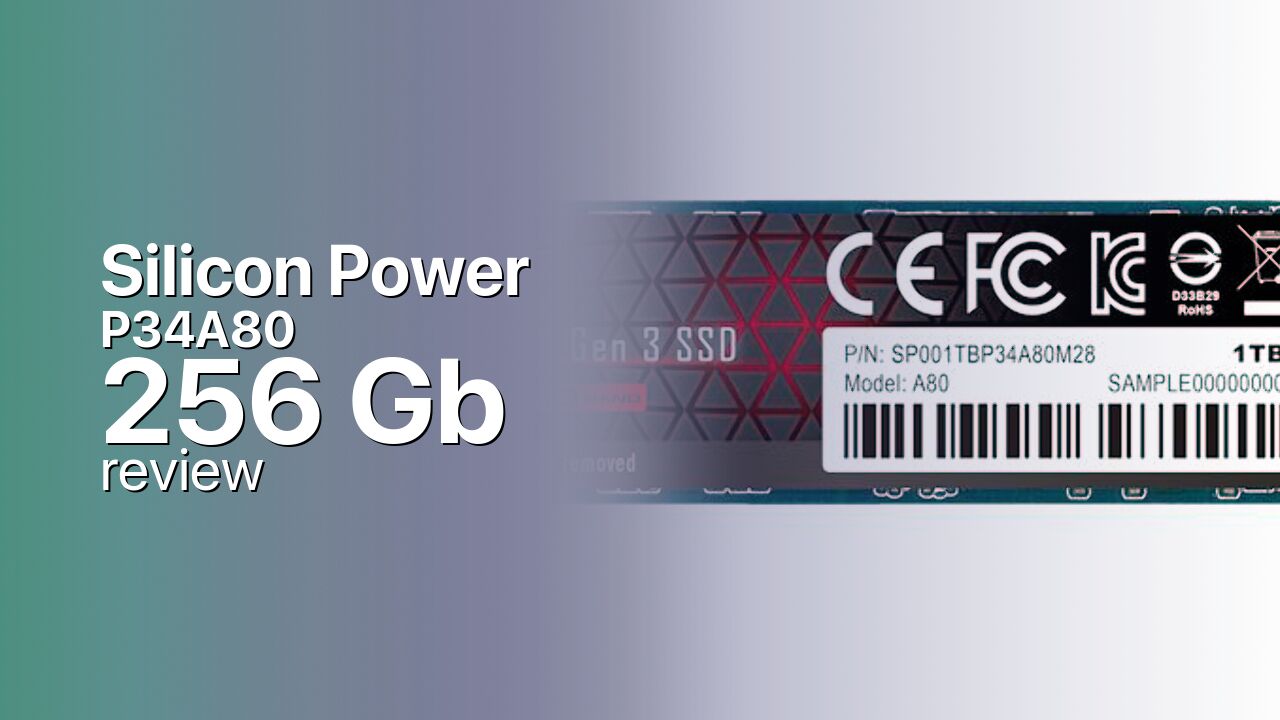
Controller & Memory
The P34A80 uses the Phison PS5012-E12 eight-channel controller paired with Toshiba 64-layer BiCS3 3D TLC NAND, a combination that powered many mid-range NVMe drives in the 2018–2020 era. Silicon Power specifies 3,200 MB/s sequential reads and 3,000 MB/s sequential writes across all capacities, though these peak numbers are primarily achievable on the 1TB model — the 256GB variant has fewer NAND die and may not fully saturate the controller's write pipeline.
The 256GB model is the smallest capacity in the P34A80 range, which also includes 512GB and 1TB variants. Endurance scales with capacity: the 256GB model is rated at 125 TBW versus 417 TBW for the 512GB and 708 TBW for the 1TB. The drive is double-sided even at 256GB, with some passive components on the back of the PCB alongside DRAM and NAND. All capacities carry a five-year warranty.
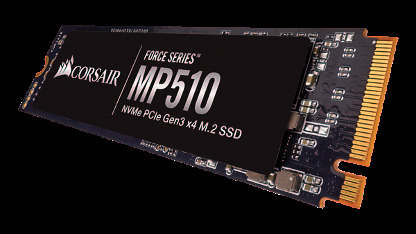
At 256GB, this drive targets budget builders who need a fast OS boot drive rather than bulk storage. It holds the operating system and a handful of frequently-used applications. Competing 256GB NVMe drives from the same era include the Corsair Force MP510 240GB (same Phison E12 platform) and the Kingston A1000 240GB (Phison E8, slower).
Storage Comparisons:
P34A80 Performance & Benchmarks
The P34A80 256GB is rated for 3,200 MB/s sequential reads and 3,000 MB/s sequential writes, though the 256GB model may not consistently reach the write ceiling due to its limited NAND die count for parallel writes. The Phison E12 controller's strength is sustained write performance: unlike QLC drives that collapse after their SLC cache fills, the P34A80's TLC NAND maintains consistent write speeds even under sustained load.
Silicon Power P34A80 256 GB vs M.2 3.0 x 4 peers
Switch between sequential throughput and random IOPS to see how this drive stacks up against other M.2 3.0 x 4 SSDs in our database. The highlighted bar is the drive on this page — click any other bar to open that drive.
- ADATA SX 8800 Pro 512 GB: 3,500 MB/s read, 2,700 MB/s write
- ADATA SX 8800 Pro 1 TB: 3,500 MB/s read, 2,700 MB/s write
- ADATA XPG Spectrix S40G RGB 256 GB: 3,500 MB/s read, 3,000 MB/s write
- ADATA XPG Spectrix S40G RGB 512 GB: 3,500 MB/s read, 3,000 MB/s write
- Silicon Power P34A80 256 GB (this drive): 3,200 MB/s read, 3,000 MB/s write
Random read and write performance is rated at 390K and 450K IOPS respectively. In typical desktop workloads — OS boot, application launches, web browsing — the 256GB model feels snappy and responsive. The drive's weakness is capacity rather than speed: 256GB fills quickly with a modern OS and a few applications, leaving little room for game libraries or media files. For a boot drive, the performance is more than adequate. For anything beyond that, the 512GB or 1TB model is the better investment.
Silicon Power P34A80 vs Competitors
See how the P34A80 stacks up against other M.2 3.0 x 4 drives in our database:
Compare with rival drives:
Endurance, TBW & Warranty
Silicon Power rates the P34A80 256GB at 125 TBW with a five-year limited warranty. At a typical desktop write workload of 10–20 GB per day, the endurance budget covers 17 to 34 years — well beyond the warranty period for a boot drive that handles mostly reads. The five-year warranty is standard for this segment and matches competitors like Corsair and Kingston. Warranty service is handled through the retailer or Silicon Power's direct RMA process.
Silicon Power P34A80 256 GB Specifications
| Category | Value |
|---|---|
| Capacity [?] | 256 GB |
| Interface [?] | M.2 3.0 x 4 |
| Controller [?] | Phison PSW5012-E12-27 |
| Memory type [?] | Toshiba 64L 3D TLC |
| DRAM [?] | SK Hynix 2x256MB DDR4 |
| Read speed (MB/s) [?] | 3200 |
| Write speed (MB/s) [?] | 3000 |
| Read IOPS [?] | 390000 |
| Write IOPS [?] | 450000 |
| Endurance (TBW) [?] | 125 |
| MTBF (million hours) [?] | 2000000 |
| Warranty (years) [?] | 5 |
Verdict: Is the P34A80 Worth It in 2026?
The Silicon Power P34A80 256GB is a competent PCIe 3.0 boot drive built on proven Phison E12 and Toshiba TLC hardware. Its strength is consistent TLC write performance — no QLC-style collapse after cache exhaustion. The limitation is capacity: 256GB is tight for anything beyond the OS and a few applications. Budget builders who just need a fast boot drive will find the P34A80 256GB delivers where it counts. Anyone who can stretch the budget slightly should opt for the 512GB or 1TB model, which offer significantly more usable space and better endurance at a modest price increase. The Kingston A2000 250GB is a TLC alternative worth comparing on price.
+ Pros
- Phison E12 controller with Toshiba 64L 3D TLC
- 3,200 MB/s sequential reads on PCIe 3.0
- Consistent sustained writes — no QLC-style collapse
- 125 TBW endurance with 5-year warranty
- Proven hardware platform with mature firmware
- Cons
- 256GB fills quickly — tight for anything beyond a boot drive
- Fewer NAND die may not fully saturate write speeds
- Double-sided PCB despite small capacity
- Outpaced by newer PCIe 4.0 and 5.0 drives
- Minimal bundled software or management tools
Buy this or similar SSD Storage:



Video Review
Silicon Power A80 NVMe M.2 SSD P34A80 Gen 3x4 Review- The Best Value NVMe