Team Group MP34 512GB NVMe SSD Review — Budget DRAM Pick (2026)
Quick answer
The Team Group MP34 512GB is a straightforward value play: proven E12 performance with DRAM, high endurance, and a price that undercuts better-known brands.
Read: 3000 MB/s Write: 1700 MB/s Endurance: 800 TBW Warranty: 3 years Interface: M.2 3.0 x 4
The Team Group MP34 512GB is the sweet spot in Team Group's budget NVMe lineup — DRAM-cached Phison E12 performance with 3,000 MB/s reads and 800 TBW endurance at a price that undercuts most competitors.
Controller & Memory
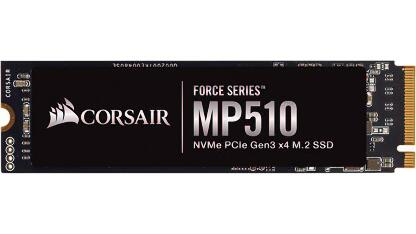
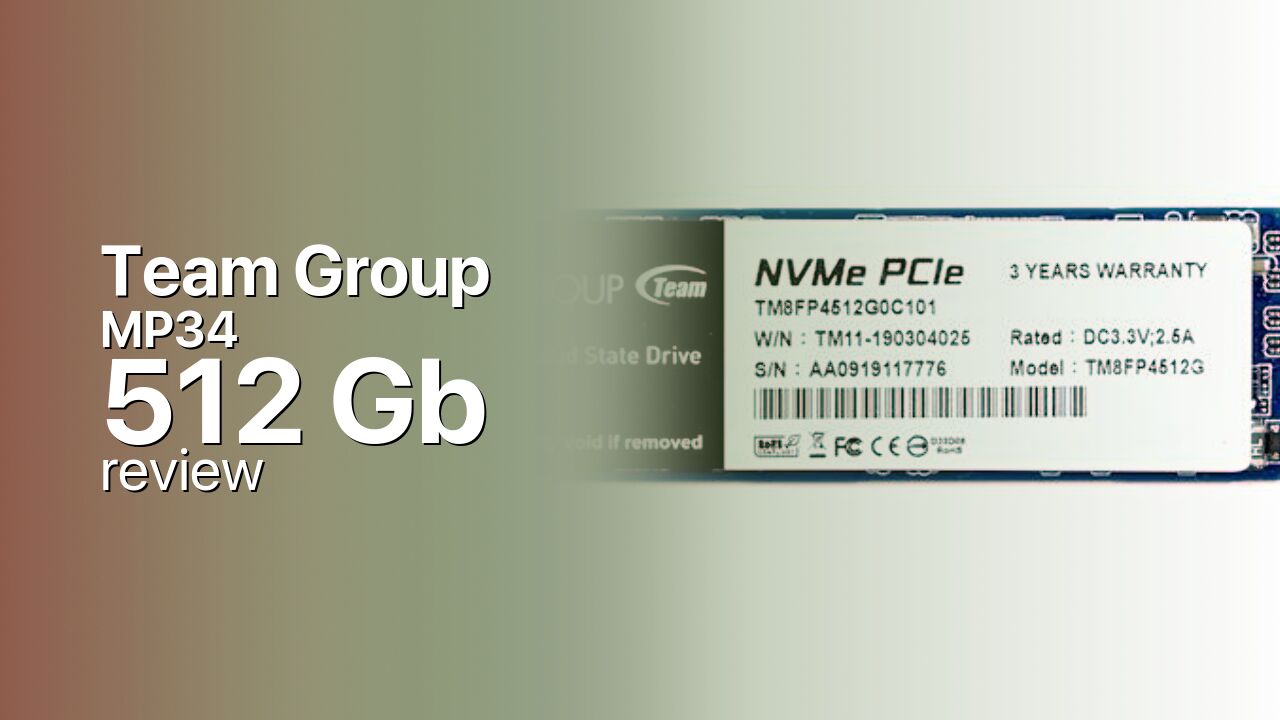
The MP34 512GB uses the Phison PS5012-E12-27 controller with Toshiba BiCS3 64-layer 3D TLC NAND and a single Nanya DDR3L DRAM package for the flash translation layer. The E12 platform is one of the most widely used PCIe 3.0 NVMe designs, appearing in drives from Corsair (MP510), ADATA (SX8200), Kingston (KC2000), and Silicon Power (P34A80). Team Group differentiates primarily on price.
At 512GB, the MP34 is rated at 3,000 MB/s sequential read and 1,700 MB/s sequential write with 190,000 random read and 160,000 random write IOPS. Tom's Hardware noted that Team Group hugely under-rates the drive — their 512GB sample delivered up to 3,500 MB/s read and 2,100 MB/s write in testing, exceeding the official specs. The 512GB is single-sided with a blue PCB.
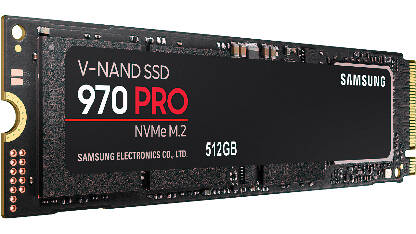
The 800 TBW endurance at 512GB is notably higher than competitors like the Samsung 970 EVO Plus (300 TBW at 500GB) and WD Black SN750 (300 TBW at 500GB). This is one of the MP34's genuine differentiators. Competitors in the same budget tier include the Crucial P1 (QLC, slower), WD Blue SN550 (DRAM-less), and Kingston A2000 (similar E12 platform).
Storage Comparisons:
MP34 Performance & Benchmarks
Team Group rates the 512GB MP34 at 3,000 MB/s read and 1,700 MB/s write, but Tom's Hardware found the drive significantly outperforms these ratings — 3,500 MB/s read and 2,100 MB/s write in CrystalDiskMark. This is consistent with the E12 platform's proven capability. Random performance was equally impressive: over 300,000 read and 485,000 write IOPS at QD64, far exceeding the rated 190K/160K.
Team Group MP34 512 GB vs M.2 3.0 x 4 peers
Switch between sequential throughput and random IOPS to see how this drive stacks up against other M.2 3.0 x 4 SSDs in our database. The highlighted bar is the drive on this page — click any other bar to open that drive.
- ADATA SX 8800 Pro 512 GB: 3,500 MB/s read, 2,700 MB/s write
- ADATA SX 8800 Pro 1 TB: 3,500 MB/s read, 2,700 MB/s write
- ADATA XPG Spectrix S40G RGB 256 GB: 3,500 MB/s read, 3,000 MB/s write
- ADATA XPG Spectrix S40G RGB 512 GB: 3,500 MB/s read, 3,000 MB/s write
- Team Group MP34 512 GB (this drive): 3,000 MB/s read, 1,700 MB/s write
In real-world use, the MP34 512GB delivers a responsive desktop experience comparable to more expensive E12 drives. The SLC cache is generous, and post-cache writes hold steady. The DDR3L DRAM (versus DDR4 on pricier E12 drives) did not noticeably impact performance in Tom's Hardware testing. The drive trades blows with the MyDigitalSSD BPX Pro, which costs more and uses DDR4. Game load times, OS boot, and application launches are competitive with drives at twice the price.
Team Group MP34 vs Competitors
See how the MP34 stacks up against other M.2 3.0 x 4 drives in our database:
Compare with rival drives:
Endurance, TBW & Warranty
The 512GB model is rated for 800 TBW endurance — almost triple the 300 TBW on the Samsung 970 EVO Plus at a similar capacity. The warranty is 3 years, shorter than the 5-year terms on premium drives. Some Amazon listings indicate Team Group later extended the warranty to 5 years, but the original specification lists 3 years. At 40 GB of writes per day, the 800 TBW rating translates to roughly 55 years. The MTBF is 1.8 million hours. The high endurance is the MP34's standout spec — few drives at this price offer comparable TBW.
Team Group MP34 512 GB Specifications
| Category | Value |
|---|---|
| Capacity [?] | 512 GB |
| Interface [?] | M.2 3.0 x 4 |
| Controller [?] | Phison PS5012-E12-27 |
| Memory type [?] | Toshiba BiCS3 64L TLC |
| DRAM [?] | SK Hynix 2GB DDR4-2400 |
| Read speed (MB/s) [?] | 3000 |
| Write speed (MB/s) [?] | 1700 |
| Read IOPS [?] | 190000 |
| Write IOPS [?] | 160000 |
| Endurance (TBW) [?] | 800 |
| MTBF (million hours) [?] | 1.8 |
| Warranty (years) [?] | 3 |
Verdict: Is the MP34 Worth It in 2026?
The Team Group MP34 512GB is a straightforward value play: proven E12 performance with DRAM, high endurance, and a price that undercuts better-known brands. The 3-year warranty is the main compromise versus premium drives, though the 800 TBW endurance is actually higher than many 5-year competitors. For budget-conscious builders who want DRAM-cached NVMe without paying the Samsung or WD premium, the MP34 delivers. The blue PCB is unappealing for windowed cases, and the lack of bundled software or accessories is expected at this price. The Crucial P1 is cheaper but uses QLC flash; the WD Blue SN550 is similar in price but DRAM-less.
+ Pros
- 3,000 MB/s read (3,500 MB/s actual per reviews)
- 800 TBW endurance exceeds pricier competitors
- DRAM cache at budget pricing
- Proven Phison E12 platform
- Single-sided PCB fits laptops
- Cons
- 3-year warranty (competitors offer 5)
- Blue PCB looks cheap in windowed cases
- No bundled software or accessories
- DDR3L DRAM instead of DDR4
Buy this or similar SSD Storage:



Video Review
Team Group MP32 M.2 256GB NVMe SSD - Fast and Cheap SSD?