Team Group T-Force Cardea 480GB Review — An Early MLC PCIe 3.0 NVMe SSD (2026)
Quick answer
The Team Group T-Force Cardea 480 GB is a curiosity for 2026 — a drive whose MLC NAND gives it sustained write consistency that no modern consumer SSD can match, housed in a platform whose PCIe 3.0 and NVMe 1.2 limitations make it thoroughly obsolete for any performance-sensitive use.
Read: 2650 MB/s Write: 1450 MB/s Endurance: 670 TBW Warranty: 3 years Interface: PCIe 3.0 x 4
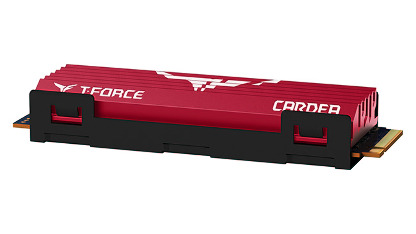
The Team Group T-Force Cardea 480 GB is a time capsule from 2017 — one of the first consumer NVMe SSDs to ship with an included heatsink and the increasingly rare pairing of a Phison E7 controller with genuine 2D MLC NAND.
Controller & Memory
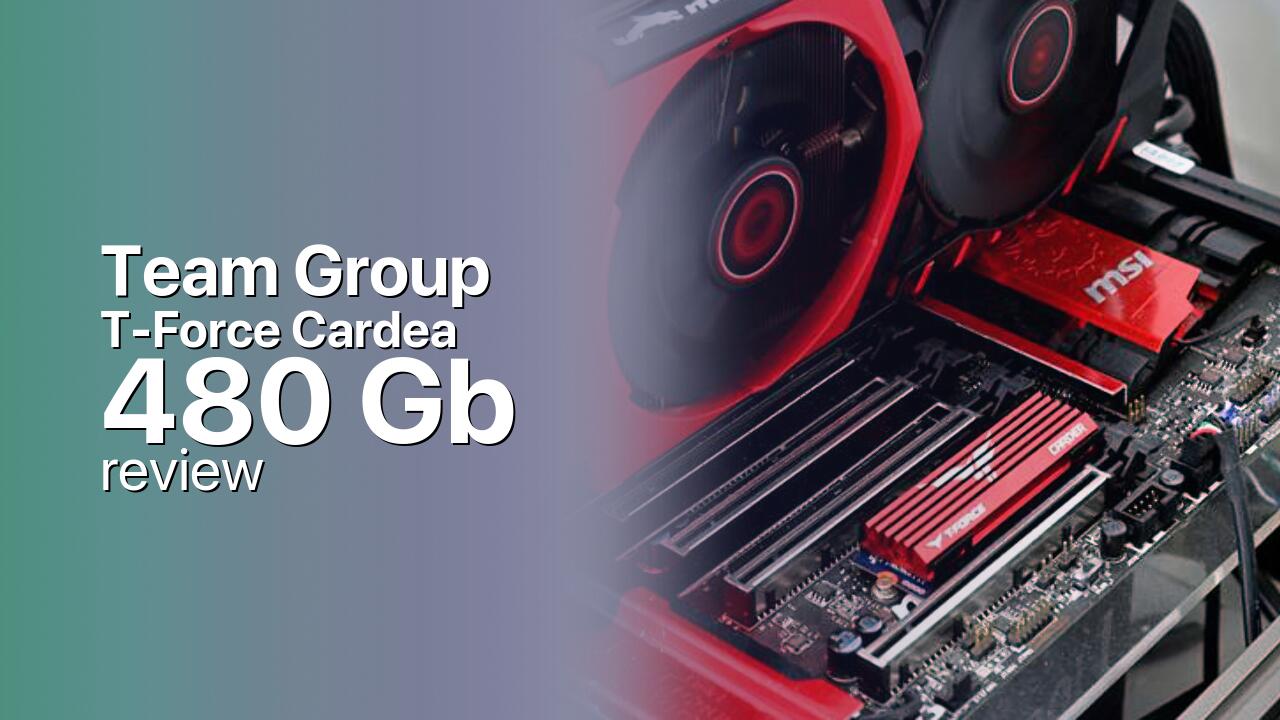
The Team Group T-Force Cardea uses the Phison PS5007-E7 controller — a quad-core, eight-channel PCIe 3.0 design that was the predecessor to the much more common Phison E12. Paired with Toshiba 15nm 2D MLC NAND — planar NAND, not the 3D TLC that would dominate within a year of this drive's launch — and Nanya DDR3 DRAM (likely 512 MB for the 480 GB variant), the Cardea was one of the first consumer NVMe SSDs to include a factory passive heatsink. The E7 architecture is older and less efficient than the E12: it runs on an older process node, has higher power consumption, and is limited to NVMe 1.2 rather than the NVMe 1.3 that the E12 supports. However, the MLC NAND gives the Cardea a distinguishing characteristic that modern TLC and QLC drives lack — consistent sustained write performance without the cache-exhaustion cliff that defines modern SSDs.
The Cardea launched in 2017 at a time when NVMe was still a premium feature, not a commodity. The 480 GB variant was the flagship capacity (a 240 GB model also existed), and it was positioned as a gaming drive — the "T-Force" branding and angular red heatsink were aimed squarely at the PC gaming market. At the time, it competed against the Samsung 960 EVO (faster, more expensive, 3D TLC) and the Intel 600p (slower, cheaper). The Cardea's MLC NAND gave it an endurance advantage over early 3D TLC competitors, which were still working through the teething issues of the new flash generation.
The drive is effectively discontinued and was replaced by the Cardea II (Phison E12, 3D TLC) and later models. Surviving 480 GB units on the used market represent one of the last opportunities to own an MLC-based consumer NVMe SSD — a niche that appeals to enthusiasts who value write consistency over peak throughput. The included heatsink was a forward-thinking touch that has aged well, even if the rest of the platform has not.
Storage Comparisons:
T-Force Cardea Performance & Benchmarks
The Team Group T-Force Cardea 480 GB is rated for 2,650 MB/s sequential reads and 1,450 MB/s sequential writes, with random performance of up to 180,000 IOPS reads and 150,000 IOPS writes. These numbers were competitive for the 2017 PCIe 3.0 landscape but sit well below the 3,400 to 3,500 MB/s ceiling that the Phison E12 and Samsung Phoenix controllers would reach a year later. The E7 controller is the bottleneck: its older architecture and 28nm process node cap peak throughput at roughly 2.6 GB/s, regardless of how fast the NAND underneath can run.
Team Group T-Force Cardea 480 GB vs PCIe 3.0 x 4 peers
Switch between sequential throughput and random IOPS to see how this drive stacks up against other PCIe 3.0 x 4 SSDs in our database. The highlighted bar is the drive on this page — click any other bar to open that drive.
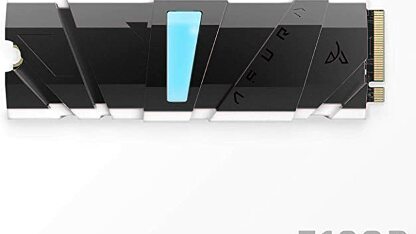
- Asura Genesis Xtreme 256 GB: 3,400 MB/s read, 3,000 MB/s write
- Asura Genesis Xtreme 512 GB: 3,400 MB/s read, 3,000 MB/s write
- Asura Genesis Xtreme 1 TB: 3,400 MB/s read, 3,000 MB/s write
- Asura Genesis Xtreme 2 TB: 3,400 MB/s read, 3,000 MB/s write
- Team Group T-Force Cardea 480 GB (this drive): 2,650 MB/s read, 1,450 MB/s write
Where the Cardea differentiates itself from modern drives is in write consistency. The MLC NAND does not rely on a pSLC cache — there is no burst-speed cliff because MLC writes at full native speed all the time. Once a modern TLC drive exhausts its pSLC cache, writes drop to 800 to 1,500 MB/s. The Cardea delivers its rated 1,450 MB/s write speed from the first byte to the last, with no cache to exhaust and no post-cache performance drop. This makes it surprisingly capable for sustained write workloads that would cripple a modern DRAM-less QLC drive, despite the Cardea's lower headline numbers.
Independent reviewers at AnandTech and Tom's Hardware measured throughput consistent with the rated figures, with the Cardea typically placing in the middle of the 2017 NVMe pack. The passive heatsink kept the E7 controller within safe operating temperatures under sustained load, and the drive did not exhibit thermal throttling in standard desktop scenarios. For gaming, the Cardea loads titles at speeds indistinguishable from other PCIe 3.0 NVMe SSDs — the DRAM cache and MLC NAND ensure consistent read latency across the entire capacity range.
Team Group T-Force Cardea vs Competitors
See how the T-Force Cardea stacks up against other PCIe 3.0 x 4 drives in our database:
Compare with rival drives:
Endurance, TBW & Warranty
Team Group backs the T-Force Cardea 480 GB with a 3-year limited warranty and an endurance rating of 670 TBW. The 3-year warranty is shorter than the 5-year coverage that became standard on later NVMe SSDs, and Team Group's warranty infrastructure is less globally established than tier-one vendors. At 670 TBW, the 480 GB Cardea can absorb roughly 610 GB of writes per day for the warranty period — an aggressive endurance rating made possible by the MLC NAND's inherently higher write tolerance compared to TLC. At a typical 30 GB/day consumer pace, endurance extends beyond 60 years. The 240 GB variant carries 335 TBW. The MTBF is rated at 2 million hours. Team Group provides no dedicated SSD management software, so firmware updates and health monitoring require third-party tools.
Team Group T-Force Cardea 480 GB Specifications
| Category | Value |
|---|---|
| Capacity [?] | 480 GB |
| Interface [?] | PCIe 3.0 x 4 |
| Controller [?] | Phison PS5007-E7 |
| Memory type [?] | Toshiba MLC |
| DRAM [?] | Nanya DDR3 (512MB) |
| Read speed (MB/s) [?] | 2650 |
| Write speed (MB/s) [?] | 1450 |
| Read IOPS [?] | 180000 |
| Write IOPS [?] | 150000 |
| Endurance (TBW) [?] | 670 |
| MTBF (million hours) [?] | 2 |
| Warranty (years) [?] | 3 |
Verdict: Is the T-Force Cardea Worth It in 2026?
The Team Group T-Force Cardea 480 GB is a curiosity for 2026 — a drive whose MLC NAND gives it sustained write consistency that no modern consumer SSD can match, housed in a platform whose PCIe 3.0 and NVMe 1.2 limitations make it thoroughly obsolete for any performance-sensitive use. Buy one if you specifically want an MLC-based NVMe SSD for a retro build, a period-correct 2017 gaming PC, or as a reliable scratch disk where write consistency matters more than peak throughput. For anything else, a modern PCIe 3.0 TLC drive like the Samsung 970 EVO Plus or even a budget PCIe 4.0 drive will deliver better overall performance, longer warranty coverage, and easier availability.
+ Pros
- Genuine 2D MLC NAND — no pSLC cache cliff, consistent sustained writes
- 670 TBW endurance — high for a 480 GB drive thanks to MLC
- Factory passive heatsink included — innovative for 2017
- Competitive pricing at launch for an early NVMe SSD
- Cons
- Phison E7 limited to PCIe 3.0 and NVMe 1.2 — older protocol stack
- Peak throughput capped at 2,650/1,450 MB/s — well below PCIe 3.0 ceiling
- Only a 3-year warranty — shorter than modern 5-year standard
- No SSD management software or migration tools
- Discontinued — limited to used market
- 480 GB is a small capacity by modern standards
Buy this or similar SSD Storage:
Video Review
Best Bang for Buck PCIe 3.0 NVMe SSD? ⏩ T-Force Cardea z340 SSD Review