ADATA XPG Spectrix S20G RGB 500GB SSD — In-Depth Review & Specs (2026)
Quick answer
The ADATA XPG Spectrix S20G RGB 500GB is a style-first SSD that makes the most sense in a budget build where the PC's internal aesthetics matter more than peak storage performance.
Read: 2500 MB/s Write: 1800 MB/s Endurance: 300 TBW Warranty: 5 years Interface: M.2 3.0 x 4
The ADATA XPG Spectrix S20G RGB is a budget-oriented PCIe 3.0 NVMe SSD that prioritizes visual flair over raw performance. Built around the DRAM-less Realtek RTS5762DL controller and SpecTek 3D QLC NAND, it delivers up to 2,500 MB/s sequential reads and 1,800 MB/s writes — modest numbers by modern standards — but compensates with an eye-catching addressable RGB aluminum heatsink that syncs with all major motherboard lighting ecosystems. If your build priorities lean more toward aesthetics than storage benchmarks, the S20G fills a specific niche at an approachable price.
Controller & Memory
Under the RGB heatsink, the Spectrix S20G is a fairly standard entry-level NVMe SSD from the 2019–2020 era. The controller is a Realtek RTS5762DL — a 4-channel, DRAM-less design that relies on the NVMe Host Memory Buffer (HMB) protocol to borrow a small slice of system RAM (typically 32–64 MB) for its mapping table. The NAND is SpecTek 3D QLC (quad-level cell), sourced from Micron's subsidiary that handles lower-binned or remarketed flash. QLC stores 4 bits per cell versus TLC's 3, which increases density and lowers cost at the expense of endurance and sustained write performance.
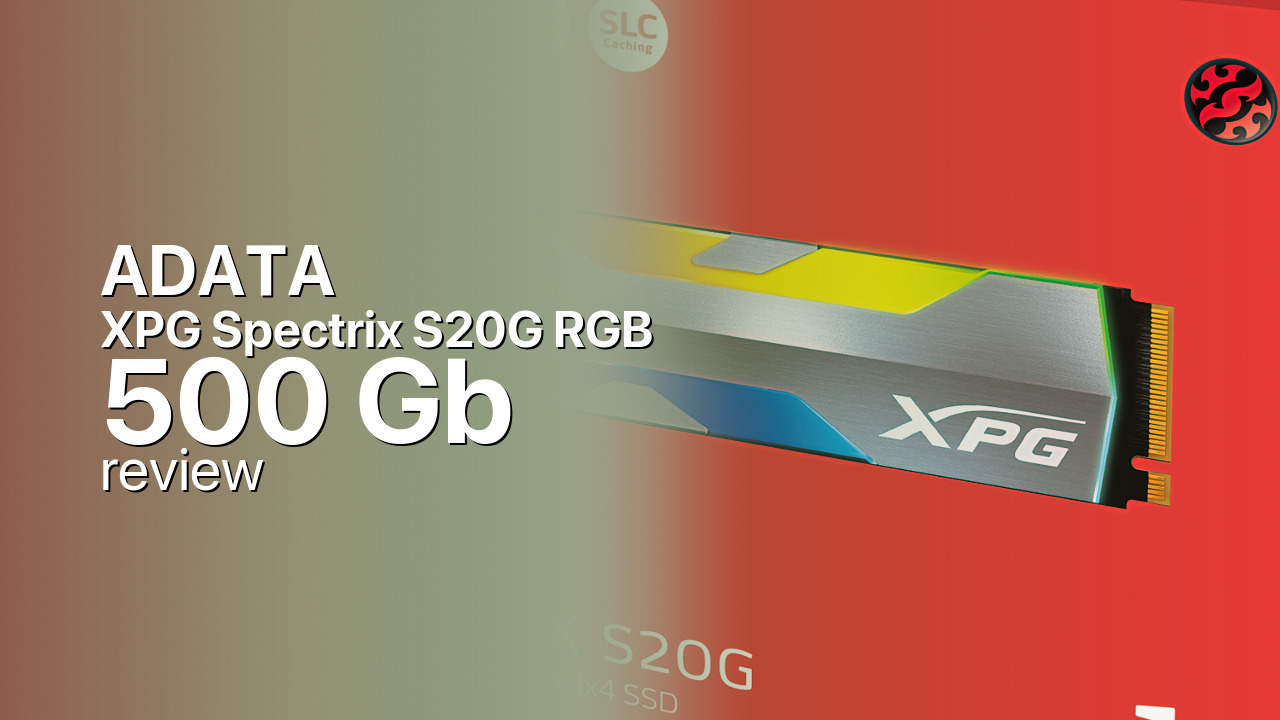
The S20G is one of the few SSDs on the market with integrated RGB lighting. The aluminum heat spreader features a frosted light diffuser strip along the top edge, populated with addressable RGB LEDs that can be controlled through ASUS Aura Sync, MSI Mystic Light, Gigabyte RGB Fusion, or ASRock Polychrome — essentially any major motherboard RGB ecosystem. The lighting is genuinely well-executed: colors are vibrant, diffusion is even, and the effect is more premium than you would expect at this price point. The heatsink itself is functional as well as decorative, keeping the controller and NAND temperatures in check despite the modest thermal output of the Realtek chip.
With only 500 GB of capacity, the S20G is best suited as a boot drive paired with a larger secondary SSD or HDD. The 300 TBW endurance rating works out to roughly 164 GB of writes per day over the 5-year warranty — adequate for an OS and applications, but tight for write-heavy creative work.
Storage Comparisons:
XPG Spectrix S20G RGB Performance & Benchmarks
Sequential throughput is capped at 2,500 MB/s read and 1,800 MB/s write — the ceiling of the PCIe 3.0 x4 interface and the Realtek DRAM-less controller. In real-world use, large-file copies settle around 2,300–2,400 MB/s read and 1,600–1,700 MB/s write. These numbers represent a solid upgrade over any SATA SSD (capped at ~550 MB/s) but are unremarkable for an NVMe drive in 2026, when even budget Gen4 drives routinely push past 3,500 MB/s.
ADATA XPG Spectrix S20G RGB 500 GB vs M.2 3.0 x 4 peers
Switch between sequential throughput and random IOPS to see how this drive stacks up against other M.2 3.0 x 4 SSDs in our database. The highlighted bar is the drive on this page — click any other bar to open that drive.
- ADATA SX 8800 Pro 512 GB: 3,500 MB/s read, 2,700 MB/s write
- ADATA SX 8800 Pro 1 TB: 3,500 MB/s read, 2,700 MB/s write
- ADATA XPG Spectrix S40G RGB 256 GB: 3,500 MB/s read, 3,000 MB/s write
- ADATA XPG Spectrix S40G RGB 512 GB: 3,500 MB/s read, 3,000 MB/s write
- ADATA XPG Spectrix S20G RGB 500 GB (this drive): 2,500 MB/s read, 1,800 MB/s write
Random performance is where the DRAM-less QLC design shows its limitations. Rated at roughly 160,000–190,000 IOPS for 4K random reads — about a third of what a DRAM-equipped TLC drive delivers. In real-world use, this translates to modestly slower application launches and file operations compared to a higher-end NVMe SSD, though the difference is far smaller than the gap between any NVMe drive and a SATA SSD. The HMB implementation on the Realtek RTS5762DL works transparently on Windows 10/11 and modern Linux kernels, but older operating systems without HMB support will see noticeably degraded random I/O.
Sustained write performance is the QLC Achilles' heel. The SLC write cache on the 500GB model is relatively small — roughly 40–60 GB of dynamic SLC cache before writes drop to native QLC speeds of around 100–150 MB/s. For everyday use (Windows updates, game installs, file copies under 50 GB), the cache is sufficient. For large sustained writes beyond the cache boundary, the drive will feel slow. The RGB heatsink does its job: the Realtek controller runs cool, with temperatures rarely exceeding 55°C even under sustained load.
ADATA XPG Spectrix S20G RGB vs Competitors
See how the XPG Spectrix S20G RGB stacks up against other M.2 3.0 x 4 drives in our database:
Compare with rival drives:
Endurance, TBW & Warranty
ADATA provides a 5-year limited warranty on the XPG Spectrix S20G series, subject to the 300 TBW endurance limit for the 500GB model (600 TBW for the 1TB). The warranty covers defects in materials and workmanship. RGB lighting functionality is covered under the standard warranty terms, though physical damage to the heatsink or light diffuser from improper installation is excluded.
ADATA XPG Spectrix S20G RGB 500 GB Specifications
| Category | Value |
|---|---|
| Capacity [?] | 500 GB |
| Interface [?] | M.2 3.0 x 4 |
| Controller [?] | Realtek RTS5762DL |
| Memory type [?] | Spectek 3D QLC |
| DRAM [?] | No (HMB) |
| Read speed (MB/s) [?] | 2500 |
| Write speed (MB/s) [?] | 1800 |
| Read IOPS [?] | 160000 |
| Write IOPS [?] | 190000 |
| Endurance (TBW) [?] | 300 |
| MTBF (million hours) [?] | 2 |
| Warranty (years) [?] | 5 |
Verdict: Is the XPG Spectrix S20G RGB Worth It in 2026?
The ADATA XPG Spectrix S20G RGB 500GB is a style-first SSD that makes the most sense in a budget build where the PC's internal aesthetics matter more than peak storage performance. The RGB implementation is genuinely good — well-diffused, compatible with all major ecosystems, and integrated into a functional aluminum heatsink. As a storage device, it is competent but unexceptional: 2,500/1,800 MB/s is plenty for a responsive Windows boot drive, but the QLC NAND and DRAM-less controller mean sustained writes are slow and random I/O is modest. At the right price — meaning a small premium over a non-RGB equivalent — it is a fun way to add lighting to your M.2 slot. Pay much more than that, and you are better off with a faster TLC drive plus a separate RGB M.2 heatsink.
+ Pros
- Well-executed addressable RGB lighting on an aluminum heatsink
- Compatible with all major motherboard RGB ecosystems
- 5-year warranty with ADATA global support
- 2,500 MB/s reads — a solid upgrade over SATA SSDs
- Cool-running Realtek controller with functional heatsink
- Cons
- QLC NAND — sustained writes drop to ~100-150 MB/s after cache
- DRAM-less HMB design limits random I/O performance
- 300 TBW endurance is modest for write-heavy use cases
- 500GB capacity is tight for a primary drive in 2026
- PCIe 3.0 — half the bandwidth of even entry-level Gen4 drives
Buy this or similar SSD Storage:



Video Review
XPG SPECTRIX S20G PCIe Gen3x4 M.2 2280 RGB SSD