Intel Optane Memory H20 512GB — Optane Meets QLC (2026)
Quick answer
The Intel Optane Memory H20 512GB is a fascinating dead-end: a hybrid SSD that genuinely improves everyday responsiveness through Optane caching, but locked to a specific Intel platform, sold only to OEMs, and discontinued with no ongoing support.
Read: 3300 MB/s Write: 2000 MB/s Endurance: 185 TBW Warranty: 5 years Interface: M.2 3.0 x 4
The Intel Optane Memory H20 512GB is a hybrid Optane-plus-QLC SSD sold only to OEMs, locked to Intel 11th Gen platforms, and discontinued when Intel killed the entire Optane business in 2022.
Controller & Memory
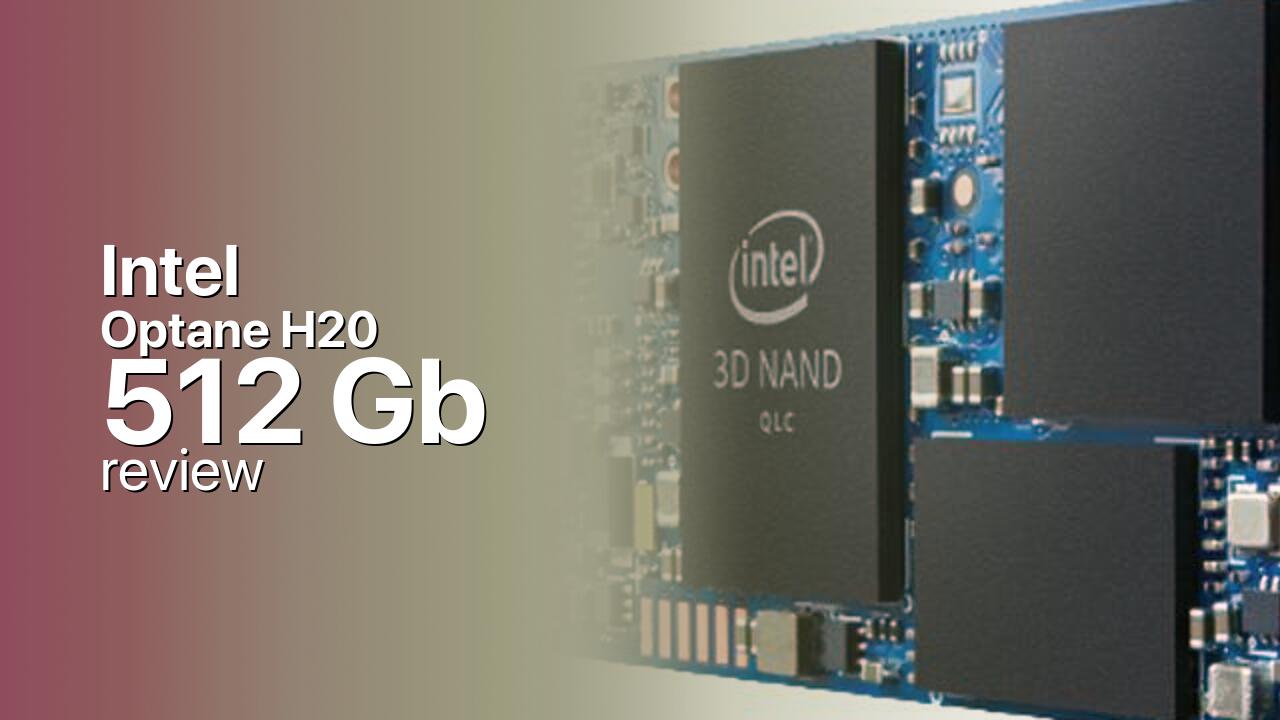
The Intel Optane Memory H20 512GB combines a 32GB Intel Optane 3D XPoint module with 512GB of Intel 144-layer QLC NAND on a single M.2 2280 PCB, managed by a Silicon Motion SM2265 controller with 256MB of Nanya DDR3 DRAM. The PCIe 3.0 x4 interface is hardware-bifurcated: two lanes feed the Optane die for low-latency caching and two lanes feed the QLC controller for bulk storage. Intel Rapid Storage Technology version 18.1 or newer manages data placement automatically, promoting frequently-accessed hot data to the Optane tier while cold data stays on QLC.
The 512GB variant differs from the 1TB only in QLC capacity and endurance. The Optane cache is identical at 32GB, which means the 512GB model has a higher ratio of Optane to QLC (1:16 versus 1:32). In theory, this should make the 512GB variant more responsive under workloads where the hot working set fits within 32GB. In practice, the difference is subtle.
The H20 carries the same limitations as the 1TB model: Intel 11th Gen platform lock-in, OEM-only distribution, and complete discontinuation with no further support. It was sold exclusively through laptop manufacturers — Dell, HP, Lenovo. The 512GB variant has an endurance rating of 185 TBW and carries a 5-year OEM warranty with no direct end-user RMA path. Intel wound down the entire Optane business in July 2022.
Storage Comparisons:
Optane H20 Performance & Benchmarks
The Intel Optane Memory H20 512GB is rated for 3,300 MB/s sequential reads and 2,100 MB/s sequential writes, with random performance of 65,000 IOPS reads and 40,000 IOPS writes at Queue Depth 1. The QD1 random read figure is where the Optane cache shines: TweakTown's testing of the 1TB H20 showed 3-4x the QD1 random read performance of conventional NAND SSDs, translating to snappier application launches, faster boot times, and more responsive multitasking.
Intel Optane H20 512 GB vs M.2 3.0 x 4 peers
Switch between sequential throughput and random IOPS to see how this drive stacks up against other M.2 3.0 x 4 SSDs in our database. The highlighted bar is the drive on this page — click any other bar to open that drive.
- ADATA SX 8800 Pro 512 GB: 3,500 MB/s read, 2,700 MB/s write
- ADATA SX 8800 Pro 1 TB: 3,500 MB/s read, 2,700 MB/s write
- ADATA XPG Spectrix S40G RGB 256 GB: 3,500 MB/s read, 3,000 MB/s write
- ADATA XPG Spectrix S40G RGB 512 GB: 3,500 MB/s read, 3,000 MB/s write
- Intel Optane H20 512 GB (this drive): 3,300 MB/s read, 2,000 MB/s write
Large sequential transfers see no benefit from the Optane cache and perform at standard QLC speeds. Sustained writes after the QLC pSLC cache fills drop to approximately 100-200 MB/s. The 32GB Optane cache is sufficient for a typical office workload — Windows, Outlook, browser, productivity apps — but thrashes under heavy multitasking or large creative applications.
Power efficiency is a genuine strength: 170 mW average active power and 35 mW idle make the H20 one of the most power-efficient NVMe SSDs ever produced. The single-sided M.2 2280 PCB fits any laptop with an M.2 slot, though the platform lock-in means it only functions in specific Intel 11th Gen systems.
Intel Optane H20 vs Competitors
See how the Optane H20 stacks up against other M.2 3.0 x 4 drives in our database:
Compare with rival drives:
Endurance, TBW & Warranty
The Intel Optane Memory H20 512GB carries a 5-year limited warranty through the OEM system vendor — not through Intel directly. End users cannot RMA an H20 to Intel. The drive is rated for 185 TBW of endurance, proportionally half the 1TB variant's 370 TBW. At a typical 30 GB/day pace, the endurance translates to roughly 17 years. The MTBF is rated at 1.6 million hours. Intel ended all Optane product support in mid-2022, meaning no further firmware updates or driver updates. The H20 is effectively abandonware.
Intel Optane H20 512 GB Specifications
| Category | Value |
|---|---|
| Capacity [?] | 512 GB |
| Interface [?] | M.2 3.0 x 4 |
| Controller [?] | Silicon Motion SM2265 |
| Memory type [?] | Intel 144L QLC |
| DRAM [?] | 256MB DDR3 and 32GB Optane |
| Read speed (MB/s) [?] | 3300 |
| Write speed (MB/s) [?] | 2000 |
| Read IOPS [?] | 65000 |
| Write IOPS [?] | 40000 |
| Endurance (TBW) [?] | 185 |
| MTBF (million hours) [?] | 1600000 |
| Warranty (years) [?] | 5 |
Verdict: Is the Optane H20 Worth It in 2026?
The Intel Optane Memory H20 512GB is a fascinating dead-end: a hybrid SSD that genuinely improves everyday responsiveness through Optane caching, but locked to a specific Intel platform, sold only to OEMs, and discontinued with no ongoing support. It only makes sense inside the specific OEM laptop it shipped in. Do not seek one out. If you already have one in an older laptop, it is a perfectly functional boot drive — but do not try to transplant it to another system.
+ Pros
- Optane 3D XPoint cache dramatically improves low-QD responsiveness
- Higher Optane-to-QLC ratio than 1TB variant
- Extremely power efficient — 170 mW active, ideal for laptops
- Automatic transparent caching via Intel RST
- Single-sided M.2 2280 fits thin laptops
- 5-year warranty through OEM
- Cons
- OEM-only — never sold at retail
- Requires specific Intel 11th Gen platform
- Only 512GB QLC capacity
- 185 TBW endurance is low
- Sustained writes drop to 100-200 MB/s after cache exhaustion
- Discontinued — entire Optane line cancelled in 2022
- Zero benefit from Optane for large sequential workloads
Buy this or similar SSD Storage:



Video Review
Is Intel Optane FINALLY Worth It? Optane H10 Tested!