Lexar NM800 PRO 512GB Review — A Compact PCIe 4.0 NVMe with DRAM (2026)
Quick answer
The Lexar NM800 PRO 512 GB is the right pick for a buyer who wants a DRAM-equipped PCIe 4.0 boot drive in a single-sided form factor and does not need massive sequential write throughput.
Read: 7450 MB/s Write: 3500 MB/s Endurance: 500 TBW Warranty: 5 years Interface: M.2 4.0 x 4
The Lexar NM800 PRO 512 GB is a rare breed in the budget PCIe 4.0 segment — it pairs an eight-channel Innogrit IG5236 controller with a DRAM cache, a combination most competitors at this capacity have abandoned for cheaper DRAM-less designs.
Controller & Memory
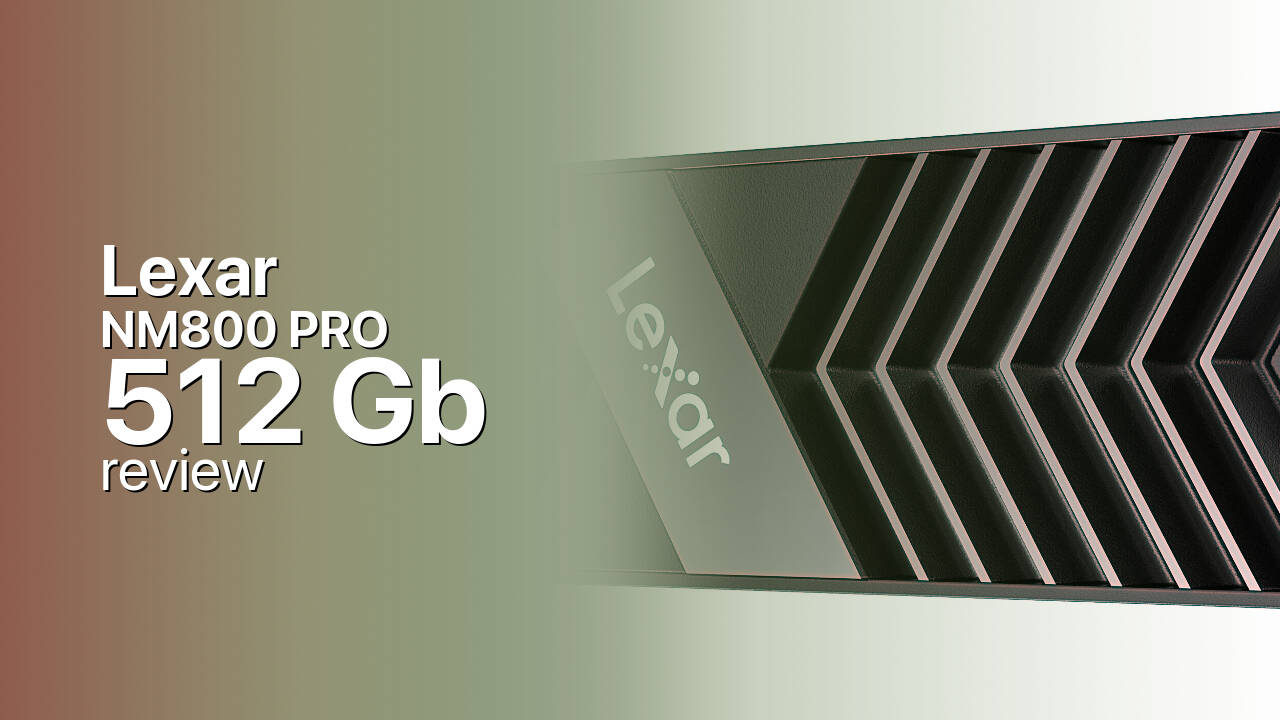
The Lexar NM800 PRO builds around the Innogrit IG5236 Rainier controller, an eight-channel PCIe 4.0 design fabricated on TSMC 12nm that also appears in the ADATA XPG Gammix S70 and several other enthusiast-grade Gen4 drives. Lexar pairs it with 176-layer 3D TLC NAND branded by Longsys, the parent company, and a DDR4L DRAM cache buffer — likely 512 MB for the 512 GB variant, scaling up to 2 GB on the 2 TB model. The drive uses a single-sided M.2 2280 PCB, which makes it a strong candidate for thin laptops and ultrabooks that cannot physically accommodate double-sided drives. The NM800 PRO supports NVMe 1.4 and includes AES 256-bit hardware encryption with TCG Pyrite compliance, a feature set that is often stripped from budget-oriented SSDs.
The 512 GB variant occupies an interesting niche. It delivers 7,450 MB/s sequential reads — nearly identical to the 1 TB and 2 TB versions — but sequential writes drop sharply to 3,500 MB/s, roughly half the 2 TB model's 6,500 MB/s. This is an inherent limitation of the lower capacity: fewer NAND packages mean fewer dies to stripe writes across, and the IG5236's eight channels are under-populated at 512 GB. The write-speed gap is the single most important thing to understand about this SKU. If your workload involves frequent large sequential writes — video ingest, 4K capture, or daily 100 GB-plus transfers — the 1 TB or 2 TB NM800 PRO is a meaningfully better choice. For boot-drive duty, gaming, and general desktop use, the 512 GB variant's read performance and DRAM-equipped random I/O keep it responsive and competitive.
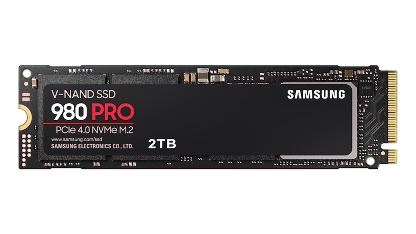
The NM800 PRO is also available with an optional heatsink that fits the PS5 expansion bay, and Sony's 5,500 MB/s minimum read requirement is comfortably exceeded by the 7,450 MB/s rated read speed. The included heatsink is a functional aluminum design rather than a cosmetic sticker, which matters for sustained PS5 gameplay. Lexar sells the heatsink separately as well, and the bare-drive SKU works with any third-party M.2 cooler. The NM800 PRO competes directly with the Samsung 980 Pro (faster random I/O, pricier), the WD Black SN770 (DRAM-less, faster sustained writes at 512 GB), and the Silicon Power UD90 (cheaper, QLC, DRAM-less). Among DRAM-equipped PCIe 4.0 drives at 512 GB, the NM800 PRO is one of the few options left standing.
Storage Comparisons:
NM800 PRO Performance & Benchmarks
The Lexar NM800 PRO 512 GB is rated for 7,450 MB/s sequential reads and 3,500 MB/s sequential writes, with random performance of up to 500,000 IOPS reads and 900,000 IOPS writes. The read number is excellent — it sits within 50 MB/s of the 1 TB variant and fully saturates the PCIe 4.0 x4 interface for read-heavy workloads. The write number is the story: 3,500 MB/s is roughly PCIe 3.0 territory and reflects the 512 GB variant's reduced NAND parallelism. Independent reviewers measured the larger capacities hitting their rated figures consistently, though the 1 TB model occasionally fell slightly short of its 6,300 MB/s write claim in sustained testing.
Lexar NM800 PRO 512 GB vs M.2 4.0 x 4 peers
Switch between sequential throughput and random IOPS to see how this drive stacks up against other M.2 4.0 x 4 SSDs in our database. The highlighted bar is the drive on this page — click any other bar to open that drive.
- Patriot Viper PV593 1 TB: 14,500 MB/s read, 14,000 MB/s write
- Patriot Viper PV593 2 TB: 14,500 MB/s read, 14,000 MB/s write
- Patriot Viper PV593 4 TB: 14,500 MB/s read, 14,000 MB/s write
- Patriot Viper PV573 2 TB: 14,000 MB/s read, 12,000 MB/s write
- Lexar NM800 PRO 512 GB (this drive): 7,450 MB/s read, 3,500 MB/s write
The IG5236 controller supports a dynamic pSLC cache that on the 512 GB variant absorbs roughly 150 to 200 GB of writes at full speed before exhausting to direct-to-TLC mode, where writes settle at approximately 800 to 1,000 MB/s. This is adequate for everyday consumer workloads — installing a large game, transferring a video project, or cloning a SATA drive — but anyone moving multi-hundred-gigabyte datasets regularly will notice the post-cache drop. Thermally, the NM800 PRO runs cool by Gen4 standards. The IG5236 on 12nm is more efficient than earlier 28nm Gen4 controllers, and reviewers observed peak temperatures in the low 70s Celsius under sustained sequential load without a heatsink. A passive motherboard M.2 cover is sufficient for desktop use; the PS5's internal airflow handles the heatsink-equipped variant without issue. For gaming specifically, the NM800 PRO loads titles within a second of the fastest PCIe 4.0 drives, and the DRAM cache keeps Windows responsive during background write activity.
Lexar NM800 PRO vs Competitors
See how the NM800 PRO stacks up against other M.2 4.0 x 4 drives in our database:
Compare with rival drives:
Endurance, TBW & Warranty
Lexar covers the NM800 PRO 512 GB with a 5-year limited warranty and rates the drive for 500 TBW of endurance. At 500 TBW, the drive can absorb roughly 273 GB of writes per day for the warranty period — far beyond typical consumer use of 20 to 50 GB per day. At a 30 GB/day pace, the endurance headroom extends beyond 40 years. The TBW rating scales linearly with capacity: 500 TBW for 512 GB, 1,000 TBW for 1 TB, and 2,000 TBW for 2 TB. The MTBF is rated at 1.5 million hours, a standard population statistic for consumer NVMe SSDs. Compared to competitors at this capacity, the NM800 PRO's 500 TBW endurance is above average — the Samsung 980 Pro 500 GB carries 300 TBW, and the WD Black SN770 500 GB is rated for 300 TBW. The NM800 PRO's endurance advantage comes from the TLC NAND's higher write tolerance relative to QLC alternatives, combined with Lexar's conservative over-provisioning. Warranty claims are handled through Lexar's standard RMA process, backed by Longsys's global distribution network.
Lexar NM800 PRO 512 GB Specifications
| Category | Value |
|---|---|
| Capacity [?] | 512 GB |
| Interface [?] | M.2 4.0 x 4 |
| Controller [?] | Innogrit IG5236 |
| Memory type [?] | 176-layer 3D TLC |
| DRAM [?] | DDR4L DRAM Cache |
| Read speed (MB/s) [?] | 7450 |
| Write speed (MB/s) [?] | 3500 |
| Read IOPS [?] | 500000 |
| Write IOPS [?] | 900000 |
| Endurance (TBW) [?] | 500 |
| MTBF (million hours) [?] | 1500000 |
| Warranty (years) [?] | 5 |
Verdict: Is the NM800 PRO Worth It in 2026?
The Lexar NM800 PRO 512 GB is the right pick for a buyer who wants a DRAM-equipped PCIe 4.0 boot drive in a single-sided form factor and does not need massive sequential write throughput. The 7,450 MB/s read speed keeps it competitive with drives costing more, and the 500 TBW endurance rating outperforms nearly every other DRAM-equipped 500 GB-class Gen4 drive. Gamers, SFF builders, and laptop upgraders get a responsive, cool-running SSD with hardware encryption — a combination that is surprisingly hard to find at 512 GB. Skip it if your workload involves heavy sequential writes — the 3,500 MB/s write ceiling is a real limit, and the 1 TB variant or a DRAM-less WD Black SN770 will serve those use cases better. For similar money, the Samsung 980 Pro 500 GB offers stronger random I/O but less endurance and no single-sided guarantee, while the TeamGroup MP44L undercuts on price but drops the DRAM cache entirely. The NM800 PRO 512 GB is a niche product done right.
+ Pros
- 7,450 MB/s sequential reads near the PCIe 4.0 ceiling
- Dedicated DRAM cache ensures consistent mixed-workload performance
- 500 TBW endurance — higher than Samsung 980 Pro and WD SN770 at this capacity
- Single-sided PCB fits thin laptops and ultrabooks
- AES 256-bit hardware encryption with TCG Pyrite
- PS5 compatible with optional heatsink
- Runs cool for a Gen4 drive — no thermal throttling at desktop loads
- Cons
- 512 GB write speed limited to 3,500 MB/s — half the 2 TB variant's throughput
- Random read IOPS (500K) trail the Samsung 980 Pro at this capacity
- NAND wafer source is unmarked Longsys branding — no vendor traceability
- Heatsink sold separately on the bare-drive SKU
- MTBF of 1.5M hours is below the 1.75-2M hours common on premium competitors
Buy this or similar SSD Storage:
Video Review
Is this the new KING of SSDs? 🔥 Lexar Professional NM800 SSD 7400MB/s Review - Fastest SSD 2021?