Goodram PX500 512GB - Budget PCIe 3.0 NVMe SSD (2026)
Quick answer
The Goodram PX500 512 GB is a sensible pick for European builders on tight budgets who want a regional-brand boot drive and accept the three-year warranty trade-off.
Read: 2000 MB/s Write: 1600 MB/s Endurance: 330 TBW Warranty: 3 years Interface: PCIe 3.0 x 4
The Goodram PX500 512GB is a budget Polish-brand PCIe 3.0 NVMe - Silicon Motion 2263XT DRAM-less controller, 3D TLC NAND, 2,000 MB/s reads, and a three-year warranty at near-SATA SSD pricing.
Controller & Memory
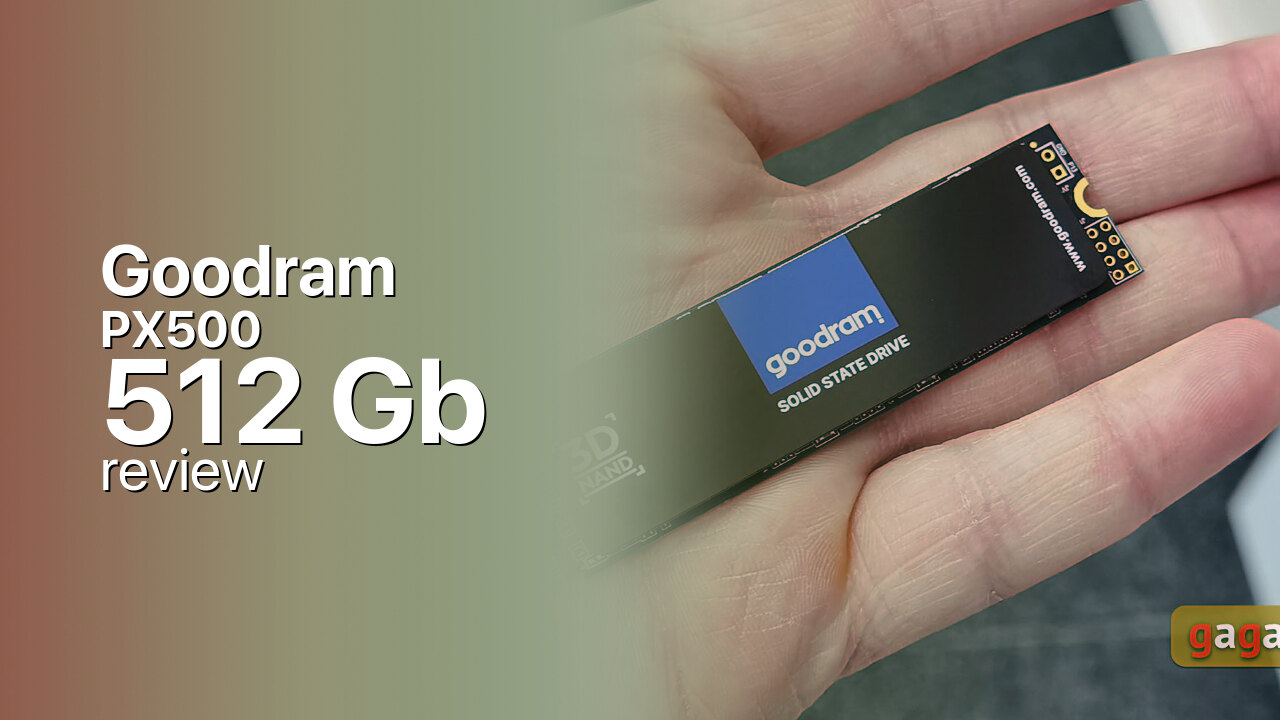
The Goodram PX500 512 GB pairs Silicon Motion's four-channel SM2263XT controller with 3D TLC NAND in a DRAM-less Host Memory Buffer (HMB) configuration. The 2263XT is the DRAM-less variant of the SM2263 - the same controller family used in many budget PCIe 3.0 NVMe drives from 2019-2021 - and uses HMB to borrow a small slice of system RAM for the logical-to-physical mapping table. The PCB is single-sided M.2 2280, fits any modern motherboard slot, and consumes modestly less power than DRAM-equipped drives.
Goodram ships the PX500 in 256 GB, 512 GB, and 1 TB capacities, with a Gen.2 revision adding a copper-graphite heat-spreader coating without changing the underlying silicon. The 512 GB SKU on this page reaches Goodram's published 2,000 MB/s sequential read rating and 1,600 MB/s sequential writes, with random performance up to 173,000 read and 140,000 write IOPS. Goodram is a Polish brand (owned by Wilk Elektronik in Lazany, Poland) with strong European retail distribution and limited but real North American presence.
The PX500 512 GB targets buyers replacing an older SATA SSD or hard drive in a PCIe 3.0 system with the cheapest possible NVMe upgrade, particularly European buyers who prefer regional brands with local warranty handling. Direct rivals at this capacity are the Crucial P1 500 GB (QLC, similar price), the WD Blue SN550 500 GB (TLC HMB, faster), the Kingston A2000 500 GB (DRAM-equipped, similar tier), and the Adata SX6000 Lite 512 GB (DRAM-less, similar price). Within that field the PX500 is the European value pick - lower peak performance than DRAM-equipped peers, longer-than-flagship value through Goodram's regional support.
Storage Comparisons:
PX500 Performance & Benchmarks
Manufacturer ratings for the PX500 512 GB land at 2,000 MB/s sequential reads and 1,600 MB/s sequential writes, with random performance up to 173,000 read and 140,000 write IOPS. Those numbers sit well below the PCIe 3.0 x4 interface ceiling (around 3,500 MB/s) because the SM2263XT is a four-channel DRAM-less design without the parallelism of higher-end eight-channel platforms. The drive's peak read speed is roughly two-thirds of what a Samsung 970 EVO 500 GB delivers, though it remains roughly four times faster than any SATA SSD.
Goodram PX500 512 GB vs PCIe 3.0 x 4 peers
Switch between sequential throughput and random IOPS to see how this drive stacks up against other PCIe 3.0 x 4 SSDs in our database. The highlighted bar is the drive on this page — click any other bar to open that drive.
- Asura Genesis Xtreme 256 GB: 3,400 MB/s read, 3,000 MB/s write
- Asura Genesis Xtreme 512 GB: 3,400 MB/s read, 3,000 MB/s write
- Asura Genesis Xtreme 1 TB: 3,400 MB/s read, 3,000 MB/s write
- Asura Genesis Xtreme 2 TB: 3,400 MB/s read, 3,000 MB/s write
- Goodram PX500 512 GB (this drive): 2,000 MB/s read, 1,600 MB/s write
Sustained writes show the DRAM-less HMB design's expected limitation. The drive holds peak SLC-cached writes for roughly 40-60 GB of continuous transfer on a near-empty 512 GB before the cache exhausts, after which writes drop into TLC direct-write territory around 400-600 MB/s. For boot, application, and gaming workloads at this capacity that profile is invisible. For sustained capture or large file moves the limit is more visible; the WD Blue SN570 500 GB and Crucial P3 500 GB both hold higher sustained speeds. The drive runs cool thanks to the four-channel SM2263XT's modest power draw - one of the few practical advantages of the DRAM-less design. DirectStorage operates at PCIe 3.0 speeds well below current PCIe 4.0 alternatives.
Goodram PX500 vs Competitors
See how the PX500 stacks up against other PCIe 3.0 x 4 drives in our database:
Compare with rival drives:
Endurance, TBW & Warranty
Goodram backs the PX500 512 GB with a three-year limited warranty - shorter than the five-year terms offered by most competitors at this tier - and a 330 TBW endurance budget per the manufacturer's official spec sheet. At a typical 10-20 GB/day desktop write workload that budget lasts roughly 45-90 years, well past the warranty period and any realistic service life. The published MTBF is two million hours, a population statistic across a fleet rather than a per-drive promise. The TBW scales linearly across the line: 170 TBW (256 GB), 330 TBW (512 GB), 660 TBW (1 TB). Goodram handles consumer RMA through regional European distributors with the company's own support portal at goodram.com - the experience is consistent in Europe and slower for international claims. The three-year warranty is a real consideration for long-life builds where Samsung, WD, and Crucial offer five years on competing drives.
Goodram PX500 512 GB Specifications
| Category | Value |
|---|---|
| Capacity [?] | 512 GB |
| Interface [?] | PCIe 3.0 x 4 |
| Controller [?] | Silicon Motion SMI 2263XT |
| Memory type [?] | 3D TLC |
| DRAM [?] | HMB |
| Read speed (MB/s) [?] | 2000 |
| Write speed (MB/s) [?] | 1600 |
| Read IOPS [?] | 173000 |
| Write IOPS [?] | 140000 |
| Endurance (TBW) [?] | 330 |
| MTBF (million hours) [?] | 2 |
| Warranty (years) [?] | 3 |
Verdict: Is the PX500 Worth It in 2026?
The Goodram PX500 512 GB is a sensible pick for European builders on tight budgets who want a regional-brand boot drive and accept the three-year warranty trade-off. Buyers who can spend slightly more should look at the WD Blue SN570 500 GB or Crucial P3 500 GB instead - both PCIe 3.0/4.0 DRAM-less designs that offer materially higher peak read speeds (3,000-3,500 MB/s versus 2,000 MB/s) and five-year warranties for typically only a small price premium. Skip the PX500 if your workload includes sustained writes greater than around 60 GB at a time, or if you need DRAM-equipped reliability under heavy random workloads. As a basic PCIe 3.0 NVMe at the lowest practical price in the European market the PX500 512 GB does the job for boot and casual gaming.
+ Pros
- One of the cheaper 512 GB NVMe drives in European retail
- Silicon Motion 2263XT controller with mature firmware
- Single-sided 2280 PCB fits any laptop M.2 slot
- 2,000,000-hour MTBF rating
- Low power consumption typical of four-channel HMB design
- Strong European retail and warranty footprint
- Cons
- 2,000 MB/s reads two-thirds of WD Blue SN570 500 GB
- Three-year warranty shorter than tier-one rivals
- DRAM-less HMB lags DRAM-equipped peers on random writes
- PCIe 3.0 only, two generations behind current drives
- Limited retail availability outside Europe
- Sustained writes drop to ~500 MB/s after small SLC cache
Buy this or similar SSD Storage:



Video Review
SSD GOODRAM PX500 512GB SSDPR-PX500-512-80