Patriot Viper VP4100 1TB PCIe 4.0 NVMe SSD (2026)
Quick answer
The Patriot Viper VP4100 1 TB is a first-generation PCIe 4.0 SSD that has since been superseded by faster drives like the VP4300.
Read: 5000 MB/s Write: 4400 MB/s Endurance: 1800 TBW Warranty: 5 years Interface: M.2 4.0 x 4
The Patriot Viper VP4100 1 TB was among the first PCIe 4.0 consumer SSDs to ship, pairing Phison's PS5016-E16 controller with Kioxia 96-layer TLC for 5,000 MB/s sequential reads.
Controller & Memory
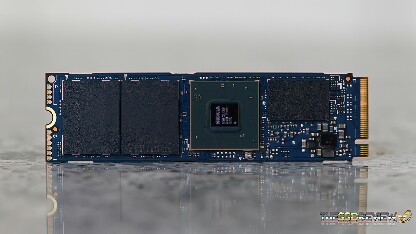
The VP4100 was Patriot's first foray into PCIe 4.0 territory, launched in late 2019 alongside AMD's X570 chipset launch. At its heart is the Phison PS5016-E16, the world's first PCIe 4.0 x4 NVMe controller. This 8-channel controller manages Kioxia (formerly Toshiba Memory) BiCS4 96-layer 3D TLC NAND, with a 1 GB DDR4-2400 DRAM cache on the 1 TB model handling flash translation table duties.
The VP4100 line originally shipped in 500 GB, 1 TB, and 2 TB capacities. The 1 TB model sits in the middle, offering the full 800,000 rated IOPS for both reads and writes, unlike the 500 GB variant which is capped at 400,000 read and 550,000 write IOPS. The drive ships with an integrated aluminum heatsink featuring raised fins and thermal tubes. The heatsink adhesive is strong, so removing it is not recommended. Patriot also includes their PCIe Toolbox software for health monitoring, secure erase, and firmware updates.
The VP4100 was succeeded by the VP4300, which moved to InnoGrit's IG5236 controller for substantially higher sequential throughput. Against its direct PCIe 4.0 first-generation peers like the Corsair MP600 and Sabrent Rocket 4.0, the VP4100 offers essentially identical hardware since all three use the Phison E16 reference platform. The VP4100 differentiates mainly through Patriot's included heatsink and toolbox software.
Storage Comparisons:
Viper VP4100 Performance & Benchmarks
Patriot rates the 1 TB VP4100 at up to 5,000 MB/s sequential reads and up to 4,400 MB/s sequential writes over the PCIe 4.0 x4 bus. Random performance is rated at up to 800,000 IOPS for both reads and writes. These figures represent the ceiling of what the Phison E16 controller can deliver with 96-layer TLC NAND.
Patriot Viper VP4100 1 TB vs M.2 4.0 x 4 peers
Switch between sequential throughput and random IOPS to see how this drive stacks up against other M.2 4.0 x 4 SSDs in our database. The highlighted bar is the drive on this page — click any other bar to open that drive.
- Patriot Viper PV593 1 TB: 14,500 MB/s read, 14,000 MB/s write
- Patriot Viper PV593 2 TB: 14,500 MB/s read, 14,000 MB/s write
- Patriot Viper PV593 4 TB: 14,500 MB/s read, 14,000 MB/s write
- Patriot Viper PV573 2 TB: 14,000 MB/s read, 12,000 MB/s write
- Patriot Viper VP4100 1 TB (this drive): 5,000 MB/s read, 4,400 MB/s write
In independent testing by KitGuru and Legit Reviews, the VP4100 1 TB delivered on its rated sequential speeds on AMD X570 platforms. The drive scored a 9 out of 10 at KitGuru, confirming that first-generation PCIe 4.0 hardware was already a substantial leap over PCIe 3.0 drives. On Intel platforms, sequential read speeds tend to come in slightly below AMD numbers due to platform-level differences in Gen4 implementation. For real-world use, the VP4100 loads games, boots Windows, and handles file transfers significantly faster than any SATA SSD and measurably faster than PCIe 3.0 NVMe drives. Firmware version 13.0, which shipped later in the VP4100's lifecycle, brought incremental improvements over the original firmware.
Patriot Viper VP4100 vs Competitors
See how the Viper VP4100 stacks up against other M.2 4.0 x 4 drives in our database:
Compare with rival drives:
Endurance, TBW & Warranty
The 1 TB VP4100 carries a 1,800 TBW endurance rating backed by a 5-year warranty. Patriot confirmed that the warranty is 5 years despite some early product sheets listing 3 years. At a typical consumer write workload of 20 to 50 GB per day, the 1,800 TBW rating translates to roughly 98 to 246 years before reaching the rated write limit. The Phison E16 platform uses LDPC error correction and end-to-end data path protection to maintain data integrity. Warranty claims are handled through Patriot's support portal or the original retailer.
Patriot Viper VP4100 1 TB Specifications
| Category | Value |
|---|---|
| Capacity [?] | 1 TB |
| Interface [?] | M.2 4.0 x 4 |
| Controller [?] | Phison PS5016-E16 |
| Memory type [?] | Toshiba 3D TLC |
| DRAM [?] | 1GB - 2GB DDR4 |
| Read speed (MB/s) [?] | 5000 |
| Write speed (MB/s) [?] | 4400 |
| Read IOPS [?] | 800000 |
| Write IOPS [?] | 800000 |
| Endurance (TBW) [?] | 1800 |
| MTBF (million hours) [?] | 1.7 |
| Warranty (years) [?] | 5 |
Verdict: Is the Viper VP4100 Worth It in 2026?
The Patriot Viper VP4100 1 TB is a first-generation PCIe 4.0 SSD that has since been superseded by faster drives like the VP4300. Builders on a budget who already own an X570 or B550 motherboard and find the VP4100 at a discount will get reliable PCIe 4.0 performance with an included heatsink and toolbox software. Anyone building a new system today should consider the VP4300 or a Samsung 980 Pro instead, since newer PCIe 4.0 controllers deliver substantially higher sequential speeds at similar or lower prices. The VP4100 remains a capable drive for gaming and general desktop use, but its performance ceiling is lower than what current-gen PCIe 4.0 NVMe drives offer.
+ Pros
- 5,000 MB/s sequential read speed
- 1,800 TBW endurance on the 1 TB model
- Integrated aluminum heatsink included
- Patriot PCIe Toolbox software provided
- 1 GB DDR4 DRAM cache
- 5-year warranty
- Cons
- First-gen PCIe 4.0, slower than current drives
- Phison E16 is a repurposed PCIe 3.0 design
- Heatsink adhesive makes removal risky
- Superseded by VP4300 with InnoGrit IG5236
Buy this or similar SSD Storage:



Video Review
5.6GB/s GEN 4 NVME! Patriot Viper VP4100 Review - TechteamGB