Micron 3400 1TB Review — OEM PCIe 4.0 NVMe SSD (2026)
Quick answer
The Micron 3400 1TB is a competent OEM PCIe 4.0 SSD that delivers strong 6,600 MB/s read performance using Micron's vertically integrated DM02A1 controller and 176-layer NAND.
Read: 6600 MB/s Write: 5000 MB/s Endurance: 600 TBW Warranty: 3 years Interface: M.2 4.0 x 4
The Micron 3400 1TB is an OEM-only PCIe 4.0 NVMe SSD built for system integrators, featuring Micron's in-house DM02A1 controller and 176-layer 3D TLC NAND that deliver 6,600 MB/s reads in a DRAM-less package.
Controller & Memory
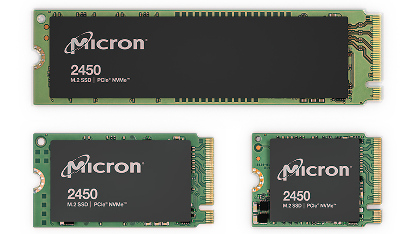
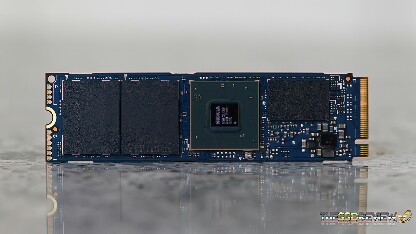
The Micron 3400 is an OEM client SSD, meaning you won't find it on retail shelves — it ships pre-installed in laptops and desktops from major system builders. Built around Micron's proprietary DM02A1 controller and the company's own 176-layer 3D TLC NAND, this is a vertically integrated design where Micron supplies every silicon component. The drive uses a DRAM-less architecture with HMB (Host Memory Buffer), leveraging system RAM for FTL mapping instead of a dedicated cache chip. This keeps the BOM cost down and the PCB thin — a single-sided M.2 2280 design that fits in virtually any slot.
The 3400 comes in three capacities: 512 GB, 1 TB, and 2 TB. The 1TB model sits in the middle, rated at 6,600 MB/s sequential reads and 5,000 MB/s writes — the same read speed across all capacities, but the 512GB writes drop to 3,600 MB/s. Random read IOPS scale from 360K on the smallest drive to 720K on the 2TB, with random writes consistently rated at 700K across the lineup. The 1TB carries a 600 TBW endurance rating and is backed by a 3-year warranty, though Micron's OEM warranty flows through the system manufacturer rather than directly to end users.
As an OEM drive, the 3400 competes with other factory-installed options: the SK Hynix BC711, Samsung PM9A1, and WD SN730. The PM9A1 (Samsung's OEM version of the 980 PRO) offers DRAM caching and slightly higher endurance, making it the stronger performer. The BC711 is similarly DRAM-less but tops out at PCIe 3.0 speeds. The 3400's advantage is Micron's vertically integrated supply chain — when it ships in your laptop, you're getting a known-quantity drive with no third-party controller or NAND risk.
The drive's DRAM-less HMB design means it runs cooler than DRAM-equipped competitors and draws less idle power — Micron claims 25% lower idle consumption versus the prior generation. For laptop users, this translates to marginally better battery life. For desktop users, the performance difference between HMB and DRAM caching is negligible in everyday use but becomes measurable under sustained heavy workloads.
Storage Comparisons:
3400 Performance & Benchmarks
The Micron 3400 1TB is rated at up to 6,600 MB/s sequential reads and 5,000 MB/s sequential writes over its PCIe 4.0 x4 interface. Random 4K performance reaches up to 630,000 IOPS for reads and 700,000 IOPS for writes. These are strong numbers for a DRAM-less drive — the HMB architecture borrows a small slice of system RAM for FTL mapping, and modern NVMe implementations have narrowed the gap between HMB and dedicated DRAM caching to the point where most users won't notice the difference in day-to-day use.
Micron 3400 1 TB vs M.2 4.0 x 4 peers
Switch between sequential throughput and random IOPS to see how this drive stacks up against other M.2 4.0 x 4 SSDs in our database. The highlighted bar is the drive on this page — click any other bar to open that drive.
- Patriot Viper PV593 1 TB: 14,500 MB/s read, 14,000 MB/s write
- Patriot Viper PV593 2 TB: 14,500 MB/s read, 14,000 MB/s write
- Patriot Viper PV593 4 TB: 14,500 MB/s read, 14,000 MB/s write
- Patriot Viper PV573 2 TB: 14,000 MB/s read, 12,000 MB/s write
- Micron 3400 1 TB (this drive): 6,600 MB/s read, 5,000 MB/s write
The 3400 uses Micron's own SLC caching algorithm to boost burst write performance. The dynamic SLC cache scales with available free space, typically providing 40–100 GB of burst headroom on the 1TB model. Once the cache exhausts, native TLC direct-write speeds on the DM02A1 platform settle around 1,000–1,500 MB/s — respectable for a DRAM-less drive, though behind DRAM-cached competitors like the Samsung PM9A1 that maintain higher sustained throughput. For typical desktop and laptop workloads — OS booting, application launches, file browsing — the SLC cache rarely depletes. Sustained 100+ GB transfers are where the DRAM-less architecture shows its limits.
In StorageReview's testing, the 3400 1TB recorded 5ms average latency in SQL database simulations, 396K IOPS in 4K random read workloads, and 3,400 MB/s in 64K sequential reads. These real-world figures confirm that the drive performs well under mixed enterprise-style workloads despite its DRAM-less design. For gaming and desktop use, load times are comparable to any PCIe 4.0 drive — sub-2-second loads for most titles. The drive does not include hardware decompression for DirectStorage, but that feature remains rarely used in current game titles.
Micron 3400 vs Competitors
See how the 3400 stacks up against other M.2 4.0 x 4 drives in our database:
Compare with rival drives:
Endurance, TBW & Warranty
The Micron 3400 1TB carries a 600 TBW endurance rating and a nominal 3-year warranty. However, because this is an OEM-only drive, the warranty is handled through the system manufacturer (Dell, HP, Lenovo, etc.) rather than directly by Micron. If your system is out of the manufacturer's support period, you may not have actionable warranty coverage regardless of the 3400's own rating. The 600 TBW endurance translates to roughly 54 years at 30 GB of daily writes — well beyond any realistic ownership period. Micron does not publish an MTBF figure for the 3400 in its public documentation. For buyers upgrading or replacing an OEM-installed 3400, note that any replacement purchase would be a bare drive without manufacturer warranty backing — a consideration when choosing between keeping the OEM drive and upgrading to a retail alternative with direct warranty support.
Micron 3400 1 TB Specifications
| Category | Value |
|---|---|
| Capacity [?] | 1 TB |
| Interface [?] | M.2 4.0 x 4 |
| Controller [?] | Micron |
| Memory type [?] | Micron 3D TLC |
| DRAM [?] | 1GB LPDDR4 |
| Read speed (MB/s) [?] | 6600 |
| Write speed (MB/s) [?] | 5000 |
| Read IOPS [?] | 630000 |
| Write IOPS [?] | 700000 |
| Endurance (TBW) [?] | 600 |
| MTBF (million hours) [?] | 2 |
| Warranty (years) [?] | 3 |
Verdict: Is the 3400 Worth It in 2026?
The Micron 3400 1TB is a competent OEM PCIe 4.0 SSD that delivers strong 6,600 MB/s read performance using Micron's vertically integrated DM02A1 controller and 176-layer NAND. Its DRAM-less HMB design keeps costs and power consumption low, making it well-suited for laptop OEMs. As a retail purchase, however, the 3400 is hard to recommend over warranty-backed alternatives like the Samsung 980 PRO or WD Black SN850. If your laptop shipped with a 3400, it's a solid drive that will serve you well. If you're buying an SSD separately, a retail drive with direct warranty support is the smarter investment.
+ Pros
- 6,600 MB/s sequential reads on PCIe 4.0
- 5,000 MB/s writes for 1TB and larger
- Micron 176-layer 3D TLC NAND
- Low power consumption — 25% lower idle than prior gen
- Single-sided M.2 2280 fits all slots
- Cons
- OEM-only — no direct-to-consumer warranty
- DRAM-less HMB design limits sustained performance
- SLC cache exhausts after 40–100 GB
- No hardware decompression for DirectStorage
Buy this or similar SSD Storage:



Video Review
M.2 vs NVME: What's the difference?