Samsung 980 Pro 1TB PCIe 4.0 NVMe SSD (2026)
Quick answer
The Samsung 980 Pro 1TB is the sweet spot in the 980 Pro lineup.
Read: 7000 MB/s Write: 5000 MB/s Endurance: 600 TBW Warranty: 5 years Interface: M.2 4.0 x 4
The Samsung 980 Pro 1TB is the capacity that defines this PCIe 4.0 flagship line, delivering the full 7,000/5,000 MB/s spec and 600 TBW that made it one of the most-reviewed NVMe drives of its generation.
Controller & Memory
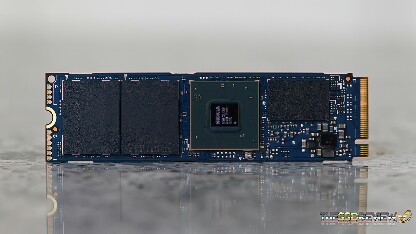
At the heart of the 980 Pro sits Samsung\'s Elpis controller (S4LV003), an 8 nm ARM-based design supporting 128 concurrent NVMe queues over an eight-channel NAND interface. The 1 TB model is the first capacity in the lineup to ship with 1 GB of LPDDR4 DRAM for the flash translation layer, up from the 512 MB on the 250 GB and 500 GB variants. Flash is Samsung\'s sixth-generation V-NAND TLC, built on a single-stack 128-layer charge-trap design. All components sit on a single-sided M.2 2280 PCB that clears the PS5 expansion slot\'s height restriction.
The 1 TB model hits the advertised ceiling of the PCIe 4.0 x4 interface: 7,000 MB/s sequential reads, 5,000 MB/s sequential writes, and 1,000,000 IOPS in both random read and write at queue depth 32. The Intelligent TurboWrite 2.0 cache can expand up to 114 GB, and direct-to-TLC writes hold around 2,000 MB/s once the cache fills. Endurance is rated at 600 TBW over a five-year warranty.
Against its PCIe 4.0 peers, the WD Black SN850X 1 TB and the SK hynix Platinum P41 1 TB are the two closest competitors. Both match or slightly exceed the 980 Pro in synthetic sequential throughput, but the Samsung offers AES 256-bit hardware encryption and the industry-leading Samsung Magician utility. The 980 Pro was superseded by the Samsung 990 Pro in late 2022, which raises speeds to 7,450/6,900 MB/s and endurance to 1,200 TBW at the 1 TB capacity, though the 980 Pro remains widely available and competitively positioned in 2026.
Storage Comparisons:
980 Pro Performance & Benchmarks
Samsung rates the 980 Pro 1TB at up to 7,000 MB/s sequential reads and 5,000 MB/s sequential writes over the PCIe 4.0 x4 bus. Peak random performance is 1,000,000 read IOPS and 1,000,000 write IOPS at queue depth 32, with low-latency QD1 numbers of 22,000 read IOPS and 60,000 write IOPS.
Samsung 980 Pro 1 TB vs M.2 4.0 x 4 peers
Switch between sequential throughput and random IOPS to see how this drive stacks up against other M.2 4.0 x 4 SSDs in our database. The highlighted bar is the drive on this page — click any other bar to open that drive.
- Patriot Viper PV593 1 TB: 14,500 MB/s read, 14,000 MB/s write
- Patriot Viper PV593 2 TB: 14,500 MB/s read, 14,000 MB/s write
- Patriot Viper PV593 4 TB: 14,500 MB/s read, 14,000 MB/s write
- Patriot Viper PV573 2 TB: 14,000 MB/s read, 12,000 MB/s write
- Samsung 980 Pro 1 TB (this drive): 7,000 MB/s read, 5,000 MB/s write
The Intelligent TurboWrite 2.0 cache on the 1 TB model consists of a 6 GB static allocation that can expand dynamically up to 114 GB using idle NAND capacity. This is the largest TurboWrite allocation in the 980 Pro family before the 2 TB model. Once the cache fills during sustained writes, native TLC performance settles around 2,000 MB/s, which is double the 500 GB model's post-cache speed and four times the 250 GB model's. Independent reviewers from AnandTech, Tom's Hardware, and StorageReview consistently placed the 980 Pro 1 TB at or near the top of PCIe 4.0 benchmarks at launch, noting particularly strong random-write and real-world application-latency results. The successor Samsung 990 Pro and competing drives like the SN850X and Platinum P41 have since nudged past it in synthetic throughput, but the gap in game-load and OS-responsiveness benchmarks is narrow.
Samsung 980 Pro vs Competitors
See how the 980 Pro stacks up against other M.2 4.0 x 4 drives in our database:
Compare with rival drives:
Endurance, TBW & Warranty
The Samsung 980 Pro 1TB carries a 600 TBW endurance rating under a five-year limited warranty. At 0.3 drive writes per day, that translates to roughly 328 GB of daily writes for five consecutive years. Samsung's field telemetry across more than 660,000 field SSDs shows that 99.7% of users write fewer than 600 TB over five years, meaning the 1 TB model's endurance covers all but the heaviest consumer workloads. For context, writing 50 GB per day would exhaust 600 TBW after approximately 33 years. The drive carries an MTBF rating of 1.5 million hours, a population-level reliability statistic. Samsung handles warranty replacement directly through its RMA process, and the Samsung Magician utility reports remaining TBW in real time.
Samsung 980 Pro 1 TB Specifications
| Category | Value |
|---|---|
| Capacity [?] | 1 TB |
| Interface [?] | M.2 4.0 x 4 |
| Controller [?] | Samsung Elpis |
| Memory type [?] | Samsung 3D TLC |
| DRAM [?] | Samsung LPDDR4 DRAM |
| Read speed (MB/s) [?] | 7000 |
| Write speed (MB/s) [?] | 5000 |
| Read IOPS [?] | 1000000 |
| Write IOPS [?] | 1000000 |
| Endurance (TBW) [?] | 600 |
| MTBF (million hours) [?] | 1.5 |
| Warranty (years) [?] | 5 |
Verdict: Is the 980 Pro Worth It in 2026?
The Samsung 980 Pro 1TB is the sweet spot in the 980 Pro lineup. It delivers the full 7,000/5,000 MB/s spec, 1 GB of DRAM, and 600 TBW endurance that make it a capable daily driver for gaming, content creation, and general enthusiast use. Buyers who want to future-proof for PCIe 5.0 should look at the Samsung 990 Pro or the Crucial T705 instead. For anyone on a PCIe 4.0 platform, the 980 Pro 1 TB still competes with the best drives in that tier. The WD Black SN850X 1 TB edges it out in raw throughput and the SK hynix Platinum P41 1 TB offers slightly better efficiency, but neither includes Samsung's hardware encryption. The 980 Pro 1TB remains a balanced, well-supported choice that has aged gracefully since its 2020 launch.
+ Pros
- 7,000 MB/s sequential reads, 5,000 MB/s writes
- 1,000,000 random read and write IOPS
- 1 GB LPDDR4 DRAM for FTL mapping
- 114 GB Intelligent TurboWrite 2.0 cache
- 2,000 MB/s sustained TLC writes past cache
- Single-sided M.2 2280 fits laptops and PS5
- AES 256-bit hardware encryption
- Cons
- Superseded by the 990 Pro with higher throughput
- No heatsink included
- TurboWrite cache shrinks as the drive fills up
- Competitors like the SN850X offer slightly higher peak reads
Buy this or similar SSD Storage:



Video Review
Samsung 980 PRO Review - Samsung's First PCIe Gen4 SSD