Sabrent Rocket NVMe 4.0 1TB — PCIe 4.0 TLC NVMe SSD (2026)
Quick answer
The Sabrent Rocket NVMe 4.0 1 TB is a first-generation PCIe 4.0 TLC drive that has aged well thanks to its high endurance and consistent performance.
Read: 5000 MB/s Write: 4400 MB/s Endurance: 1800 TBW Warranty: 5 years Interface: M.2 4.0 x 4
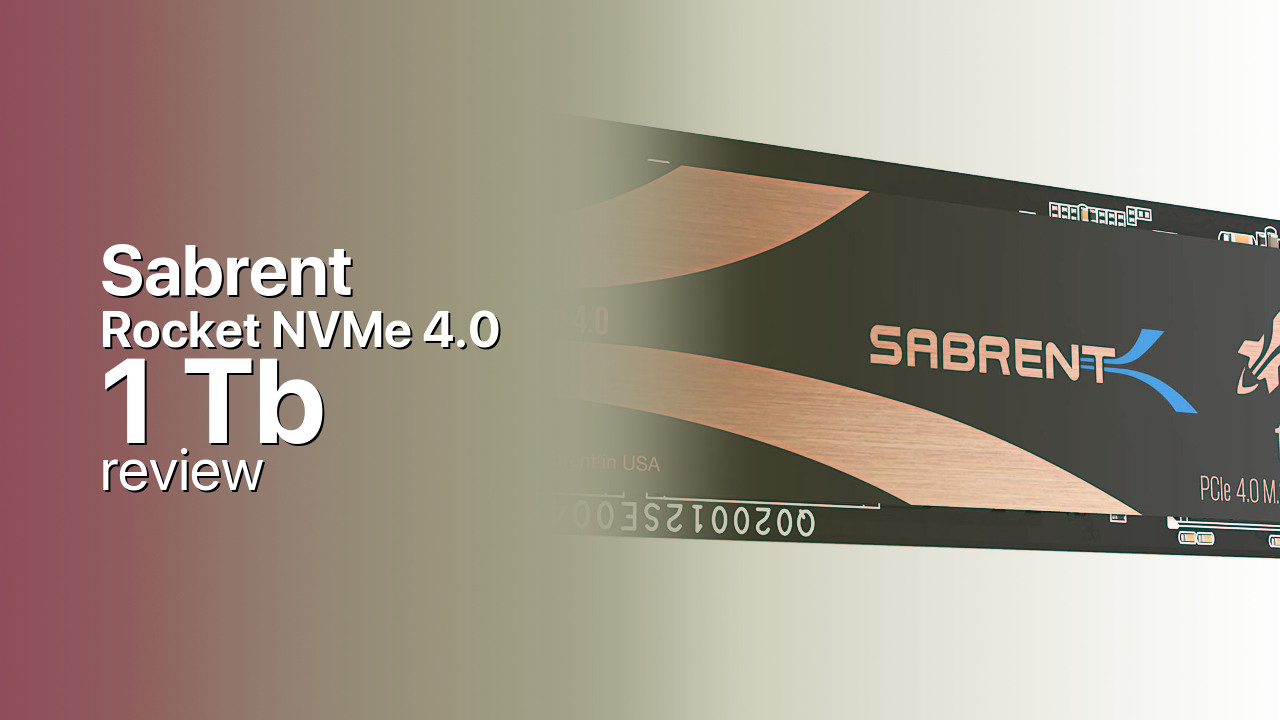
The Sabrent Rocket NVMe 4.0 1 TB was one of the first PCIe 4.0 consumer SSDs on the market, pairing Phison's E16 controller with Toshiba 96L TLC NAND and an unusually high 1,800 TBW endurance rating for a 1 TB drive.
Controller & Memory
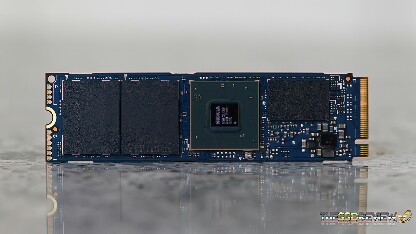
The Rocket NVMe 4.0 uses Phison's PS5016-E16 8-channel controller — the chip that monopolized the first generation of PCIe 4.0 SSDs — alongside Toshiba (now Kioxia) BiCS4 96-layer TLC NAND and SK Hynix DDR4 DRAM. This is a TLC drive, not QLC, which means better sustained write performance and significantly higher endurance than Sabrent's QLC-based Rocket Q4 series that uses the same controller.
The series comes in 500 GB, 1 TB, and 2 TB capacities. At 1 TB, the rated performance is 5,000 MB/s reads and 4,400 MB/s writes across the board — the same for all capacities, which is unusual and means the 500 GB model does not suffer the typical write penalty seen on smaller SSDs. The M.2 2280 form factor is single-sided at 1 TB, fitting any M.2 slot including thin laptops.
Competitors from the same PCIe 4.0 generation include the Corsair MP600 (TLC, same E16 controller) and the Seagate FireCuda 520 (TLC, same E16). Newer TLC drives like the Sabrent Rocket 4 Plus (E18 controller) offer substantially higher performance, but the original Rocket NVMe 4.0 remains relevant at lower price points.
Sabrent offers the Rocket NVMe 4.0 in heatsink and bare-drive variants. The E16 controller's 28 nm process generates more heat than newer 12 nm designs, making a heatsink advisable for systems without integrated M.2 cooling. The drive ships with a license for Acronis True Image for drive cloning and migration, which is a practical inclusion for users upgrading from an older boot drive.
Storage Comparisons:
Rocket NVMe 4.0 Performance & Benchmarks
Rated at 5,000 MB/s sequential reads and 4,400 MB/s sequential writes, with 750K random read IOPS and 750K random write IOPS, the Rocket NVMe 4.0 1 TB was flagship-tier performance when it launched in 2019. Today, these numbers sit in the middle of the PCIe 4.0 pack — faster than QLC drives but well below the E18-based Rocket 4 Plus at 7,100/7,000 MB/s.
Sabrent Rocket NVMe 4.0 1 TB vs M.2 4.0 x 4 peers
Switch between sequential throughput and random IOPS to see how this drive stacks up against other M.2 4.0 x 4 SSDs in our database. The highlighted bar is the drive on this page — click any other bar to open that drive.
- Patriot Viper PV593 1 TB: 14,500 MB/s read, 14,000 MB/s write
- Patriot Viper PV593 2 TB: 14,500 MB/s read, 14,000 MB/s write
- Patriot Viper PV593 4 TB: 14,500 MB/s read, 14,000 MB/s write
- Patriot Viper PV573 2 TB: 14,000 MB/s read, 12,000 MB/s write
- Sabrent Rocket NVMe 4.0 1 TB (this drive): 5,000 MB/s read, 4,400 MB/s write
The TLC NAND is the key differentiator over Sabrent's Q4 series. After the pseudo-SLC cache exhausts — which takes roughly 80–120 GB on the 1 TB model — native TLC writes sustain at approximately 1,000–1,500 MB/s. This is a dramatically smaller performance cliff than QLC drives face, and for most desktop workloads the cache never fully exhausts. Reviews from Guru3D and eTeknix confirm consistent performance across synthetic benchmarks and real-world transfer tests. The 750K random read IOPS and 750K random write IOPS are symmetric and competitive — many drives bias strongly toward one direction. For mixed read/write desktop workloads, the balanced IOPS profile delivers consistent performance across different usage patterns without surprising bottlenecks.
Sabrent Rocket NVMe 4.0 vs Competitors
See how the Rocket NVMe 4.0 stacks up against other M.2 4.0 x 4 drives in our database:
Compare with rival drives:
Endurance, TBW & Warranty
The Sabrent Rocket NVMe 4.0 1 TB carries an 1,800 TBW endurance rating — notably high for a 1 TB drive and far exceeding the 600–800 TBW typical of TLC PCIe 4.0 drives at this capacity. The five-year warranty requires product registration within 90 days (one year without). At 1,800 TBW, you can write approximately 986 GB per day for five years, which is an extraordinary amount of write headroom. The 1.7 million hour MTBF rating is also provided. This endurance level means the drive can serve as a boot drive, game library, or even a moderate-duty scratch disk without endurance concerns throughout the warranty period.
Sabrent Rocket NVMe 4.0 1 TB Specifications
| Category | Value |
|---|---|
| Capacity [?] | 1 TB |
| Interface [?] | M.2 4.0 x 4 |
| Controller [?] | Phison PS5016-E16 |
| Memory type [?] | Toshiba 3D TLC |
| DRAM [?] | SK Hynix DDR4 |
| Read speed (MB/s) [?] | 5000 |
| Write speed (MB/s) [?] | 4400 |
| Read IOPS [?] | 750000 |
| Write IOPS [?] | 750000 |
| Endurance (TBW) [?] | 1800 |
| MTBF (million hours) [?] | 1.7 |
| Warranty (years) [?] | 5 |
Verdict: Is the Rocket NVMe 4.0 Worth It in 2026?
The Sabrent Rocket NVMe 4.0 1 TB is a first-generation PCIe 4.0 TLC drive that has aged well thanks to its high endurance and consistent performance. The 5,000/4,400 MB/s speeds are no longer top-of-market, but they are fast enough for gaming and general desktop use, and the TLC NAND provides far better write consistency than QLC alternatives at similar prices. The standout spec is the 1,800 TBW endurance — triple what many competing 1 TB drives offer. For builders who want proven TLC reliability, DRAM cache, and high endurance at a price that undercuts newer E18-based drives, the Rocket NVMe 4.0 1 TB remains a solid choice.
+ Pros
- 5,000 MB/s reads, 4,400 MB/s writes
- Toshiba 96L TLC NAND for consistent writes
- 1,800 TBW endurance — exceptionally high for 1 TB
- SK Hynix DDR4 DRAM cache
- Single-sided PCB fits all M.2 slots
- Proven Phison E16 platform with mature firmware
- Cons
- Slower than E18-based drives (Rocket 4 Plus)
- 28 nm E16 controller runs warmer than 12 nm designs
- NVMe 1.3, not NVMe 1.4
- Warranty drops to 1 year without registration
- No included heatsink (optional)
- No hardware AES encryption
Buy this or similar SSD Storage:



Video Review
Sabrent 1TB Rocket NVME 4.0 Review