Samsung 970 EVO Plus 250GB NVMe SSD Review (2026)
Quick answer
The Samsung 970 EVO Plus 250GB is a reliable PCIe 3.0 boot drive with proven Phoenix-level reliability and Samsung's software ecosystem, but the 2,300 MB/s write rating and small TurboWrite cache make it a poor pick for anyone who regularly moves large files.
Read: 3500 MB/s Write: 2300 MB/s Endurance: 150 TBW Warranty: 5 years Interface: M.2 3.0 x 4
The Samsung 970 EVO Plus 250GB is the entry point of Samsung's most popular PCIe 3.0 NVMe line, squeezing 92-layer V-NAND and a Phoenix controller into a single-sided M.2 2280 card.
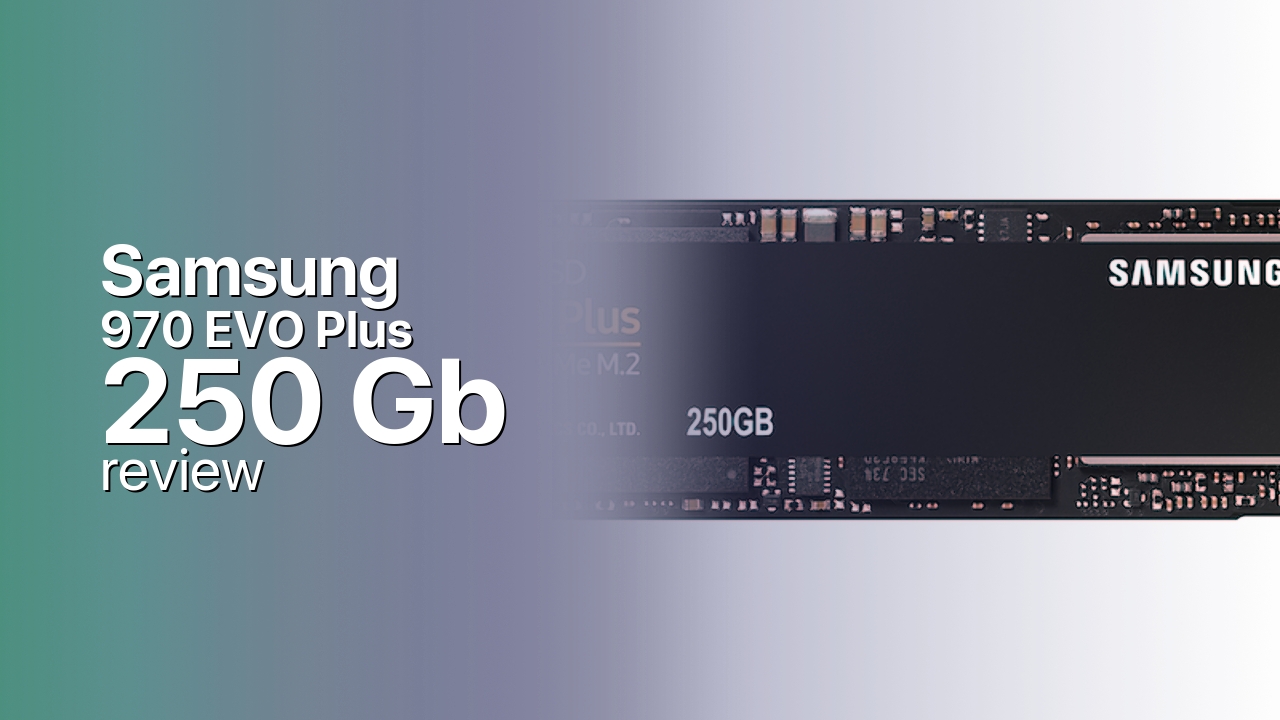
Controller & Memory
Under the label sits Samsung\'s Phoenix controller paired with 512 MB of LPDDR4 DRAM and 92-layer (V5) 3D TLC V-NAND on 256Gb dies. This is the same silicon that powers the larger capacities; the difference is that with fewer dies to stripe across, the 250 GB variant posts lower write speeds than its siblings.
Samsung rates the 250 GB model for 3,500 MB/s sequential reads and 2,300 MB/s sequential writes inside the TurboWrite SLC cache, dropping to roughly 400 MB/s once that cache fills. The cache itself is modest at 4 GB fixed plus up to 9 GB of Intelligent TurboWrite, meaning sustained large-file transfers will hit TLC-native speeds sooner than on the 1 TB model. Random performance peaks at 250,000 read IOPS and 550,000 write IOPS, noticeably lower than the 480K/600K IOPS of the larger capacities.
As a boot drive or lightweight game install target the 250 GB capacity makes sense, but anyone moving files larger than a few gigabytes on a regular basis will feel the TLC-step-down penalty. The M.2 2280 single-sided PCB fits laptops and desktops equally, and Samsung\'s nickel-coated controller plus copper-foil back label help manage thermals without a dedicated heatsink. Direct rivals at this capacity include the WD Blue SN570 and the ADATA XPG SX8200 Pro, both of which offer similar reads but trade endurance ratings.
Storage Comparisons:
970 EVO Plus Performance & Benchmarks
The Samsung 970 EVO Plus 250GB is rated for 3,500 MB/s sequential reads and 2,300 MB/s sequential writes within the TurboWrite cache. Once the 4 GB base cache and up to 9 GB of Intelligent TurboWrite are exhausted, direct-to-TLC writes settle around 400 MB/s, a steep cliff that matters for sustained transfers of more than ~13 GB. Random performance is rated at up to 250,000 read IOPS and 550,000 write IOPS, the lowest in the 970 EVO Plus family.
Samsung 970 EVO Plus 250 GB vs M.2 3.0 x 4 peers
Switch between sequential throughput and random IOPS to see how this drive stacks up against other M.2 3.0 x 4 SSDs in our database. The highlighted bar is the drive on this page — click any other bar to open that drive.
- Samsung 970 EVO Plus 250 GB (this drive): 3,500 MB/s read, 2,300 MB/s write
- ADATA SX 8800 Pro 512 GB: 3,500 MB/s read, 2,700 MB/s write
- ADATA SX 8800 Pro 1 TB: 3,500 MB/s read, 2,700 MB/s write
- ADATA XPG Spectrix S40G RGB 256 GB: 3,500 MB/s read, 3,000 MB/s write
- ADATA XPG Spectrix S40G RGB 512 GB: 3,500 MB/s read, 3,000 MB/s write
In everyday use as a boot drive, those cache limitations rarely surface. Game loads, application launches, and general OS responsiveness all benefit from the 3,500 MB/s read ceiling, which saturates the PCIe 3.0 x4 bus. Independent reviewers note that the 250 GB model trails the 1 TB variant meaningfully in write-heavy workloads, but reads are essentially identical across the range. For a pure OS-and-apps drive, the performance delta versus larger capacities is negligible in real-world latency.
Samsung 970 EVO Plus vs Competitors
See how the 970 EVO Plus stacks up against other M.2 3.0 x 4 drives in our database:
Compare with rival drives:
Endurance, TBW & Warranty
Samsung backs the 970 EVO Plus 250GB with a five-year limited warranty, terminated at 150 TBW (terabytes written), whichever comes first. At a typical consumer write workload of 20 GB per day, 150 TBW translates to over 20 years of use, so endurance is not a practical concern for a boot drive. The TBW rating applies per-drive; Samsung counts writes against the SMART attribute and will replace the drive under warranty if it fails the TBW threshold within the warranty window. Samsung's Magician software monitors remaining endurance, firmware updates, and drive health. RMA is handled through Samsung's service portal or the original retailer.
Samsung 970 EVO Plus 250 GB Specifications
| Category | Value |
|---|---|
| Capacity [?] | 250 GB |
| Interface [?] | M.2 3.0 x 4 |
| Controller [?] | Samsung Phoenix |
| Memory type [?] | Samsung 3D TLC |
| DRAM [?] | Samsung 512MB - 2GB LPDDR4 |
| Read speed (MB/s) [?] | 3500 |
| Write speed (MB/s) [?] | 2300 |
| Read IOPS [?] | 250000 |
| Write IOPS [?] | 560000 |
| Endurance (TBW) [?] | 150 |
| MTBF (million hours) [?] | 1.5 |
| Warranty (years) [?] | 5 |
Verdict: Is the 970 EVO Plus Worth It in 2026?
The Samsung 970 EVO Plus 250GB is a reliable PCIe 3.0 boot drive with proven Phoenix-level reliability and Samsung's software ecosystem, but the 2,300 MB/s write rating and small TurboWrite cache make it a poor pick for anyone who regularly moves large files. Buyers who need more than OS and a handful of applications should step up to the 500 GB or 1 TB model for higher sustained writes and double or quadruple the storage. The WD Blue SN570 250GB offers similar reads at a lower price point, though with lower endurance and no DRAM cache. For a pure OS drive in a legacy PCIe 3.0 system, the 970 EVO Plus 250GB remains a safe, well-supported choice.
+ Pros
- 3,500 MB/s sequential reads saturate PCIe 3.0
- Samsung Phoenix controller with LPDDR4 DRAM
- Single-sided M.2 2280 fits laptops
- 150 TBW endurance for a 250 GB drive
- Five-year warranty with Samsung Magician support
- Cons
- Write speed drops to 400 MB/s after TurboWrite cache
- Only 250K random read IOPS at this capacity
- Small TurboWrite cache at 4 GB base
- Tighter capacity than most modern boot drives need
Buy this or similar SSD Storage:



Video Review
Unboxing and Installation of Solid State Drive I Samsung 970 Evo Plus NVMe M.2 I 250 GB I AMAZON I