Silicon Power UD90 250GB - Budget PCIe 4.0 NVMe SSD (2026)
Quick answer
The Silicon Power UD90 250 GB is a sensible pick only for buyers replacing an older SATA SSD on the cheapest possible budget, or for a secondary OS drive on a multi-disk build.
Read: 4800 MB/s Write: 4200 MB/s Endurance: 600 TBW Warranty: 5 years Interface: M.2 4.0 x 4
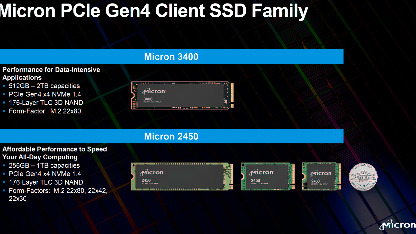
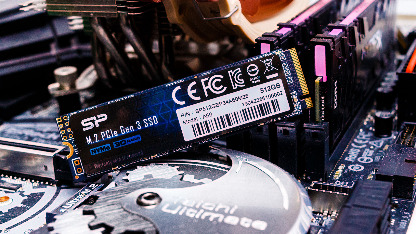
The Silicon Power UD90 250GB is one of the cheapest PCIe 4.0 NVMe drives on the market - Phison's PS5021-E21T DRAM-less controller, Micron 176-layer TLC NAND in HMB mode, and a five-year warranty at near-PCIe-3.0 prices.
Controller & Memory
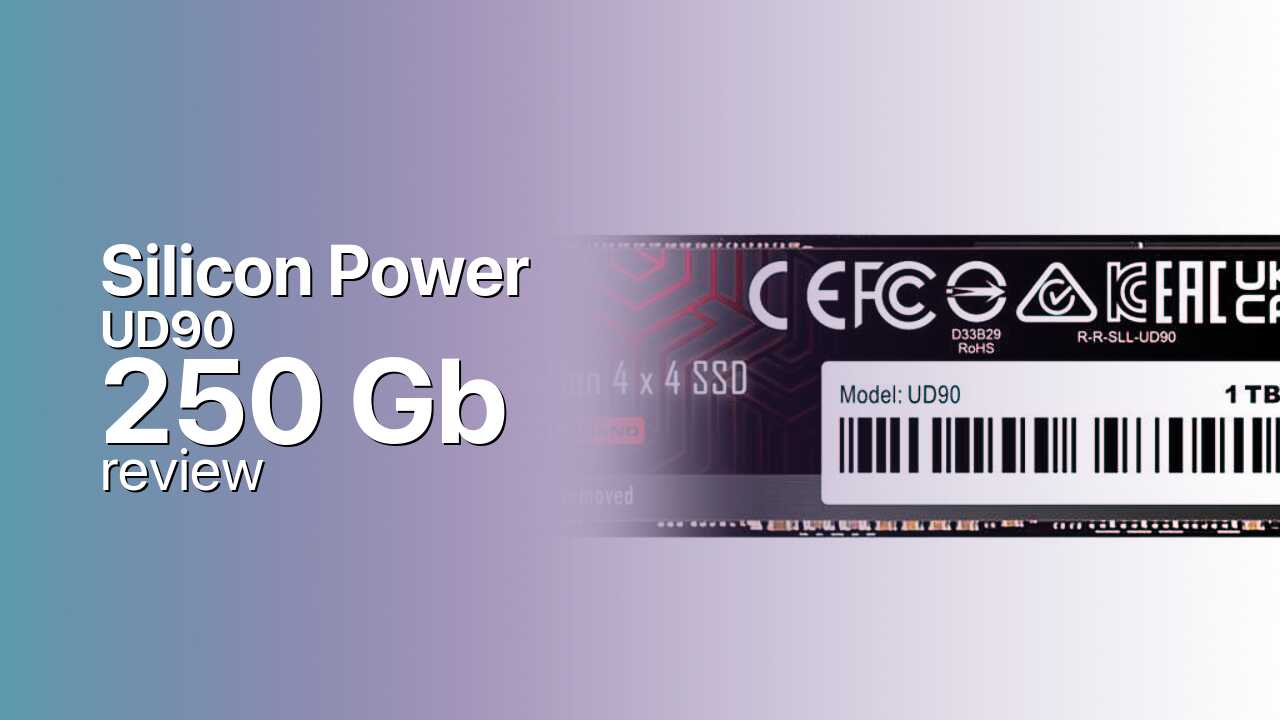
The Silicon Power UD90 250 GB pairs Phison's four-channel PS5021-E21T controller with 3D TLC NAND - typically Micron 176-layer in current production batches, though Silicon Power has shipped the UD90 with various TLC NAND vendors over the product's life. There is no on-board DRAM cache; the drive uses Host Memory Buffer (HMB) to borrow a small slice of system RAM for the logical-to-physical mapping table. The PCB is single-sided M.2 2280 which fits any current motherboard or laptop M.2 slot. The E21T is Phison's budget PCIe 4.0 controller and the same silicon used in many other low-cost PCIe 4.0 NVMe drives launched in 2022-2024.
Silicon Power ships the UD90 in 250 GB, 500 GB, 1 TB, 2 TB, and 4 TB capacities. The 250 GB SKU on this page is the entry boot-drive option in the line, intended for users replacing a SATA SSD or hard drive in an older system. Sequential write performance is materially lower on the 250 GB than on larger capacities because the E21T has fewer NAND dies to fan out across - typical of a four-channel controller running at one or two dies per channel at small capacities. Silicon Power is a Taiwanese brand with global retail distribution and decent regional warranty support, particularly in Asia-Pacific, Europe, and North America.
The UD90 250 GB targets builders who want a basic PCIe 4.0 boot drive at the cheapest possible price, or who need a small NVMe to retire an older SATA boot disk. Direct rivals at this capacity and tier are the WD Blue SN570 250 GB (PCIe 3.0, DRAM-less, similar price), the Crucial P3 Plus 500 GB (next size up, similar price), and the Kingston NV2 250 GB (also Phison budget HMB). Most modern builds skip 250 GB and start at 500 GB or 1 TB, where capacity-specific specs improve dramatically.
Storage Comparisons:
UD90 Performance & Benchmarks
Manufacturer ratings for the UD90 250 GB land at around 4,800 MB/s sequential reads with capacity-specific writes well below the line's flagship - typical of an E21T design with limited NAND parallelism at small capacities. Random performance reaches roughly 739,000 read IOPS on the published spec sheet, which is at the top of the budget PCIe 4.0 segment thanks to the E21T's efficient command handling. Independent reviewers at Tom's Hardware, TechPowerUp, PCWorld and StorageReview consistently measured CrystalDiskMark sequential reads close to the rated value, with the drive showing the typical budget HMB profile - snappy QD1 reads, competent QD8/QD16 scaling, weaker sustained random writes than a DRAM-equipped peer.
Silicon Power UD90 250 GB vs M.2 4.0 x 4 peers
Switch between sequential throughput and random IOPS to see how this drive stacks up against other M.2 4.0 x 4 SSDs in our database. The highlighted bar is the drive on this page — click any other bar to open that drive.
- Patriot Viper PV593 1 TB: 14,500 MB/s read, 14,000 MB/s write
- Patriot Viper PV593 2 TB: 14,500 MB/s read, 14,000 MB/s write
- Patriot Viper PV593 4 TB: 14,500 MB/s read, 14,000 MB/s write
- Patriot Viper PV573 2 TB: 14,000 MB/s read, 12,000 MB/s write
- Silicon Power UD90 250 GB (this drive): 4,800 MB/s read, 4,200 MB/s write
Sustained writes are the area where the 250 GB capacity and DRAM-less design combine into a clear limitation. With limited NAND parallelism and no on-board DRAM, the drive falls into the TLC direct-write rate after a relatively small SLC cache window of perhaps 30-50 GB. For boot, application, and gaming workloads on a 250 GB drive that profile is invisible because the workloads do not produce sustained writes at this scale. For sustained capture or large dataset moves the limit is more visible; in either case, a 250 GB drive is rarely the right tool for write-heavy workloads. DirectStorage operates as expected on a supported PCIe 4.0 platform, though most current titles benefit from larger drives that can hold the full asset library.
Silicon Power UD90 vs Competitors
See how the UD90 stacks up against other M.2 4.0 x 4 drives in our database:
Compare with rival drives:
Endurance, TBW & Warranty
Silicon Power backs the UD90 250 GB with a five-year limited warranty - competitive with the segment standard and a notable strength for a budget-priced drive. The TBW endurance scales with capacity across the line; the 250 GB tier sits at the bottom of the published endurance range, around 200 TBW. At a typical 10-20 GB/day desktop write workload that budget lasts roughly 27-55 years - far past the warranty window and well beyond any realistic service life. The published MTBF is 1.5 million hours, a population statistic rather than a per-drive promise. Silicon Power handles consumer RMA through regional distributors and the company's own support portal at silicon-power.com. The five-year warranty length is competitive on paper but the actual RMA experience varies by region - North American and European buyers report consistently smooth claims, while smaller markets occasionally see slower processing.
Silicon Power UD90 250 GB Specifications
| Category | Value |
|---|---|
| Capacity [?] | 250 GB |
| Interface [?] | M.2 4.0 x 4 |
| Controller [?] | Phison E21T |
| Memory type [?] | Micron TLC |
| DRAM [?] | No (HMB) |
| Read speed (MB/s) [?] | 4800 |
| Write speed (MB/s) [?] | 4200 |
| Read IOPS [?] | 739000 |
| Write IOPS [?] | 739000 |
| Endurance (TBW) [?] | 600 |
| MTBF (million hours) [?] | 1.5 |
| Warranty (years) [?] | 5 |
Verdict: Is the UD90 Worth It in 2026?
The Silicon Power UD90 250 GB is a sensible pick only for buyers replacing an older SATA SSD on the cheapest possible budget, or for a secondary OS drive on a multi-disk build. Anyone building or upgrading in 2026 should jump straight to the 500 GB or 1 TB UD90 - the per-gigabyte cost difference is small and the larger capacities deliver materially higher write performance and longer SLC cache windows. Buyers chasing performance at this price tier should consider the WD Black SN770 500 GB or Crucial P3 Plus 500 GB instead, both of which offer better sustained writes and equivalent or longer warranty. As a pure entry-level boot drive at the cheapest practical NVMe price, the UD90 250 GB does the job but offers little reason to choose over its 500 GB sibling.
+ Pros
- PCIe 4.0 generation at near-PCIe-3.0 pricing
- 5-year limited warranty
- Phison PS5021-E21T controller
- Single-sided M.2 2280 fits any laptop or motherboard
- Low power consumption typical of four-channel HMB design
- 1.5 million-hour MTBF rating
- Cons
- 250 GB capacity too small for most modern game libraries
- DRAM-less HMB lags DRAM-equipped peers on random writes
- Sustained writes drop sharply after small SLC cache
- Capacity-specific writes well below larger UD90 SKUs
- No included heatsink in retail box
Buy this or similar SSD Storage:
Video Review
Which SSD is BEST? - Silicon Power SSD's Benchmarked and Reviewed