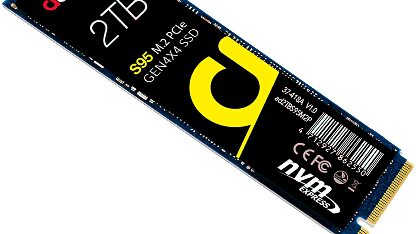
ADATA XPG Gammix S50 2TB Review — First-Gen PCIe 4.0 NVMe SSD (2026)
Quick answer
The ADATA XPG Gammix S50 2 TB is a first-gen PCIe 4.0 drive whose speed numbers now look mid-pack but whose 3,600 TBW endurance rating remains in a class of its own.
Read: 5000 MB/s Write: 4400 MB/s Endurance: 3600 TBW Warranty: 5 years Interface: M.2 4.0 x 4
The ADATA XPG Gammix S50 2 TB doubles the already-absurd endurance of the 1 TB model to 3,600 TBW, making it one of the most endurance-heavy consumer SSDs ever sold — and it still has an 8-channel DRAM controller under the heatsink.
Controller & Memory
The 2 TB XPG Gammix S50 is built on the same Phison PS5016-E16 platform as the 1 TB variant — an 8-channel PCIe 4.0 controller with dedicated DRAM cache, paired with Toshiba 96-layer BiCS4 3D TLC NAND. The extra capacity comes from populating both sides of the M.2 2280 PCB with NAND packages, which also doubles the rated endurance to 3,600 TBW and expands the SLC write cache. Sequential speeds remain unchanged at 5,000 MB/s read and 4,400 MB/s write — the E16's ceiling is the same regardless of capacity.
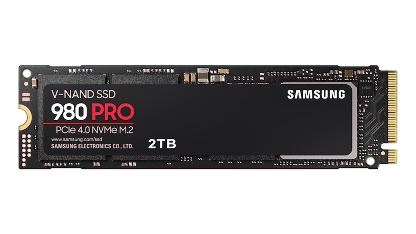
ADATA also sold the S50 in a 1 TB capacity, which carries 1,800 TBW endurance and the same speed ratings. The 2 TB variant reviewed here is the one to seek out on the used market if endurance is your priority — 3,600 TBW is triple what a modern Samsung 990 Pro 2 TB offers (1,200 TBW) and more than double the WD Black SN850X 2 TB (1,200 TBW). The S50 was among the original wave of Phison E16 drives that included the Corsair MP600, Sabrent Rocket 4.0, and Gigabyte Aorus NVMe Gen4 — all essentially the same drive with different branding and heatsink designs.
The 2 TB capacity makes the S50 viable as a single-drive solution — enough space for an OS, a large game library, and media or project files. The DRAM-equipped 8-channel controller handles sustained mixed workloads better than any modern DRAM-less drive, which is why the S50 still holds appeal for content creators and homelab users who push sustained writes. The trade-off is thermal: the E16 runs hot and demands a heatsink and airflow, making this a desktop-only proposition.
Storage Comparisons:
XPG Gammix S50 Performance & Benchmarks
The 2 TB S50 is rated for up to 5,000 MB/s sequential reads and 4,400 MB/s sequential writes — identical to the 1 TB variant. Random performance is rated at up to 750,000 IOPS for both reads and writes, benefiting from the 8-channel controller and dedicated DRAM. In practice, the 2 TB model has a larger SLC write cache than the 1 TB — independent testing of the Phison E16 platform suggests roughly 300—350 GB of cached writes on the 2 TB capacity before the controller drops to direct-to-TLC writes at roughly 1,200—1,500 MB/s, which is still faster than most SATA SSDs.
ADATA XPG Gammix S50 2 TB vs M.2 4.0 x 4 peers
Switch between sequential throughput and random IOPS to see how this drive stacks up against other M.2 4.0 x 4 SSDs in our database. The highlighted bar is the drive on this page — click any other bar to open that drive.
- Patriot Viper PV593 1 TB: 14,500 MB/s read, 14,000 MB/s write
- Patriot Viper PV593 2 TB: 14,500 MB/s read, 14,000 MB/s write
- Patriot Viper PV593 4 TB: 14,500 MB/s read, 14,000 MB/s write
- Patriot Viper PV573 2 TB: 14,000 MB/s read, 12,000 MB/s write
- ADATA XPG Gammix S50 2 TB (this drive): 5,000 MB/s read, 4,400 MB/s write
The larger cache and greater NAND parallelism give the 2 TB variant a meaningful edge in sustained throughput — large file copies, video ingest, and content creation workflows stay at full speed across longer transfers. The E16 controller runs hot regardless of capacity: sustained sequential writes push the controller past 75 °C without a heatsink, and thermal throttling kicks in within minutes. A motherboard M.2 heatsink and case airflow are essential. The drive is not suitable for laptops or fanless enclosures — the E16 was a desktop-first design from the start.
ADATA XPG Gammix S50 vs Competitors
See how the XPG Gammix S50 stacks up against other M.2 4.0 x 4 drives in our database:
Compare with rival drives:
Endurance, TBW & Warranty
The 2 TB XPG Gammix S50 carries a 3,600 TBW endurance rating and a 5-year limited warranty — one of the highest endurance figures ever offered on a consumer SSD of any capacity. At a typical desktop write rate of 20—50 GB per day, this works out to roughly 200 to 500 years of usable life. The MTBF is rated at 1.7 million hours. For comparison, the Samsung 990 Pro 2 TB and WD Black SN850X 2 TB are each rated at 1,200 TBW — the S50 offers triple the endurance. The Phison E16 platform achieved these figures through conservative NAND management and heavy over-provisioning when it launched in 2019, and no consumer drive since has matched its endurance-to-capacity ratio. ADATA handles warranty claims through its standard RMA process.
ADATA XPG Gammix S50 2 TB Specifications
| Category | Value |
|---|---|
| Capacity [?] | 2 TB |
| Interface [?] | M.2 4.0 x 4 |
| Controller [?] | Phison PS5016-E16 |
| Memory type [?] | Toshiba 3D TLC |
| DRAM [?] | SLC Caching and DRAM cache buffer |
| Read speed (MB/s) [?] | 5000 |
| Write speed (MB/s) [?] | 4400 |
| Read IOPS [?] | 750000 |
| Write IOPS [?] | 750000 |
| Endurance (TBW) [?] | 3600 |
| MTBF (million hours) [?] | 1.7 |
| Warranty (years) [?] | 5 |
Verdict: Is the XPG Gammix S50 Worth It in 2026?
The ADATA XPG Gammix S50 2 TB is a first-gen PCIe 4.0 drive whose speed numbers now look mid-pack but whose 3,600 TBW endurance rating remains in a class of its own. It makes sense for a desktop builder who writes heavily — content creators, homelab users running VMs or databases, anyone who has ever worried about wearing out an SSD — and who can provide the heatsink and airflow the E16 controller demands. Skip the S50 entirely for laptops and fanless builds: the thermal requirements are non-negotiable. For a modern 2 TB alternative with faster speeds, lower power draw, and adequate endurance for any consumer workload, the WD Black SN770 2 TB or Samsung 980 Pro 2 TB are both superior daily drivers. The S50 is a niche pick — but if you need a write-heavy workhorse with endurance numbers that look like a typo, there is nothing else like it on the consumer market.
+ Pros
- 3,600 TBW endurance — highest in the consumer 2 TB class by a wide margin
- 8-channel Phison E16 controller with dedicated DRAM cache
- 5,000 MB/s reads on PCIe 4.0
- 5-year warranty
- Sustained mixed-workload consistency beats DRAM-less designs
- Larger SLC cache than the 1 TB variant for longer burst writes
- Cons
- Phison E16 runs hot and demands a heatsink with airflow
- 4,400 MB/s writes trail modern PCIe 4.0 drives significantly
- Double-sided PCB — incompatible with some thin M.2 slots
- Poor fit for laptops and fanless enclosures
- First-gen PCIe 4.0 speeds — surpassed by budget DRAM-less drives
Buy this or similar SSD Storage:
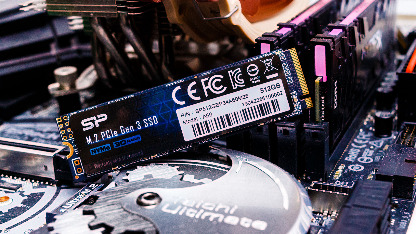
Video Review
Are Budget PCIe 4 SSDs Worth It?? - ADATA XPG GAMMIX S50 Lite