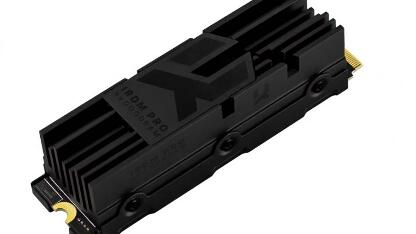
Inside the Heatsink-Equipped Silicon Power XS70 2 TB (2026)
Quick answer
The Silicon Power XS70 2 TB is the pick for buyers who want a PCIe 4.0 drive that arrives PS5-ready with a heatsink already fitted, matching the 7,300 MB/s read ceiling of the E18 platform with the cooler included.
Read: 7300 MB/s Write: 6800 MB/s Endurance: 1400 TBW Warranty: 5 years Interface: M.2 4.0 x 4
The Silicon Power XS70 2 TB ships with a heatsink in the box and hits 7,300 MB/s reads on the Phison E18 platform, backed by 1,400 TBW of endurance.
Controller & Memory
The Silicon Power XS70 2 TB runs the same recipe as the rest of the upper PCIe 4.0 field: Phison's eight-channel PS5018-E18 controller paired with Micron's 176-layer 3D TLC NAND (the B47R die) and a DDR4 DRAM cache that holds the flash translation layer. On paper the 2 TB is the throughput sweet spot of the lineup, rated at 7,300 MB/s sequential reads and 6,800 MB/s writes, which sits right at the PCIe 4.0 x4 ceiling. Random performance is rated at up to one million IOPS in each direction, matching what the E18 platform tops out at. Silicon Power positions the XS70 as a gaming and PS5 drive, and the detail that actually distinguishes it from the otherwise identical Kingston KC3000 and Sabrent Rocket 4 Plus is the bundled heatsink.
The XS70 family spans 1 TB, 2 TB, and 4 TB, all sharing the 7,300 MB/s read figure; what changes with capacity is write speed and endurance. The 1 TB drops to 6,000 MB/s writes and 700 TBW, this 2 TB holds 6,800 MB/s writes and 1,400 TBW, and the 4 TB carries 6,800 MB/s writes and 3,000 TBW. Silicon Power ships every XS70 with a graphene-and-aluminium heatsink moulded into a shark-fin shape, which lifts the module to about 10.8 mm thick. That is the trade-off: the heatsink keeps the warm E18 controller from throttling under sustained writes, but it also means the drive will not slide into most laptop M.2 slots, which expect a bare 3.5 mm stick.
For desktops and the PS5 the heatsink is a net positive. Sony recommends an M.2 NVMe drive with at least 5,500 MB/s sequential reads and a heatsink, with the assembled module fitting within 110 by 25 by 11.25 millimetres, and the XS70 2 TB clears all three comfortably at 7,300 MB/s and 10.8 mm tall. Against direct rivals, the Kingston KC3000 2 TB uses the same E18 plus Micron TLC recipe and rates 7,000/7,000 MB/s with 1,600 TBW but ships bare, while the newer Samsung 990 Pro 2 TB edges it on writes at 6,850 MB/s and brings a more mature RMA network. The XS70's case rests on matching that performance with the heatsink already in the box.
Storage Comparisons:
XS70 Performance & Benchmarks
The 2 TB XS70 is rated at 7,300 MB/s sequential reads and 6,800 MB/s sequential writes over a PCIe 4.0 x4 link, with random performance quoted at up to one million read IOPS and one million write IOPS. Those are peak numbers that sit at the practical ceiling of the Phison E18 platform, and the 2 TB hits the full write figure where the cheaper 1 TB variant is capped at 6,000 MB/s.
Silicon Power XS70 2 TB vs M.2 4.0 x 4 peers
Switch between sequential throughput and random IOPS to see how this drive stacks up against other M.2 4.0 x 4 SSDs in our database. The highlighted bar is the drive on this page — click any other bar to open that drive.
- Patriot Viper PV593 1 TB: 14,500 MB/s read, 14,000 MB/s write
- Patriot Viper PV593 2 TB: 14,500 MB/s read, 14,000 MB/s write
- Patriot Viper PV593 4 TB: 14,500 MB/s read, 14,000 MB/s write
- Patriot Viper PV573 2 TB: 14,000 MB/s read, 12,000 MB/s write
- Silicon Power XS70 2 TB (this drive): 7,300 MB/s read, 6,800 MB/s write
In real-world terms the gap between the XS70 and any other top PCIe 4.0 drive is small once past the headline spec sheet. Game load times, where the CPU and asset decompression are usually the bottleneck, are effectively indistinguishable from a Samsung 990 Pro or WD Black SN850X. The payoff for the extra bandwidth shows up in sequential workloads: copying a large game library, scrubbing 4K footage on a video timeline, or moving a virtual machine image between drives.
Like every E18 drive, the XS70 leans on a pseudo-SLC cache that absorbs writes at the full 6,800 MB/s until it fills, after which writes settle to the native Micron TLC rate, a fraction of the cached speed, under a long contiguous copy. Independent reviewers including StorageReview and TechPowerUp place the XS70 within a few percent of the Kingston KC3000 and Sabrent Rocket 4 Plus on the usual suites, which is expected given the shared E18 plus B47R recipe. Thermals are well controlled thanks to the bundled heatsink; Guru3D found the pre-fitted heatsink kept the controller comfortable under sustained writes.
Silicon Power XS70 vs Competitors
See how the XS70 stacks up against other M.2 4.0 x 4 drives in our database:
Compare with rival drives:
Endurance, TBW & Warranty
Silicon Power backs the XS70 2 TB with a five-year limited warranty that ends early if the 1,400 TBW endurance rating is exceeded, whichever comes first. That 1,400 TBW figure sits in the middle of a lineup that scales from 700 TBW on the 1 TB through 3,000 TBW on the 4 TB, holding roughly 700 TBW per terabyte. At a fairly heavy consumer workload of around 30 GB of writes per day the drive would need close to 128 years to wear out the NAND, so in practice the five-year term expires long before the flash does. Even a professional video pipeline writing 100 GB a day would take nearly four decades. Silicon Power rates the XS70 at 2 million hours MTBF; treat that as a population-reliability statistic across a fleet of drives rather than a lifespan promise for any single unit.
Silicon Power XS70 2 TB Specifications
| Category | Value |
|---|---|
| Capacity [?] | 2 TB |
| Interface [?] | M.2 4.0 x 4 |
| Controller [?] | Phison PS5018-E18 |
| Memory type [?] | Micron 3D TLC |
| DRAM [?] | Samsung DDR4 |
| Read speed (MB/s) [?] | 7300 |
| Write speed (MB/s) [?] | 6800 |
| Read IOPS [?] | 1000000 |
| Write IOPS [?] | 1000000 |
| Endurance (TBW) [?] | 1400 |
| MTBF (million hours) [?] | 2000000 |
| Warranty (years) [?] | 5 |
Verdict: Is the XS70 Worth It in 2026?
The Silicon Power XS70 2 TB is the pick for buyers who want a PCIe 4.0 drive that arrives PS5-ready with a heatsink already fitted, matching the 7,300 MB/s read ceiling of the E18 platform with the cooler included. It is the wrong choice for a laptop, where the fixed 10.8 mm heatsink will not clear most M.2 slots, and a poor fit on a motherboard that already ships with its own M.2 heatsink, since the bundled cooler becomes a redundant second layer that cannot be easily removed. The closest direct rival is the Kingston KC3000 2 TB, which uses the same Phison E18 and Micron TLC recipe and carries slightly higher 1,600 TBW endurance but ships bare, so the decision usually comes down to whether a heatsink is needed in the box. Our take: a sensible, no-surprises Gen4 drive whose bundled cooler makes it one of the cleanest PS5 upgrade picks in its capacity class.
+ Pros
- 7,300/6,800 MB/s near the PCIe 4.0 ceiling
- Included graphene heatsink, PS5-ready out of the box
- Phison E18 with DDR4 DRAM cache
- 1,400 TBW endurance over five years
- Micron 176-layer 3D TLC NAND
- Up to 1 million random read IOPS
- Cons
- Fixed 10.8 mm heatsink blocks laptop slots
- Heatsink wasted on boards with their own
- 2022 release predates Samsung 990 Pro
- Brand recognition trails Samsung and Kingston
- Writes trail KC3000's 7,000 MB/s
Buy this or similar SSD Storage:



Video Review
Silicon Power XS70 SSD Review, PC Benchmarks & PS5 Testing