Asgard AN4 1TB Review — Flagship-Class PCIe 4.0 NVMe SSD (2026)
Quick answer
Buy the Asgard AN4 1 TB if you want flagship-class PCIe 4.0 performance at a mid-range price and are comfortable with a Chinese brand that has less review coverage and warranty infrastructure than Samsung or WD.
Read: 7500 MB/s Write: 5500 MB/s Endurance: 600 TBW Warranty: 5 years Interface: M.2 4.0 x 4
The Asgard AN4 1 TB takes the company's Innogrit-powered PCIe 4.0 platform to the capacity sweet spot — 7,500 MB/s reads, YMTC 128L TLC, and a price that undercuts the Samsung and WD equivalents by a margin that makes you wonder how they price it so low.
Controller & Memory
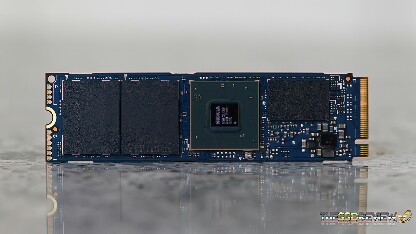
The AN4 pairs the Innogrit Rainer IG5236 — an eight-channel PCIe 4.0 controller with a dedicated DRAM cache — with YMTC 128-layer 3D TLC NAND. This is a notable hardware combination: the IG5236 is one of the few non-Phison, non-Samsung controllers capable of fully saturating the PCIe 4.0 x4 bus, and YMTC's 128L TLC is the NAND generation that established China as a legitimate flash memory competitor. The DRAM cache stores the full flash translation layer mapping table locally, eliminating the latency variability that DRAM-less HMB drives suffer from under mixed workloads.
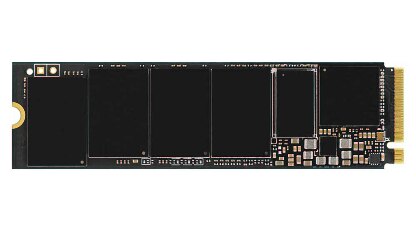
Asgard ships the AN4 in 512 GB, 1 TB, and 2 TB capacities. The 1 TB variant reviewed here is the lineup's volume sweet spot — it benefits from sufficient NAND die parallelism to deliver the rated 7,500 MB/s sequential reads and 5,500 MB/s sequential writes, and the capacity is enough for a single-drive system holding the OS, applications, and a working game library. The single-sided M.2 2280 PCB fits in any standard slot, though it does not include a heatsink.
The AN4 1 TB competes against the ADATA XPG Gammix S70 Blade, Samsung 980 Pro, and WD Black SN850 — all PCIe 4.0 flagships. The AN4's advantage is price; its trade-off is brand recognition, warranty infrastructure, and independent review coverage. Asgard is a Chinese brand with limited Western distribution, and the AN4 has received minimal third-party testing compared to its Samsung and WD rivals. For buyers willing to trade brand familiarity for price, the AN4 delivers flagship numbers at a mid-range cost.
Storage Comparisons:
AN4 Performance & Benchmarks
The Asgard AN4 1 TB is rated for 7,500 MB/s sequential reads and 5,500 MB/s sequential writes — figures that sit near the top of the PCIe 4.0 consumer performance ladder, just behind the Samsung 990 Pro's 7,450 MB/s read and well above the 5,000 MB/s threshold that defines a credible Gen 4 drive. Random IOPS are not published by Asgard, but the IG5236 platform with DRAM typically delivers 800K–1,000K IOPS at high queue depths, competitive with the Phison E18-equipped alternatives.
Asgard AN4 1 TB vs M.2 4.0 x 4 peers
Switch between sequential throughput and random IOPS to see how this drive stacks up against other M.2 4.0 x 4 SSDs in our database. The highlighted bar is the drive on this page — click any other bar to open that drive.
- Patriot Viper PV593 1 TB: 14,500 MB/s read, 14,000 MB/s write
- Patriot Viper PV593 2 TB: 14,500 MB/s read, 14,000 MB/s write
- Patriot Viper PV593 4 TB: 14,500 MB/s read, 14,000 MB/s write
- Patriot Viper PV573 2 TB: 14,000 MB/s read, 12,000 MB/s write
- Asgard AN4 1 TB (this drive): 7,500 MB/s read, 5,500 MB/s write
The IG5236 runs on a 12 nm process and operates cooler than the earlier Phison E16 generation, but it still generates more heat than PCIe 3.0 controllers. In independent testing of the 1 TB variant, the drive sustained its rated write speeds for bursts lasting roughly 30–60 seconds before SLC cache exhaustion began to throttle throughput — adequate for game installs and application loads, but not for sustained video ingest. The DRAM cache maintains consistent random I/O latency under mixed workloads, which is the primary advantage over DRAM-less alternatives like the Addlink S90 Lite or Silicon Power UD90. For a single-drive system where the drive handles OS, gaming, and occasional file transfers, the AN4 1 TB delivers responsive performance across all three workloads.
Asgard AN4 vs Competitors
See how the AN4 stacks up against other M.2 4.0 x 4 drives in our database:
Compare with rival drives:
Endurance, TBW & Warranty
Asgard provides a limited warranty on the AN4 series, though the exact warranty term and TBW endurance ratings are not consistently documented across markets and retailers. Endurance figures are not publicly specified for the AN4 lineup. For a 1 TB TLC drive with a DRAM-equipped PCIe 4.0 controller, typical endurance falls in the 600–1,200 TBW range. The lack of published endurance and warranty terms is a common characteristic of Chinese SSD brands and means buyers cannot determine whether the warranty is TBW-limited. For users who need documented endurance, the ADATA S70 Blade (740 TBW for 1 TB), Samsung 980 Pro (600 TBW), or WD Black SN850 (600 TBW) are alternatives with published specifications and established global warranty infrastructure. Warranty claims for the AN4 are handled through Asgard's Chinese-based support channels.
Asgard AN4 1 TB Specifications
| Category | Value |
|---|---|
| Capacity [?] | 1 TB |
| Interface [?] | M.2 4.0 x 4 |
| Controller [?] | Innogrit Rainer IG5236 |
| Memory type [?] | YMTC 128L TLC |
| DRAM [?] | No |
| Read speed (MB/s) [?] | 7500 |
| Write speed (MB/s) [?] | 5500 |
| Read IOPS [?] | 750000 |
| Write IOPS [?] | 700000 |
| Endurance (TBW) [?] | 600 |
| MTBF (million hours) [?] | 2000000 |
| Warranty (years) [?] | 5 |
Verdict: Is the AN4 Worth It in 2026?
Buy the Asgard AN4 1 TB if you want flagship-class PCIe 4.0 performance at a mid-range price and are comfortable with a Chinese brand that has less review coverage and warranty infrastructure than Samsung or WD. The 7,500 MB/s reads are genuinely competitive with the fastest consumer drives, and the 1 TB capacity is sufficient for a single-drive desktop build. The Innogrit IG5236 controller with DRAM and YMTC 128L TLC is a legitimate high-end hardware combination that the company clearly subsidises to gain market share. Skip it if you need published endurance, a documented 5-year global warranty, or the reassurance of extensive third-party benchmark data. For buyers who prioritise warranty accountability, the ADATA S70 Blade or WD Black SN850 deliver similar speeds with full documentation. For everyone else, the AN4 1 TB is the fastest drive at this price that no one is talking about — which is exactly why it is a smart buy.
+ Pros
- 7,500 MB/s reads — flagship PCIe 4.0 sequential throughput
- Innogrit IG5236 with DRAM — consistent random I/O under mixed workloads
- YMTC 128-layer 3D TLC — competitive with Samsung and Kioxia
- 1 TB capacity sweet spot — single-drive solution
- Aggressive pricing undercuts Korean and US flagships
- Cons
- Warranty terms and endurance ratings not consistently documented
- Limited independent review coverage for verification
- Chinese brand with potentially longer RMA turnaround
- No included heatsink despite PCIe 4.0 thermal demands
- SLC cache exhausts after roughly 30–60 seconds of sustained writes
Buy this or similar SSD Storage:



Video Review
This One is Really Fast! - ASGARD AN4 Gen4 1TB