Mushkin Helix-L 120GB SSD — In-Depth Review & Specs (2026)
Quick answer
The Mushkin Helix-L 120GB serves exactly one purpose: getting a system to boot from NVMe for the lowest possible cost.
Read: 1700 MB/s Write: 1500 MB/s Endurance: 80 TBW Warranty: 3 years Interface: M.2 3.0 x 4
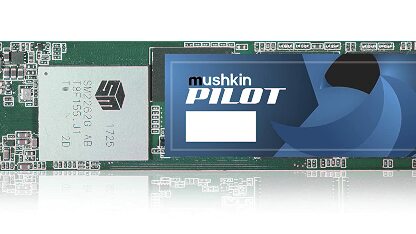
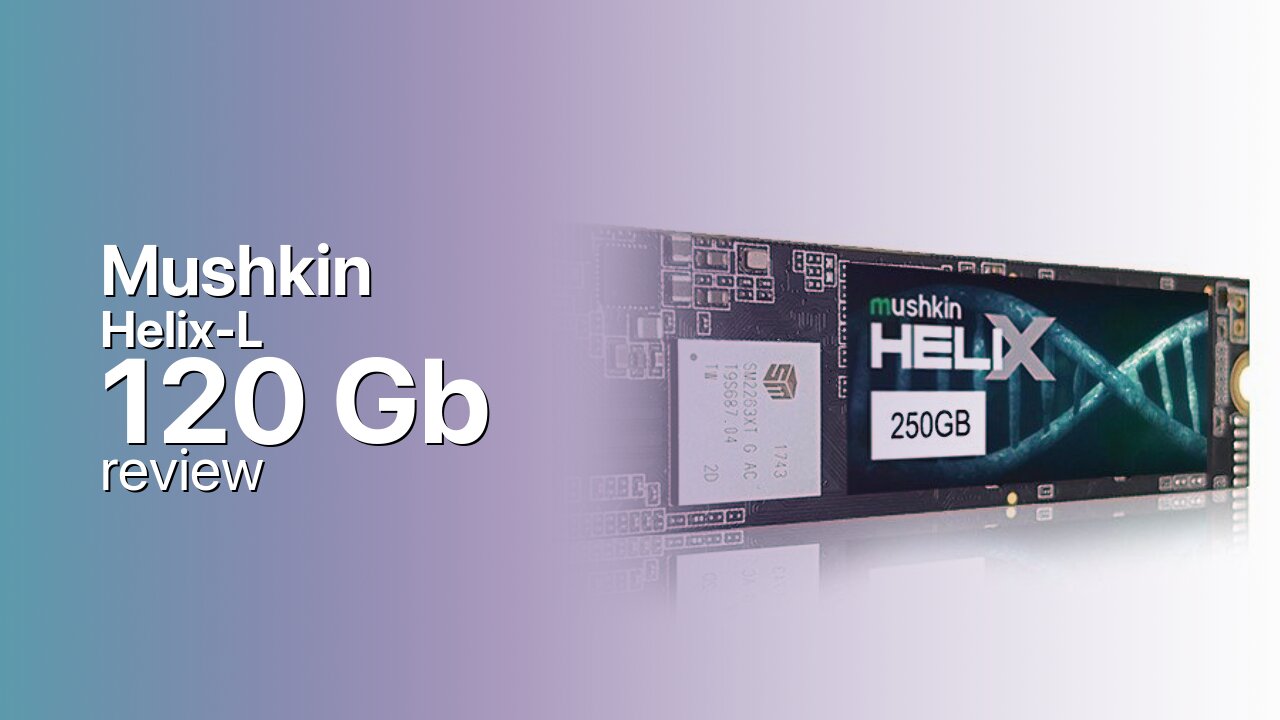
The Mushkin Helix-L 120GB is an entry-level NVMe SSD targeting the absolute lowest price point for an M.2 boot drive. Built on the Silicon Motion SM2263XT — a 4-channel, DRAM-less PCIe 3.0 x4 controller that uses Host Memory Buffer (HMB) — it delivers up to 1,700 MB/s read and 1,500 MB/s write. At 120 GB, it is sized purely as an OS boot drive, and even then the capacity is extremely tight by 2026 standards.
Controller & Memory
The Silicon Motion SM2263XT is one of the most widely-used budget NVMe controllers. It is a 4-channel, DRAM-less design fabricated on a 28nm process. Without dedicated DRAM, it relies on HMB to borrow system RAM (32–64 MB) for the flash translation layer. The NAND is 3D TLC — Mushkin does not publicly disclose their flash supplier, which is typical for ultra-budget drives sourcing on the spot market.
Mushkin is an American brand with a long history in the memory and storage market, though their SSD offerings are typically positioned at the budget end. The Helix-L is their entry-level NVMe line, competing with the ADATA Swordfish, Team Group MP33, and other SM2263XT-based drives. At 120 GB, the drive is one of the smallest NVMe SSDs still on the market — it is adequate for a lightweight Linux installation, a Chromebook replacement, or as a cache drive, but it is too small for a practical Windows 11 installation with applications.
The single-sided M.2 2280 form factor fits any compatible slot. Endurance is not publicly rated, which is concerning but not unusual for drives at this price point — expect roughly 60–80 TBW based on typical SM2263XT configurations at this capacity.
Storage Comparisons:
Helix-L Performance & Benchmarks
Sequential throughput of 1,700 MB/s read and 1,500 MB/s write is modest for an NVMe drive — roughly 3x SATA speeds — and reflects the combination of a DRAM-less controller and the limited NAND die count at 120 GB. Real-world performance is adequate for booting an OS and launching lightweight applications but will feel sluggish compared to larger-capacity NVMe drives.
Mushkin Helix-L 120 GB vs M.2 3.0 x 4 peers
Switch between sequential throughput and random IOPS to see how this drive stacks up against other M.2 3.0 x 4 SSDs in our database. The highlighted bar is the drive on this page — click any other bar to open that drive.
- ADATA SX 8800 Pro 512 GB: 3,500 MB/s read, 2,700 MB/s write
- ADATA SX 8800 Pro 1 TB: 3,500 MB/s read, 2,700 MB/s write
- ADATA XPG Spectrix S40G RGB 256 GB: 3,500 MB/s read, 3,000 MB/s write
- ADATA XPG Spectrix S40G RGB 512 GB: 3,500 MB/s read, 3,000 MB/s write
- Mushkin Helix-L 120 GB (this drive): 1,700 MB/s read, 1,500 MB/s write
Random 4K performance is limited by both the DRAM-less HMB architecture and the small capacity, with typical results in the 100,000–150,000 IOPS range. The SLC write cache is tiny — roughly 5–10 GB — reflecting the limited free space, and post-cache native TLC writes drop to 200–400 MB/s. For an OS boot drive handling small, bursty writes, this is usually sufficient. Large file copies will quickly expose the drive's limitations. Thermal output is minimal — the SM2263XT rarely exceeds 50°C under load. Power consumption peaks at roughly 3 W.
Mushkin Helix-L vs Competitors
See how the Helix-L stacks up against other M.2 3.0 x 4 drives in our database:
Compare with rival drives:
Endurance, TBW & Warranty
Mushkin provides a limited warranty on the Helix-L series, typically 3 years. The lack of a publicly stated endurance rating (TBW) means the warranty write limit is unspecified — Mushkin likely uses a time-based warranty without a write-volume cap for this entry-level product. Confirm warranty terms with the retailer before purchase.
Mushkin Helix-L 120 GB Specifications
| Category | Value |
|---|---|
| Capacity [?] | 120 GB |
| Interface [?] | M.2 3.0 x 4 |
| Controller [?] | Silicon Motion SM2263XT |
| Memory type [?] | TLC |
| DRAM [?] | No (HMB) |
| Read speed (MB/s) [?] | 1700 |
| Write speed (MB/s) [?] | 1500 |
| Read IOPS [?] | 280000 |
| Write IOPS [?] | 250000 |
| Endurance (TBW) [?] | 80 |
| MTBF (million hours) [?] | 1500000 |
| Warranty (years) [?] | 3 |
Verdict: Is the Helix-L Worth It in 2026?
The Mushkin Helix-L 120GB serves exactly one purpose: getting a system to boot from NVMe for the lowest possible cost. At 120 GB, it is too small for a practical Windows 11 installation with applications and user data — you will be constantly fighting low disk space. It makes more sense as a Linux boot drive for a lightweight server or a dedicated cache device. For any general-purpose PC, spend the small additional amount to get at least a 256GB or — better — a 512GB NVMe drive. The capacity constraint overshadows any other attribute of this drive.
+ Pros
- Extremely low cost — the cheapest way to add NVMe
- Silicon Motion SM2263XT — proven budget controller
- Single-sided M.2 2280 — universal compatibility
- Low power consumption and cool operation
- Cons
- 120 GB is impractically small for a modern OS drive
- DRAM-less HMB with limited 4-channel architecture
- Endurance not publicly rated
- Tiny SLC cache (~5-10 GB)
- NAND supplier undisclosed
Buy this or similar SSD Storage:
Video Review
Mushkin Helix-L M.2 NVMe SSD Review