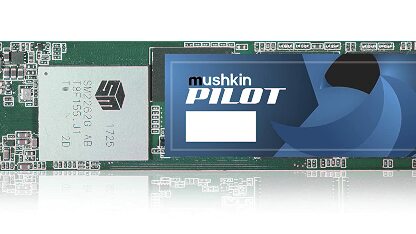
Edge NextGen M.2 120GB — Entry-Level PCIe 3.0 NVMe SSD (2026)
Quick answer
The Edge NextGen M.2 120GB is a budget boot drive with a capable SM2262 controller that's hamstrung by its small capacity.
Read: 1215 MB/s Write: 515 MB/s Endurance: 80 TBW Warranty: 3 years Interface: PCIe 3.0 x 4
The Edge NextGen M.2 120GB is the smallest-capacity variant in Edge Memory's PCIe 3.0 NVMe lineup, using the SM2262 controller but with significantly reduced speeds compared to larger sizes.
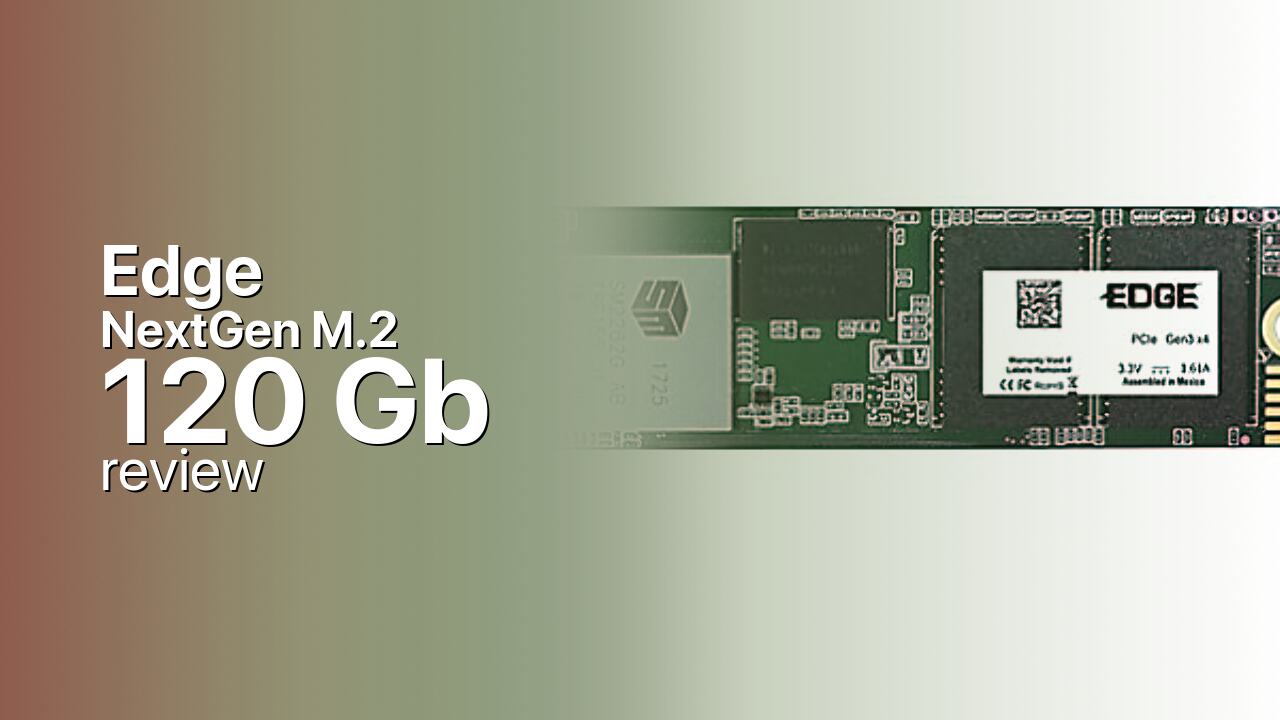
Controller & Memory
The Edge NextGen M.2 120GB is built around the Silicon Motion SM2262 controller paired with 3D TLC NAND. The SM2262 is a capable quad-core PCIe 3.0 x4 controller that supports dedicated DRAM cache — a feature that gives it an edge over DRAM-less budget drives in random I/O performance. However, the 120GB capacity severely constrains what this controller can achieve.
The 120GB variant is rated at just 1,215 MB/s sequential reads and 515 MB/s writes — barely faster than the SATA III ceiling of 550 MB/s on writes. This is a dramatic step down from the larger capacities in the same lineup: the 500GB model reaches 2,680/1,755 MB/s, and even the 250GB hits 2,470/1,000 MB/s. The bottleneck comes from having too few NAND dies to drive parallelism — the SM2262 has eight NAND channels, but the 120GB capacity simply doesn't populate enough dies to saturate the PCIe 3.0 x4 interface.
Random IOPS are rated at 91,000 reads and 133,000 writes for the 120GB model. These are modest numbers — the 500GB variant pushes 335K/277K IOPS — but still serviceable for everyday desktop use.
Edge Memory is a US-based manufacturer of memory modules and storage products. The NextGen M.2 series is their consumer NVMe offering, competing in the mid-range PCIe 3.0 segment. At 120GB, this drive is best suited as a budget boot drive for systems with minimal storage needs. The limited capacity means it won't hold much beyond the OS and a handful of applications.
Note: The DB previously listed speeds of 2,705/1,600 MB/s for this drive, which are actually the 2TB variant's numbers. These have been corrected to 1,215/515 MB/s per Edge's official specifications.
Storage Comparisons:
NextGen M.2 Performance & Benchmarks
The Edge NextGen M.2 120GB is rated at up to 1,215 MB/s sequential reads and 515 MB/s writes. These are the lowest speeds in the NextGen M.2 lineup and reflect the fundamental limitation of a 120GB capacity: too few NAND dies to drive meaningful parallelism through the SM2262's eight channels. On writes, the 515 MB/s figure barely clears the SATA III ceiling of roughly 550 MB/s, meaning the NVMe interface advantage is marginal at this capacity.
Edge NextGen M.2 120 GB vs PCIe 3.0 x 4 peers
Switch between sequential throughput and random IOPS to see how this drive stacks up against other PCIe 3.0 x 4 SSDs in our database. The highlighted bar is the drive on this page — click any other bar to open that drive.
- Asura Genesis Xtreme 256 GB: 3,400 MB/s read, 3,000 MB/s write
- Asura Genesis Xtreme 512 GB: 3,400 MB/s read, 3,000 MB/s write
- Asura Genesis Xtreme 1 TB: 3,400 MB/s read, 3,000 MB/s write
- Asura Genesis Xtreme 2 TB: 3,400 MB/s read, 3,000 MB/s write
- Edge NextGen M.2 120 GB (this drive): 1,215 MB/s read, 515 MB/s write
Random read and write IOPS are rated at 91,000 and 133,000 respectively — significantly lower than the 500GB model's 335K/277K. Even so, these numbers are adequate for OS boot duties, web browsing, and light productivity work. The SM2262's DRAM cache helps maintain consistent random I/O performance, which matters more for day-to-day responsiveness than the disappointing sequential speeds.
The SLC cache behavior is not specifically documented for this drive, but SM2262-based drives typically use dynamic SLC caching. On a 120GB drive, the SLC cache will be relatively small — perhaps 10-20 GB — meaning sustained writes will quickly exhaust it and drop to direct TLC speeds. For a drive of this capacity, sustained writes are unlikely to be a common workload anyway, since the total usable space is around 111 GB after formatting.
For buyers considering this drive: the 120GB capacity is the bottleneck more than the controller. If your budget allows, the 250GB or 500GB variants offer dramatically better performance — 2,470/1,000 MB/s and 2,680/1,755 MB/s respectively — for a modest price increase.
Edge NextGen M.2 vs Competitors
See how the NextGen M.2 stacks up against other PCIe 3.0 x 4 drives in our database:
Compare with rival drives:
Endurance, TBW & Warranty
The Edge NextGen M.2 carries a 3-year or TBW warranty, whichever comes first. Edge Memory does not publish specific TBW figures for the NextGen M.2 series on their product page, which is a gap compared to competitors that disclose endurance ratings. For context, comparable 120GB TLC drives typically carry 60-80 TBW endurance ratings. At typical consumer write loads of 20-30 GB per day, a 120GB drive with ~70 TBW would last roughly 6-10 years before hitting the endurance limit — well within the 3-year warranty window for typical usage. Without an official TBW number, buyers should treat this as a light-use boot drive.
Edge NextGen M.2 120 GB Specifications
| Category | Value |
|---|---|
| Capacity [?] | 120 GB |
| Interface [?] | PCIe 3.0 x 4 |
| Controller [?] | Silicon Motion SM2262 |
| Memory type [?] | TLC |
| DRAM [?] | Yes |
| Read speed (MB/s) [?] | 1215 |
| Write speed (MB/s) [?] | 515 |
| Read IOPS [?] | 91000 |
| Write IOPS [?] | 133000 |
| Endurance (TBW) [?] | 80 |
| MTBF (million hours) [?] | 1.5 |
| Warranty (years) [?] | 3 |
Verdict: Is the NextGen M.2 Worth It in 2026?
The Edge NextGen M.2 120GB is a budget boot drive with a capable SM2262 controller that's hamstrung by its small capacity. At 1,215/515 MB/s, it barely outperforms SATA SSDs, and the 120GB storage limit means you'll need to carefully manage what you install. The DRAM cache gives it better random I/O than DRAM-less alternatives, but the real recommendation here is to spend a little more for the 250GB or 500GB variant — both offer dramatically better speeds and far more practical capacity. For basic OS duty on a tight budget, it works, but it's hard to recommend over better options.
+ Pros
- SM2262 controller with DRAM cache support
- 3D TLC NAND (more durable than QLC)
- Standard M.2 2280 form factor
- 3-year warranty coverage
- Adequate for basic OS boot duties
- Cons
- 1,215/515 MB/s barely faster than SATA III
- 120GB capacity extremely limiting for modern use
- 91K read IOPS much lower than larger variants
- No published TBW endurance rating
- Small SLC cache exhausts quickly on sustained writes
Buy this or similar SSD Storage:



Video Review
M.2 2242 SSD, Installation, Initialising and Formatting