Apacer AS2280P2 Pro 120GB SSD — In-Depth Review & Specs (2026)
Quick answer
The Apacer AS2280P2 Pro 120GB occupies a difficult position: it is a genuine NVMe SSD at a price that competes with SATA drives, but at a capacity and performance level that make it viable only as a dedicated boot drive in a multi-drive system.
Read: 1580 MB/s Write: 950 MB/s Endurance: 60 TBW Warranty: 3 years Interface: M.2 3.0 x 4
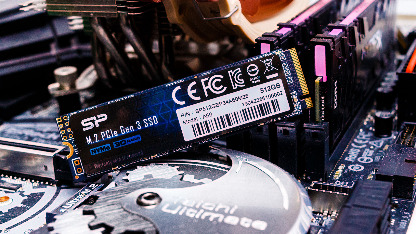
The Apacer AS2280P2 Pro 120GB is the smallest capacity in Apacer's entry-level Panther NVMe line. Built on the Phison PS5008-E8T — a 4-channel DRAM-less PCIe 3.0 controller using Host Memory Buffer — the AS2280P2 Pro delivers 1,580 MB/s read and 950 MB/s write at a 120GB capacity that is strictly an OS-and-essentials proposition. With a 3-year warranty and Kioxia 64-layer 3D TLC NAND, the drive targets the absolute entry point of the NVMe market. This review examines what the AS2280P2 Pro 120GB offers — and what it sacrifices — at the lowest rung of the NVMe ladder.
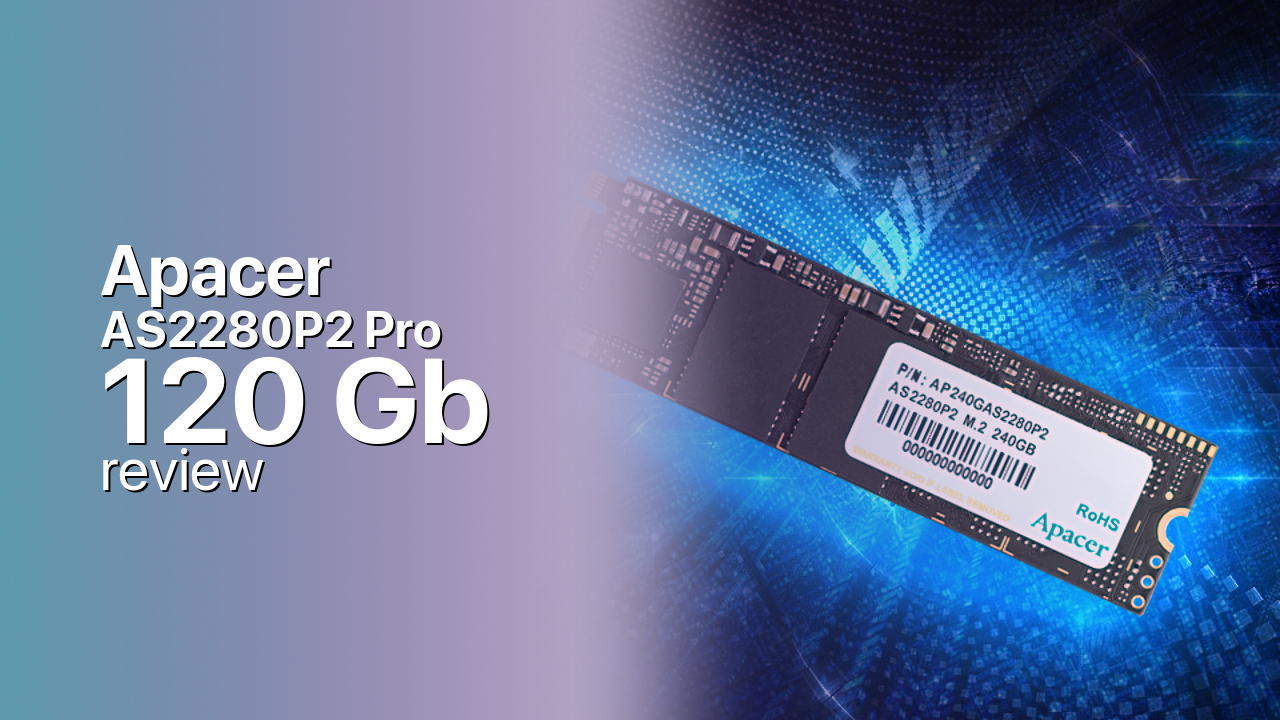
Controller & Memory
The Phison PS5008-E8T is an entry-level 4-channel DRAM-less NVMe controller. It uses NVMe Host Memory Buffer to borrow system RAM for the flash translation layer, eliminating the cost of dedicated DRAM. Apacer pairs the E8T with Kioxia 64-layer 3D TLC NAND behind an SLC write cache. At 120GB, the controller's four channels operate with the minimum viable NAND die population, capping throughput at 1,580 MB/s read and 950 MB/s write — roughly 2.9x and 1.7x SATA SSD speeds respectively.
The SLC write cache at 120GB is very small — typically 10-20 GB dynamically — meaning even modest file transfers can exhaust it and expose native TLC write speeds around 150-250 MB/s. For a pure OS drive where writes are mostly small background operations, the cache is adequate for updates and routine tasks. Large file copies or application installs will push past the cache and slow noticeably.
The drive supports LDPC error correction, SLC caching, and NVMe power management. The single-sided M.2 2280 form factor fits any slot, and the E8T's minimal power draw keeps thermals benign even in passively cooled laptop bays. Apacer provides a 3-year limited warranty — standard for the ultra-budget segment.
Storage Comparisons:
AS2280P2 Pro Performance & Benchmarks
Rated sequential throughput of 1,580 MB/s read and 950 MB/s write is at the floor of what can reasonably be called NVMe performance. Reads are roughly 2.9x faster than a SATA SSD; writes are only about 1.7x faster — the narrowest NVMe-to-SATA gap of any drive in this class. For an OS-only drive, where reads dominate and writes are small background operations, the 1,580 MB/s read speed provides a noticeable improvement over SATA in boot times and application launches.
Apacer AS2280P2 Pro 120 GB vs M.2 3.0 x 4 peers
Switch between sequential throughput and random IOPS to see how this drive stacks up against other M.2 3.0 x 4 SSDs in our database. The highlighted bar is the drive on this page — click any other bar to open that drive.
- ADATA SX 8800 Pro 512 GB: 3,500 MB/s read, 2,700 MB/s write
- ADATA SX 8800 Pro 1 TB: 3,500 MB/s read, 2,700 MB/s write
- ADATA XPG Spectrix S40G RGB 256 GB: 3,500 MB/s read, 3,000 MB/s write
- ADATA XPG Spectrix S40G RGB 512 GB: 3,500 MB/s read, 3,000 MB/s write
- Apacer AS2280P2 Pro 120 GB (this drive): 1,580 MB/s read, 950 MB/s write
Random 4K performance at 92,000 IOPS (read) reflects the E8T's budget positioning — this is lower than most DRAM-less NVMe controllers and not dramatically better than a good SATA SSD with DRAM. The HMB-based FTL keeps single-task random I/O adequate for basic desktop use — web browsing, office productivity, media playback — but any form of concurrent workload causes visible slowdown. The 120GB capacity compounds the issue: with Windows occupying 40-50 GB, free space is limited, and the drive has little room for the background garbage collection and wear leveling that keep TLC SSDs performing well over time.
The 120GB capacity is the real constraint. Windows 10/11 with updates occupies 40-50 GB; adding a browser, office suite, and a few utilities pushes to 60 GB. That leaves roughly 45-50 GB free — enough for very little beyond temp files and a few small applications. The AS2280P2 Pro 120GB is best understood as an OS-only boot drive in a system that already has secondary storage. Thermally the E8T runs cool; no heatsink is needed.
Apacer AS2280P2 Pro vs Competitors
See how the AS2280P2 Pro stacks up against other M.2 3.0 x 4 drives in our database:
Compare with rival drives:
Endurance, TBW & Warranty
Apacer provides a 3-year limited warranty for the AS2280P2 Pro series. Endurance ratings are not publicly specified for the 120GB model. The warranty is tied to the original purchaser and does not cover data recovery. Given the small capacity and budget positioning, the drive is best suited to light-duty OS-only use within the warranty period.
Apacer AS2280P2 Pro 120 GB Specifications
| Category | Value |
|---|---|
| Capacity [?] | 120 GB |
| Interface [?] | M.2 3.0 x 4 |
| Controller [?] | Phison PS5008-E8T |
| Memory type [?] | 3D TLC |
| DRAM [?] | HMB |
| Read speed (MB/s) [?] | 1580 |
| Write speed (MB/s) [?] | 950 |
| Read IOPS [?] | 92000 |
| Write IOPS [?] | 160000 |
| Endurance (TBW) [?] | 60 |
| MTBF (million hours) [?] | 1.5 |
| Warranty (years) [?] | 3 |
Verdict: Is the AS2280P2 Pro Worth It in 2026?
The Apacer AS2280P2 Pro 120GB occupies a difficult position: it is a genuine NVMe SSD at a price that competes with SATA drives, but at a capacity and performance level that make it viable only as a dedicated boot drive in a multi-drive system. The Phison E8T controller and 120GB of Kioxia TLC NAND deliver adequate read performance for the OS role, but the narrow SATA-to-NVMe gap in write speed and the extremely limited capacity mean that stepping up to even 240-256GB — in this same product line or from a competitor — yields a disproportionately better experience for a modest price increase. For a budget build where every dollar is stretched to the absolute limit and a secondary drive is already planned, the AS2280P2 Pro 120GB functions as a basic NVMe boot drive. For anyone else, spend the extra few dollars on more capacity.
+ Pros
- 1,580/950 MB/s — genuine NVMe, 2.9x SATA read throughput
- Kioxia 64L 3D TLC NAND — mature, reliable flash from a top-tier manufacturer
- Single-sided M.2 2280 — universal fit including thin laptops
- Very low entry price — among the cheapest NVMe drives available
- Cool and efficient — minimal power draw, no heatsink required
- 3-year warranty — standard coverage for the ultra-budget segment
- Cons
- 120GB capacity — OS-only; no room for games, media, or large applications
- 950 MB/s write is only 1.7x SATA — smallest NVMe-to-SATA gap in its class
- DRAM-less HMB design — latency under mixed workloads; E8T is a very basic controller
- Very small SLC cache — modest file transfers exhaust it
- Post-cache TLC write speed drops to ~150-250 MB/s — slower than a good SATA SSD
- 3-year warranty — shorter than the 5-year coverage on slightly more expensive drives
Buy this or similar SSD Storage:
Video Review
SSD Speed Test - Apacer AS2280P2 120GB (AP120GAS2280P2)