MyDigitalSSD BPX 240GB Review — A Budget MLC PCIe 3.0 NVMe from a Defunct Brand (2026)
Quick answer
The MyDigitalSSD BPX 240 GB is a budget MLC NVMe relic from a defunct brand — and at the right used price (think well under $20), it is a perfectly functional boot drive for a retro PCIe 3.0 build or a secondary system where capacity is not a concern.
Read: 2600 MB/s Write: 1100 MB/s Endurance: 350 TBW Warranty: 5 years Interface: M.2 3.0 x 4
The MyDigitalSSD BPX 240 GB was one of the cheapest ways to get a DRAM-equipped MLC NVMe SSD in 2017 — and the fact that the company behind it has since disappeared makes it a fascinating snapshot of the early NVMe market.
Controller & Memory
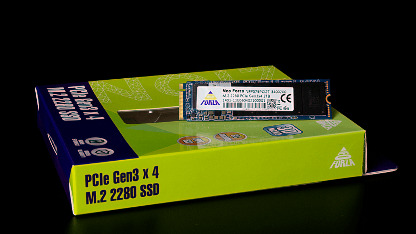
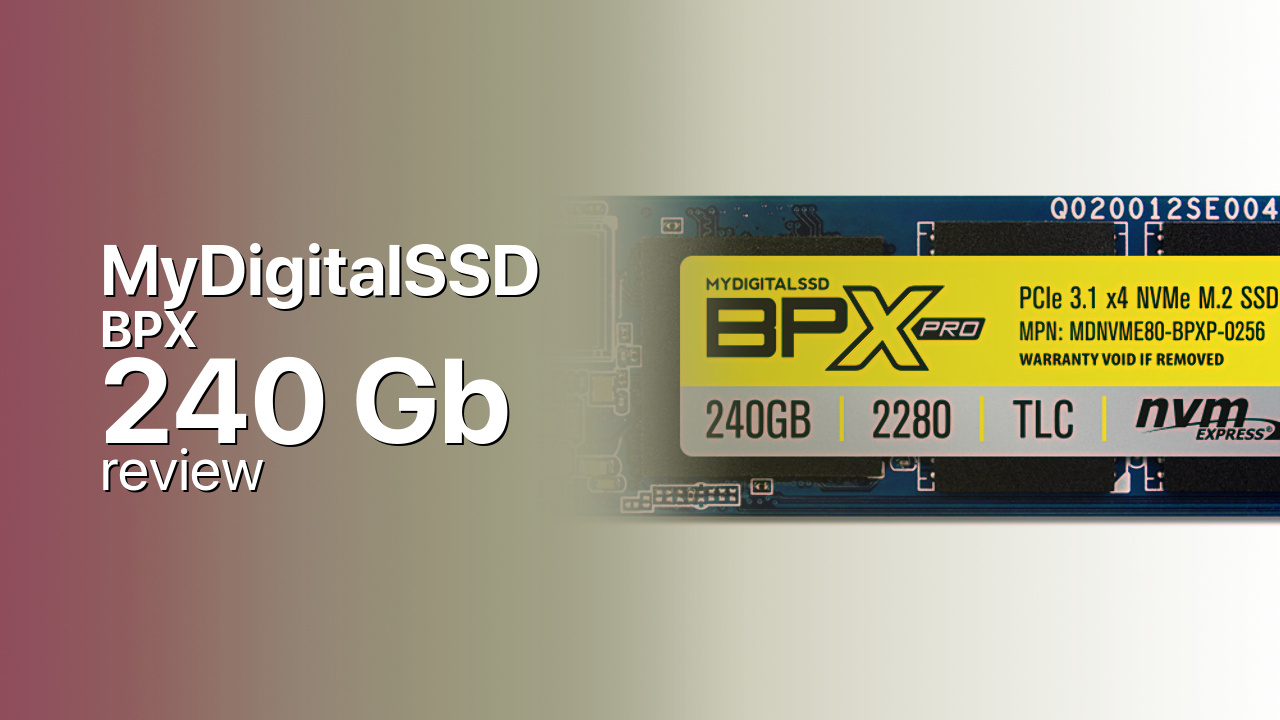
The MyDigitalSSD BPX uses the Phison PS5007-E7 controller — a quad-core, eight-channel PCIe 3.0 design on TSMC 28nm — paired with SanDisk 15nm 2D MLC NAND and 256 MB of Nanya DDR3L DRAM on a standard M.2 2280 PCB with no heatsink. This is the same foundational platform as the Team Group T-Force Cardea, Corsair MP500, and Plextor M8Pe — all early-adopter NVMe drives that used the E7 reference design before the Phison E12 became the de facto standard. MyDigitalSSD was a small US-based brand that sourced reference-design PCBs, added its own branding and packaging, and competed on price rather than features.
The BPX was notable at launch for aggressively undercutting the Samsung 960 EVO while offering MLC NAND — a flash type with inherently better write endurance and more consistent sustained write performance than the 3D TLC that was becoming the norm. The 240 GB variant delivers 2,600 MB/s reads and 1,100 MB/s writes, with the write speed limited by the small capacity's reduced NAND parallelism. The BPX also supported AES-256 hardware encryption and L1.2 low-power states, features that were not universal on budget NVMe drives of the era.
MyDigitalSSD has been effectively defunct since roughly 2019, with no new product releases and a dormant web presence. The BPX was succeeded briefly by the BPX Pro (Phison E12, 3D TLC) before the brand went silent. Surviving BPX drives on the used market represent a budget entry point into MLC-based NVMe, but with zero warranty support and no firmware updates, they are buyer-beware purchases. The 5-year warranty that was class-leading at launch is now worthless.
Storage Comparisons:
BPX Performance & Benchmarks
The MyDigitalSSD BPX 240 GB is rated for 2,600 MB/s sequential reads and 1,100 MB/s sequential writes, with random performance of up to 150,000 IOPS reads and 265,000 IOPS writes. The write IOPS figure is unusually high relative to reads — an atypical profile that multiple reviewers confirmed and that likely reflects the E7 controller's firmware tuning for the small-capacity SanDisk MLC configuration. Independent reviewers at Tom's Hardware and Tweaktown measured throughput consistent with the rated figures, with the BPX placing in the middle of the 2017 budget NVMe pack.
MyDigitalSSD BPX 240 GB vs M.2 3.0 x 4 peers
Switch between sequential throughput and random IOPS to see how this drive stacks up against other M.2 3.0 x 4 SSDs in our database. The highlighted bar is the drive on this page — click any other bar to open that drive.
- ADATA SX 8800 Pro 512 GB: 3,500 MB/s read, 2,700 MB/s write
- ADATA SX 8800 Pro 1 TB: 3,500 MB/s read, 2,700 MB/s write
- ADATA XPG Spectrix S40G RGB 256 GB: 3,500 MB/s read, 3,000 MB/s write
- ADATA XPG Spectrix S40G RGB 512 GB: 3,500 MB/s read, 3,000 MB/s write
- MyDigitalSSD BPX 240 GB (this drive): 2,600 MB/s read, 1,100 MB/s write
The MLC NAND means the BPX does not suffer from the pSLC cache exhaustion cliff that defines modern TLC and QLC SSDs. Writes sustain at the rated 1,100 MB/s from start to finish, with no performance drop as the drive fills. For the 240 GB capacity, this is less of a practical advantage than on larger drives — the drive fills up quickly regardless — but the write consistency is technically superior to any modern budget SSD. The E7 controller's power draw is higher than modern equivalents, and the BPX was noted by reviewers as having poor notebook battery life compared to competitors like the Intel 600p.
For gaming, the 240 GB capacity is the limiting factor. It holds a modern OS plus perhaps two or three AAA titles before filling up, making it impractical as a primary drive. As a boot drive for a secondary PC or a dedicated OS volume, the BPX remains responsive — the DRAM cache and MLC NAND ensure consistent latency, and the 2,600 MB/s read speed is fast enough that most users will not perceive a difference versus a modern PCIe 4.0 drive in everyday desktop use.
MyDigitalSSD BPX vs Competitors
See how the BPX stacks up against other M.2 3.0 x 4 drives in our database:
Compare with rival drives:
Endurance, TBW & Warranty
The MyDigitalSSD BPX 240 GB was originally sold with a 5-year limited warranty and an endurance rating of up to 1,400 TBW for the product line, but the 240 GB-specific endurance rating is approximately 350 TBW — the 1,400 TBW figure is the maximum across all capacities and applied to the largest SKU. At 350 TBW, the 240 GB BPX can absorb roughly 190 GB of writes per day for the warranty period — high for the capacity thanks to the MLC NAND. At a typical 30 GB/day pace, endurance extends beyond 30 years. The MTBF is rated at 2 million hours. Critically, MyDigitalSSD is effectively a defunct company — no new products have been released since approximately 2019, and the warranty is unenforceable. Any BPX purchased today should be treated as having zero warranty coverage and no firmware update path.
MyDigitalSSD BPX 240 GB Specifications
| Category | Value |
|---|---|
| Capacity [?] | 240 GB |
| Interface [?] | M.2 3.0 x 4 |
| Controller [?] | Phison 5007-E7 |
| Memory type [?] | SanDisk MLC |
| DRAM [?] | 256MB Nanya DDR3L |
| Read speed (MB/s) [?] | 2600 |
| Write speed (MB/s) [?] | 1100 |
| Read IOPS [?] | 150000 |
| Write IOPS [?] | 265000 |
| Endurance (TBW) [?] | 350 |
| MTBF (million hours) [?] | 2 |
| Warranty (years) [?] | 5 |
Verdict: Is the BPX Worth It in 2026?
The MyDigitalSSD BPX 240 GB is a budget MLC NVMe relic from a defunct brand — and at the right used price (think well under $20), it is a perfectly functional boot drive for a retro PCIe 3.0 build or a secondary system where capacity is not a concern. The MLC NAND provides write consistency that no modern budget SSD can match, and the DRAM cache keeps Windows responsive. Buy it as a curiosity or a period-correct component for a 2017-era build. Do not buy it as a daily driver — the 240 GB capacity is too small for modern use, the company is gone, and any modern budget PCIe 4.0 drive will dramatically outperform it in real-world use while actually having a warranty.
+ Pros
- Genuine SanDisk 2D MLC NAND — consistent sustained writes with no cache cliff
- 256 MB DDR3L DRAM cache for consistent random I/O
- AES-256 hardware encryption support
- 5-year warranty was class-leading at launch for a budget NVMe
- Aggressive launch pricing — among the cheapest NVMe SSDs of its era
- Cons
- MyDigitalSSD is defunct — zero warranty support or firmware updates
- Only 240 GB — too small for a modern primary drive
- 1,100 MB/s write speed limited by small capacity NAND configuration
- Poor notebook battery life — high idle power draw versus competitors
- Phison E7 platform is dated — PCIe 3.0, NVMe 1.2, 28nm controller
- No heatsink included — E7 runs warm under sustained load
Buy this or similar SSD Storage:



Video Review
NVMe vs Sata iii - How much faster is it? - MyDigitalSSD BPX Review