Kingston KC1000 240GB Review — Classic PCIe 3.0 NVMe with MLC NAND (2026)
Quick answer
The Kingston KC1000 240GB is a relic from a time when MLC NAND was still viable in consumer SSDs, and that durability focus still gives it a distinctive edge.
Read: 2700 MB/s Write: 1600 MB/s Endurance: 300 TBW Warranty: 5 years Interface: M.2 or PCIe 3.0 x 4
The Kingston KC1000 240GB is one of the last mainstream consumer SSDs to use MLC NAND — a durability-focused PCIe 3.0 NVMe drive from an era before TLC became the default.
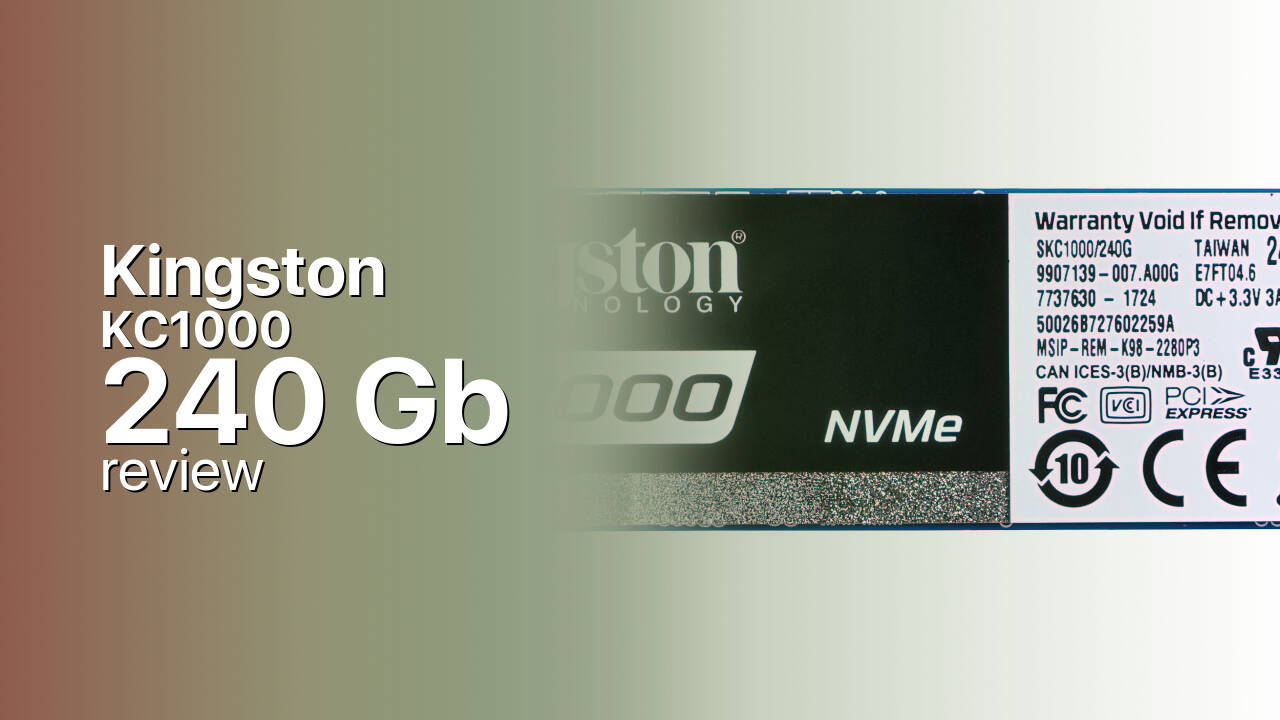
Controller & Memory
Inside the KC1000 sits the Phison PS5007-E7 controller, one of the earliest mainstream NVMe 1.2 designs. Paired with Toshiba MLC NAND and 1 GB of discrete DRAM (two 512 MB packages), this drive was positioned as a performance-focused option when it launched in 2017. The MLC flash is the key differentiator — it delivers better sustained write performance and higher endurance per GB than the TLC NAND that dominates the market today.
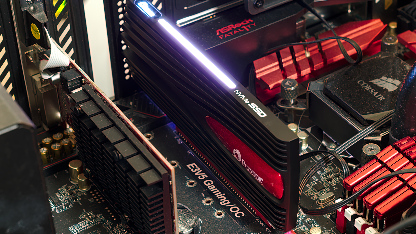
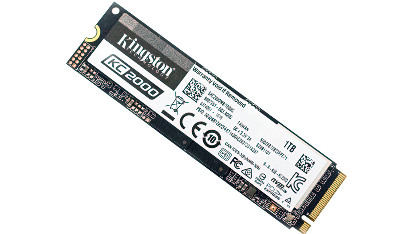
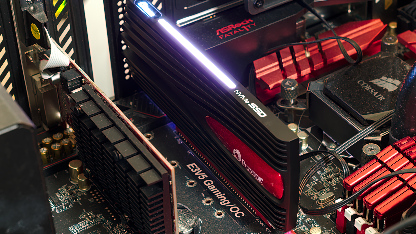
The KC1000 ships in an M.2 2280 form factor with PCIe 3.0 x4 connectivity. Kingston also offered an HHHL (half-height, half-length) add-in card variant with the same internals, targeting desktop users who preferred a PCIe slot installation. The 240 GB capacity is the entry point in the lineup, with larger 480 GB and 960 GB options available at proportionally higher write speeds.
In 2017, the KC1000 competed directly with the Samsung 960 EVO and the Intel 760p series. Today it occupies an interesting niche — the MLC NAND gives it a durability edge that modern budget TLC drives struggle to match, but the older Phison E7 controller can't keep pace with newer Gen3 or Gen4 drives on peak throughput. For a 240 GB boot drive focused on longevity over raw speed, the KC1000 still holds some appeal.
The main trade-off is capacity. 240 GB is tight for a modern Windows installation plus games, and this drive was never designed as a bulk storage solution. Users should look at the 480 GB or 960 GB variants, or consider a modern TLC drive if they need more space per dollar.
Storage Comparisons:
KC1000 Performance & Benchmarks
The Kingston KC1000 240GB is rated at up to 2,700 MB/s sequential reads and 1,600 MB/s sequential writes over its PCIe 3.0 x4 interface. Random 4K performance peaks at 290,000 IOPS reads and 190,000 IOPS writes — respectable numbers for a drive of this generation, though well below what current PCIe 3.0 drives like the WD Blue SN580 can achieve. The MLC NAND is the KC1000's real advantage in sustained workloads. Unlike TLC drives that rely on a relatively small SLC cache and drop sharply once it fills, MLC flash handles prolonged sequential writes with less dramatic performance degradation. Reviewers at KitGuru and HardwareSecrets found the KC1000 maintained more consistent write speeds during large file transfers compared to TLC-based competitors of the same era. That said, the Phison E7 controller shows its age in mixed random workloads — latency is noticeably higher than on drives using newer controllers like the Phison E12 or Silicon Motion SM2262EN. For everyday desktop use, OS responsiveness, and game loading, the difference is marginal. For sustained content-creation workloads involving multi-gigabyte file copies, the MLC advantage becomes more visible. The 240 GB capacity naturally has the lowest write speeds in the KC1000 family — the 480 GB and 960 GB models reach 1,700 MB/s and higher.
Kingston KC1000 240 GB vs M.2 or PCIe 3.0 x 4 peers
Switch between sequential throughput and random IOPS to see how this drive stacks up against other M.2 or PCIe 3.0 x 4 SSDs in our database. The highlighted bar is the drive on this page — click any other bar to open that drive.
- Kingston KC2000 1 TB: 3,200 MB/s read, 2,200 MB/s write
- Kingston KC2000 2 TB: 3,200 MB/s read, 2,200 MB/s write
- Plextor M9Pe Series 512 GB: 3,200 MB/s read, 2,000 MB/s write
- Plextor M9Pe Series 1 TB: 3,200 MB/s read, 2,100 MB/s write
- Kingston KC1000 240 GB (this drive): 2,700 MB/s read, 1,600 MB/s write
Kingston KC1000 vs Competitors
See how the KC1000 stacks up against other M.2 or PCIe 3.0 x 4 drives in our database:
Compare with rival drives:
Endurance, TBW & Warranty
Kingston backs the KC1000 240GB with a five-year warranty, limited to 300 TBW (terabytes written). For a 240 GB drive, that 300 TBW figure is notably higher than what TLC competitors offered — the Samsung 960 EVO 250 GB, for instance, was rated at only 100 TBW. The MLC NAND's higher program/erase cycle endurance is the reason. At a typical 40 GB per day write workload, the 300 TBW endurance works out to roughly 20 years of use before the warranty limit is reached, which comfortably exceeds the five-year warranty period and the practical lifespan of most systems. Kingston's warranty is honoured through their global network of authorized distributors and retailers — RMA is handled via the point of purchase. The drive does not list an MTBF figure in Kingston's datasheet, which is common for consumer SSDs from this generation. The five-year warranty is straightforward and competitive, though it's worth noting that Kingston has since superseded the KC1000 with the KC2000 and KC3000 series, both using TLC NAND.
Kingston KC1000 240 GB Specifications
| Category | Value |
|---|---|
| Capacity [?] | 240 GB |
| Interface [?] | M.2 or PCIe 3.0 x 4 |
| Controller [?] | Phison PS5007-E7 |
| Memory type [?] | Toshiba MLC |
| DRAM [?] | Kingston 2 X 512MB |
| Read speed (MB/s) [?] | 2700 |
| Write speed (MB/s) [?] | 1600 |
| Read IOPS [?] | 290000 |
| Write IOPS [?] | 190000 |
| Endurance (TBW) [?] | 300 |
| MTBF (million hours) [?] | 2 |
| Warranty (years) [?] | 5 |
Verdict: Is the KC1000 Worth It in 2026?
The Kingston KC1000 240GB is a relic from a time when MLC NAND was still viable in consumer SSDs, and that durability focus still gives it a distinctive edge. The 300 TBW endurance rating triples what TLC competitors offered at this capacity, and the Phison E7 controller delivers competent PCIe 3.0 performance for everyday tasks. But 240 GB is very limiting for modern use, and the 1,600 MB/s write speed is overshadowed by nearly every current-generation drive. Buyers who value longevity above all else might still find appeal here, but most users are better served by a modern 500 GB TLC drive with comparable endurance and significantly higher throughput. The Kingston KC2500 or WD Blue SN580 are stronger choices in 2026.
+ Pros
- MLC NAND for superior endurance
- 300 TBW rated lifespan
- 1 GB discrete DRAM cache
- 5-year manufacturer warranty
- Consistent sustained write performance
- Cons
- Only 240 GB capacity
- 1,600 MB/s writes slow by modern standards
- Phison E7 controller shows its age
- No heatsink variant available
- Superseded by newer Kingston models
Buy this or similar SSD Storage:



Video Review
NVMe PCIe and M.2 SSD for Desktop Workstation – KC1000 – Kingston Technology