Sabrent Rocket 4 Plus-G 1TB — Phison E18 Gaming NVMe SSD (2026)
Quick answer
The Sabrent Rocket 4 Plus-G 1 TB is a flagship PCIe 4.0 drive with two standout selling points: class-leading endurance at 5,100 TBW and full-fat Phison E18 performance.
Read: 7400 MB/s Write: 7000 MB/s Endurance: 5100 TBW Warranty: 5 years Interface: M.2 4.0 x 4
The Sabrent Rocket 4 Plus-G 1 TB takes the Phison E18 platform and firmware-tunes it for gaming workloads, delivering flagship PCIe 4.0 performance with endurance that far outstrips most competitors at this capacity.
Controller & Memory
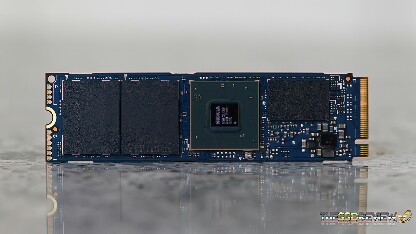
The Rocket 4 Plus-G is built on Phison's PS5018-E18 8-channel controller, the second-generation PCIe 4.0 flagship that succeeded the E16. The "G" designation indicates gaming-focused firmware optimizations, prioritizing read latency and sustained throughput patterns that match real-world gaming workloads. NAND is Micron 3D TLC, paired with DDR4 DRAM for the flash translation layer. The drive follows the standard M.2 2280 form factor and is available in 500 GB, 1 TB, 2 TB, and 4 TB capacities.
The 1 TB variant sits at the performance sweet spot of the lineup. Unlike the 500 GB model, which sacrifices write speed due to fewer NAND die, the 1 TB delivers the full E18 experience: 7,400 MB/s sequential reads and 7,000 MB/s writes. This capacity comfortably holds a modern OS plus several AAA titles, making it a practical single-drive solution for gaming PCs.
Competitors at 1 TB include the Samsung 980 Pro, WD Black SN850X, Corsair MP600 Pro, and Seagate FireCuda 530 — all Phison E18 or equivalent flagships targeting the same enthusiast segment. The Sabrent's standout advantage is the 5,100 TBW endurance rating, which is substantially higher than the 600 TBW typical of 1 TB E18 drives. This suggests either higher-grade NAND binned for the Plus-G series or more conservative rating practices.
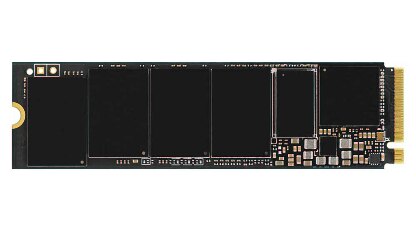
The drive ships as a bare PCB without a factory heatsink. Sabrent sells heatsink variants separately, and most premium motherboards include adequate M.2 thermal coverage. For sustained write workloads or high-ambient-temperature cases, a heatsink is mandatory — the E18 runs warm under load, and thermal throttling will clip performance without proper cooling.
Storage Comparisons:
Rocket 4 Plus-G Performance & Benchmarks
Sabrent rates the Rocket 4 Plus-G 1 TB at up to 7,400 MB/s sequential reads and 7,000 MB/s sequential writes, with up to 1,000K random read and 1,000K random write IOPS. These figures place it at the very top of the PCIe 4.0 ecosystem — only a handful of drives, primarily those using the same E18 controller with NAND overclocks, can match these numbers. Real-world gaming load times will be bottlenecked by CPU decompression rather than drive throughput, but the headroom ensures background processes never introduce stutter.
Sabrent Rocket 4 Plus-G 1 TB vs M.2 4.0 x 4 peers
Switch between sequential throughput and random IOPS to see how this drive stacks up against other M.2 4.0 x 4 SSDs in our database. The highlighted bar is the drive on this page — click any other bar to open that drive.
- Patriot Viper PV593 1 TB: 14,500 MB/s read, 14,000 MB/s write
- Patriot Viper PV593 2 TB: 14,500 MB/s read, 14,000 MB/s write
- Patriot Viper PV593 4 TB: 14,500 MB/s read, 14,000 MB/s write
- Patriot Viper PV573 2 TB: 14,000 MB/s read, 12,000 MB/s write
- Sabrent Rocket 4 Plus-G 1 TB (this drive): 7,400 MB/s read, 7,000 MB/s write
The Phison E18 employs a large SLC write cache, typically 160–200 GB on a 1 TB drive. Burst writes within this cache hit the full 7,000 MB/s ceiling. Once the cache saturates, writes settle to native TLC speeds — approximately 1,800–2,400 MB/s on the E18 platform, depending on NAND condition and thermal state. This is still well above SATA SSD rates and more than sufficient for content creation workflows including 4K video editing and large dataset manipulation.
Independent testing of the E18 platform consistently shows that sustained write performance holds up better than first-gen PCIe 4.0 controllers. The Plus-G firmware appears tuned to maintain read performance even under heavy concurrent write loads, a pattern that matches gaming workloads where asset streaming occurs alongside background updates and texture downloads. For the average desktop or gaming user, the difference between a 6,500 MB/s drive and a 7,400 MB/s drive is imperceptible outside of synthetic benchmarks — but the E18's advantage is consistency rather than peak numbers.
Sabrent Rocket 4 Plus-G vs Competitors
See how the Rocket 4 Plus-G stacks up against other M.2 4.0 x 4 drives in our database:
Compare with rival drives:
Endurance, TBW & Warranty
The Sabrent Rocket 4 Plus-G 1 TB carries a 5,100 TBW endurance rating with a five-year limited warranty, whichever limit is reached first. At 5,100 TBW, this drive is in a different endurance class than most 1 TB consumer SSDs — the Samsung 980 Pro 1 TB is rated at 600 TBW, and the WD Black SN850X 1 TB at 600 TBW. Writing 100 GB per day would take 140 years to exhaust 5,100 TBW; writing a more aggressive 500 GB daily would still span 28 years. The NAND will outlast the controller, the warranty, and likely the system it's installed in.
The warranty requires product registration within 90 days of purchase, otherwise it defaults to one year. Sabrent handles RMA through their online support portal, and turnaround times are generally competitive with other major SSD vendors. The drive ships with a license for Acronis True Image HD for drive cloning, which softens the blow of the registration requirement.
MTBF is not prominently specified in consumer-facing materials for the Plus-G series, but Phison E18 reference designs typically carry a 1.8–2.0 million hour rating. This is a population-level statistic, not a prediction of individual drive lifespan. For practical purposes, the 5-year warranty and massive TBW rating mean you are far more likely to upgrade out of this drive than wear it out.
Sabrent Rocket 4 Plus-G 1 TB Specifications
| Category | Value |
|---|---|
| Capacity [?] | 1 TB |
| Interface [?] | M.2 4.0 x 4 |
| Controller [?] | Phison PS5018-E18 |
| Memory type [?] | Micron TLC |
| DRAM [?] | DDR4 |
| Read speed (MB/s) [?] | 7400 |
| Write speed (MB/s) [?] | 7000 |
| Read IOPS [?] | 1000000 |
| Write IOPS [?] | 1000000 |
| Endurance (TBW) [?] | 5100 |
| MTBF (million hours) [?] | 2000000 |
| Warranty (years) [?] | 5 |
Verdict: Is the Rocket 4 Plus-G Worth It in 2026?
The Sabrent Rocket 4 Plus-G 1 TB is a flagship PCIe 4.0 drive with two standout selling points: class-leading endurance at 5,100 TBW and full-fat Phison E18 performance. Buy it if you want a no-compromise gaming drive that will likely outlast two system rebuilds, or if you value the assurance of a massive TBW rating for intensive write workloads. Skip it if you don't need peak performance — a mid-tier PCIe 4.0 drive like the WD Black SN770 or Kingston KC3000 delivers 90% of the real-world experience for significantly less money. For builders who prioritize NAND longevity and want the E18 controller's full capability, the Plus-G 1 TB is a compelling choice.
+ Pros
- 7,400 MB/s reads and 7,000 MB/s writes on Phison E18
- 5,100 TBW endurance far exceeds typical 1 TB drives
- DDR4 DRAM cache for consistent mixed-workload performance
- 1,000K random IOPS for demanding multitasking
- 5-year warranty with registration
- Gaming-focused firmware tuning
- Cons
- No factory heatsink — must budget for motherboard or third-party cooling
- Warranty defaults to 1 year without 90-day registration
- Phison E18 runs hot under sustained load — thermal throttling possible without heatsink
- Premium pricing over mid-tier PCIe 4.0 alternatives
Buy this or similar SSD Storage:



Video Review
Sabrent Rocket 4 Plus G | Future SSD For Gaming Now!