Samsung 970 EVO 1TB PCIe 3.0 NVMe SSD (2026)
Quick answer
The Samsung 970 EVO 1TB is a reliable PCIe 3.0 NVMe SSD, but the 970 EVO Plus 1TB outperforms it in writes (3,300 vs 2,500 MB/s) and sustained TLC speed (1,700 vs 1,250 MB/s) at a similar price point.
Read: 3500 MB/s Write: 2500 MB/s Endurance: 600 TBW Warranty: 5 years Interface: M.2 3.0 x 4
The Samsung 970 EVO 1TB was Samsung's mainstream PCIe 3.0 flagship before the EVO Plus refresh, pairing 64-layer TLC with a Phoenix controller for 2,500 MB/s writes and 600 TBW endurance.
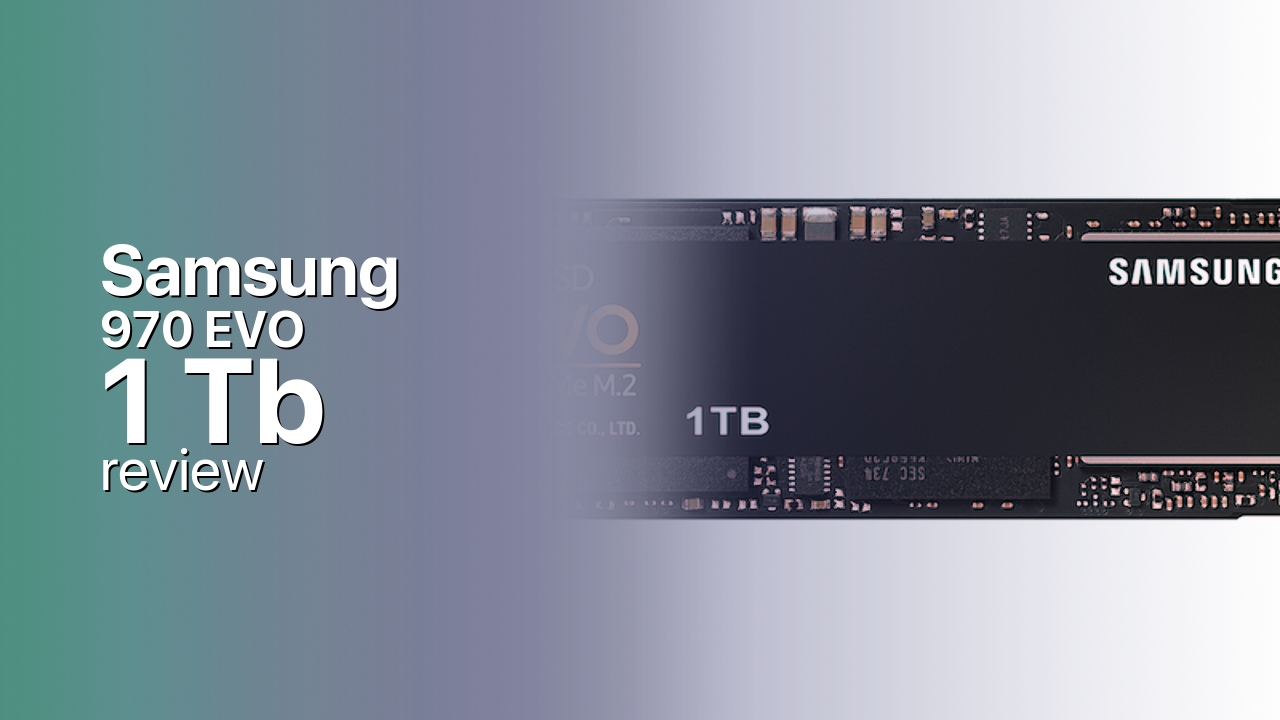
Controller & Memory
The 1 TB 970 EVO uses Samsung's Phoenix controller with 1 GB of LPDDR4 DRAM and 64-layer (V4) 3D TLC V-NAND. The TurboWrite allocation is 6 GB fixed plus up to 36 GB of Intelligent TurboWrite, giving a total of up to 42 GB when the drive has free space. After the cache fills, direct-to-TLC writes hold around 1,250 MB/s.
Samsung rates the 1 TB model at 3,500 MB/s sequential reads, 2,500 MB/s sequential writes, 500,000 random read IOPS, and 450,000 random write IOPS. Endurance is 600 TBW with a five-year warranty. The single-sided M.2 2280 form factor ensures laptop compatibility.
The 970 EVO was the workhorse PCIe 3.0 NVMe drive for enthusiasts and gamers before the 970 EVO Plus replaced it. The Plus offers 3,300 MB/s writes (versus 2,500 MB/s) and updated 92-layer NAND. The original EVO remains a capable drive where the Plus is unavailable. Direct competitors at this capacity include the WD Black SN750 and the ADATA XPG SX8200 Pro 1TB.
Storage Comparisons:
970 EVO Performance & Benchmarks
Samsung rates the 1 TB 970 EVO at 3,500 MB/s sequential reads and 2,500 MB/s sequential writes inside the TurboWrite cache, with direct-to-TLC writes settling at approximately 1,250 MB/s. Random performance reaches 500,000 read IOPS and 450,000 write IOPS. The 42 GB Intelligent TurboWrite buffer is large enough that most consumer workloads never exceed it.
Samsung 970 EVO 1 TB vs M.2 3.0 x 4 peers
Switch between sequential throughput and random IOPS to see how this drive stacks up against other M.2 3.0 x 4 SSDs in our database. The highlighted bar is the drive on this page — click any other bar to open that drive.
- Samsung 970 EVO 1 TB (this drive): 3,500 MB/s read, 2,500 MB/s write
- ADATA SX 8800 Pro 512 GB: 3,500 MB/s read, 2,700 MB/s write
- ADATA SX 8800 Pro 1 TB: 3,500 MB/s read, 2,700 MB/s write
- ADATA XPG Spectrix S40G RGB 256 GB: 3,500 MB/s read, 3,000 MB/s write
- ADATA XPG Spectrix S40G RGB 512 GB: 3,500 MB/s read, 3,000 MB/s write
Independent reviewers found the 970 EVO 1TB to be a strong all-around performer at launch, though the 970 EVO Plus outperforms it in nearly every metric thanks to the newer NAND. The gap is most noticeable in write-heavy workloads, where the Plus sustains 1,700 MB/s after cache versus 1,250 MB/s on the original EVO. For read-heavy gaming workloads, the difference is minimal.
Samsung 970 EVO vs Competitors
See how the 970 EVO stacks up against other M.2 3.0 x 4 drives in our database:
Compare with rival drives:
Endurance, TBW & Warranty
Samsung covers the 970 EVO 1TB with a five-year limited warranty and a 600 TBW endurance rating. At a consumer-typical 20 GB of writes per day, 600 TBW translates to approximately 82 years of use. Samsung's Magician software provides real-time health monitoring, TBW tracking, and firmware updates. The warranty is honored through Samsung's service portal or the point of purchase.
Samsung 970 EVO 1 TB Specifications
| Category | Value |
|---|---|
| Capacity [?] | 1 TB |
| Interface [?] | M.2 3.0 x 4 |
| Controller [?] | Samsung Phoenix |
| Memory type [?] | Samsung TLC |
| DRAM [?] | 1GB LPDDR4 |
| Read speed (MB/s) [?] | 3500 |
| Write speed (MB/s) [?] | 2500 |
| Read IOPS [?] | 500000 |
| Write IOPS [?] | 450000 |
| Endurance (TBW) [?] | 600 |
| MTBF (million hours) [?] | 1.5 |
| Warranty (years) [?] | 5 |
Verdict: Is the 970 EVO Worth It in 2026?
The Samsung 970 EVO 1TB is a reliable PCIe 3.0 NVMe SSD, but the 970 EVO Plus 1TB outperforms it in writes (3,300 vs 2,500 MB/s) and sustained TLC speed (1,700 vs 1,250 MB/s) at a similar price point. Unless the original EVO is substantially discounted, the Plus is the better choice. For new builds, PCIe 4.0 drives like the Samsung 980 Pro or WD Black SN850X offer double the bandwidth potential.
+ Pros
- 3,500/2,500 MB/s sequential read/write
- 1 GB LPDDR4 DRAM cache
- 600 TBW endurance with five-year warranty
- 42 GB Intelligent TurboWrite buffer
- Single-sided M.2 2280 fits laptops
- Cons
- Superseded by the 970 EVO Plus in every metric
- TLC writes drop to 1,250 MB/s after cache fills
- 64-layer NAND older than EVO Plus 92-layer
- PCIe 3.0 caps reads at 3,500 MB/s
Buy this or similar SSD Storage:
Video Review
Samsung 970 EVO NVMe M.2 SSD Review