Sabrent Rocket 4 Plus 1TB — Enthusiast PCIe 4.0 TLC NVMe (2026)
Quick answer
The Sabrent Rocket 4 Plus 1 TB is a competitive enthusiast PCIe 4.0 drive that trades blows with the Samsung 980 Pro and WD Black SN850X at a lower price point.
Read: 7100 MB/s Write: 6600 MB/s Endurance: 700 TBW Warranty: 5 years Interface: M.2 4.0 x 4
The Sabrent Rocket 4 Plus 1 TB is where this enthusiast TLC lineup hits its stride — 7,100 MB/s reads, 6,600 MB/s writes, and 700 TBW endurance from a Phison E18 and Micron 96L TLC combination.
Controller & Memory
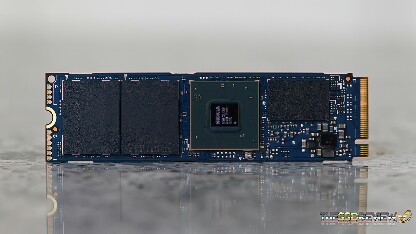
The Rocket 4 Plus 1 TB uses Phison's PS5018-E18 controller — an 8-channel, 12 nm NVMe 1.4 design that replaced the 28 nm E16 in Sabrent's enthusiast tier. Paired with Micron 96-layer 3D TLC NAND and SK Hynix DDR4 DRAM, the platform targets the top of the PCIe 4.0 performance bracket. The E18's newer process node also runs cooler and more efficiently than the E16, which helps with sustained performance under heavy workloads.
The 1 TB capacity offers a meaningful step up from the 500 GB model: writes jump from 5,500 MB/s to 6,600 MB/s, and random IOPS scale from 500K to 650K/700K (read/write). Also available in 2 TB and 4 TB, which push write speeds even higher. The M.2 2280 form factor is single-sided at 1 TB, meaning it fits in any M.2 slot including thin laptops.
Direct competitors include the Samsung 980 Pro 1 TB (in-house controller and NAND, similar performance), the WD Black SN850X 1 TB (custom WD controller, strong sustained writes), and the Seagate FireCuda 530 1 TB (also Phison E18-based). The Sabrent competes on price, typically undercutting Samsung and WD on Amazon while offering nearly identical real-world performance.
Sabrent offers the Rocket 4 Plus with or without an optional heatsink. The Phison E18 runs cooler than the older E16 thanks to its 12 nm process node, but under sustained write loads a heatsink is still recommended for systems without motherboard-integrated M.2 cooling.
Storage Comparisons:
Rocket 4 Plus Performance & Benchmarks
At 7,100 MB/s sequential reads and 6,600 MB/s sequential writes, the Rocket 4 Plus 1 TB sits near the practical ceiling of the PCIe 4.0 x4 interface. The 650K random read IOPS and 700K random write IOPS handle anything a desktop workload can throw at them. Independent reviews from Guru3D and CDR Labs confirm that the E18 controller delivers consistent performance across a range of benchmarks, with only minor variation between the Sabrent and other E18-based drives like the Seagate FireCuda 530.
Sabrent Rocket 4 Plus 1 TB vs M.2 4.0 x 4 peers
Switch between sequential throughput and random IOPS to see how this drive stacks up against other M.2 4.0 x 4 SSDs in our database. The highlighted bar is the drive on this page — click any other bar to open that drive.
- Patriot Viper PV593 1 TB: 14,500 MB/s read, 14,000 MB/s write
- Patriot Viper PV593 2 TB: 14,500 MB/s read, 14,000 MB/s write
- Patriot Viper PV593 4 TB: 14,500 MB/s read, 14,000 MB/s write
- Patriot Viper PV573 2 TB: 14,000 MB/s read, 12,000 MB/s write
- Sabrent Rocket 4 Plus 1 TB (this drive): 7,100 MB/s read, 6,600 MB/s write
The Micron TLC NAND provides a more forgiving write profile than QLC alternatives. After the pseudo-SLC cache exhausts — which happens after roughly 50–100 GB of sustained writes on the 1 TB model — native TLC speeds sustain around 1,000–1,500 MB/s, which is a far smaller cliff than QLC drives face. For gaming, content creation, and general desktop use, the Rocket 4 Plus 1 TB delivers enthusiast-tier performance without the compromises of budget-oriented drives. Real-world game load benchmarks show the Rocket 4 Plus 1 TB trading narrow wins and losses with the Samsung 980 Pro and WD Black SN850X.
Sabrent Rocket 4 Plus vs Competitors
See how the Rocket 4 Plus stacks up against other M.2 4.0 x 4 drives in our database:
Compare with rival drives:
Endurance, TBW & Warranty
Sabrent rates the Rocket 4 Plus 1 TB at 700 TBW, backed by a five-year warranty that requires product registration within 90 days of purchase. Without registration, the warranty drops to one year. At 700 TBW, you can write approximately 383 GB per day over five years before reaching the rated limit. For a 1 TB drive in a typical enthusiast desktop writing 30–60 GB/day, this provides years of margin. The drive reports health and remaining endurance through standard S.M.A.R.T. attributes accessible via Sabrent's support tools or third-party utilities like CrystalDiskInfo. S.M.A.R.T. health monitoring is supported for tracking endurance consumption over time.
Sabrent Rocket 4 Plus 1 TB Specifications
| Category | Value |
|---|---|
| Capacity [?] | 1 TB |
| Interface [?] | M.2 4.0 x 4 |
| Controller [?] | Phison PS5018-E18 |
| Memory type [?] | Micron 3D TLC |
| DRAM [?] | SK Hynix DDR4 Cache |
| Read speed (MB/s) [?] | 7100 |
| Write speed (MB/s) [?] | 6600 |
| Read IOPS [?] | 650000 |
| Write IOPS [?] | 700000 |
| Endurance (TBW) [?] | 700 |
| MTBF (million hours) [?] | 1800000 |
| Warranty (years) [?] | 5 |
Verdict: Is the Rocket 4 Plus Worth It in 2026?
The Sabrent Rocket 4 Plus 1 TB is a competitive enthusiast PCIe 4.0 drive that trades blows with the Samsung 980 Pro and WD Black SN850X at a lower price point. The Phison E18 and Micron TLC combination delivers 7,100/6,600 MB/s with no significant weaknesses for desktop workloads. The 700 TBW endurance and five-year warranty provide long-term reliability. The main drawback is the registration requirement for the full warranty — forget to register and you are covered for one year instead of five. If you want top-tier PCIe 4.0 TLC performance and are willing to register the product, the Rocket 4 Plus 1 TB is one of the strongest options in its class.
+ Pros
- 7,100 MB/s reads, 6,600 MB/s writes
- Micron 96L TLC NAND sustains well after cache exhaustion
- Phison E18 12 nm controller with NVMe 1.4
- 700 TBW endurance with 5-year warranty
- SK Hynix DDR4 DRAM cache
- Single-sided PCB fits laptops and desktops
- Cons
- Warranty drops to 1 year without product registration
- No included heatsink (optional variant available)
- No hardware AES 256-bit encryption
- Write speeds lower than 2 TB and 4 TB variants
Buy this or similar SSD Storage:



Video Review
INSANE SPEED: Sabrent Rocket 4 Plus 2 TB M.2 PCIe 4x4 nvme Review & Benchmark