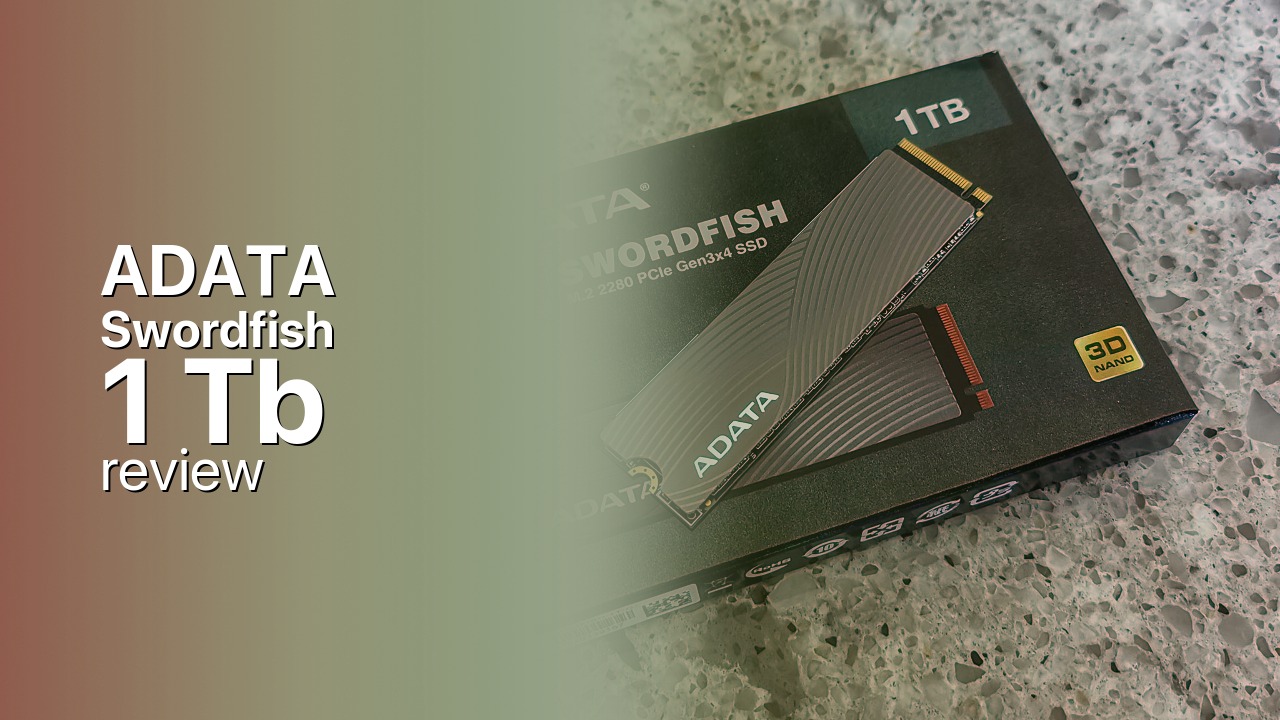
ADATA Swordfish 1TB Review — Budget PCIe 3.0 NVMe SSD (2026)
Quick answer
The ADATA Swordfish 1TB is a reasonable budget NVMe SSD for users who need ample storage without paying premium prices.
Read: 1800 MB/s Write: 1200 MB/s Endurance: 540 TBW Warranty: 5 years Interface: M.2 3.0 x 4
The ADATA Swordfish 1TB is the sweet-spot capacity in ADATA's budget PCIe 3.0 lineup, offering enough room for the OS, applications, and a decent game library at an entry-level price.
Controller & Memory
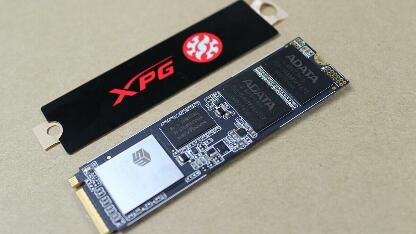
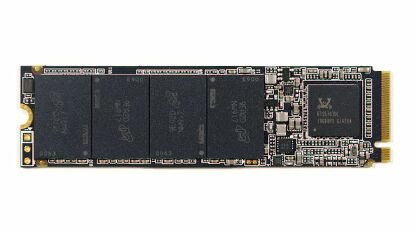
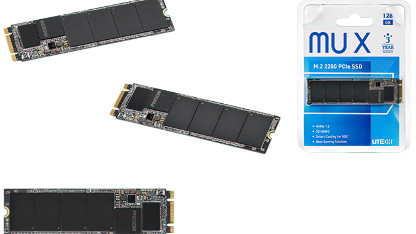
The ADATA Swordfish 1TB uses the same hardware as its smaller siblings — the Realtek RTS5763DL controller paired with ADATA's own 3D TLC NAND, no dedicated DRAM cache, and reliance on the NVMe Host Memory Buffer protocol. The drive ships in a standard M.2 2280 form factor with a single-sided PCB, compatible with any desktop motherboard M.2 slot or laptop with an NVMe slot. Tom's Hardware noted that the Swordfish supports AES 256-bit encryption, a feature not always found on budget drives.
ADATA rates the 1 TB model at 1,800 MB/s sequential reads and 1,200 MB/s sequential writes, with up to 180,000 IOPS for random 4K reads and writes. These figures place the Swordfish firmly at the entry level of the NVMe market — roughly half the bandwidth that a PCIe 3.0 x4 interface can deliver. The drive sits at the bottom of ADATA's NVMe product range, well below the XPG-branded performance series like the SX6000 Pro and SX8200 Pro. The Swordfish also ships in 250 GB, 500 GB, and 2 TB capacities.
The 1 TB capacity is the most practical variant in the lineup. It provides enough space for the operating system, a large application library, and a dozen or more modern games — something the 250 GB and 500 GB models struggle with. For budget builders who want NVMe speeds without paying for premium performance, the Swordfish 1TB hits a reasonable sweet spot. Direct competitors include the Kingston NV2 1TB and the WD Blue SN570 1TB, both of which offer faster sequential speeds at similar prices.
The Swordfish shares the same sustained write limitations across all capacities. Under heavy write loads, the SLC cache exhausts and the underlying TLC NAND cannot maintain high throughput. StorageReview's testing found the Swordfish series suffering from severe 4K random write performance drops — falling to approximately 9,710 IOPS with extreme latency spikes under sustained workloads. For everyday desktop tasks, this is irrelevant. For content creators or anyone moving large files regularly, it is a significant constraint.
Storage Comparisons:
Swordfish Performance & Benchmarks
The ADATA Swordfish 1TB is rated for 1,800 MB/s sequential reads and 1,200 MB/s sequential writes, with up to 180,000 random read and write IOPS. These are manufacturer-rated best-case figures, achievable when data fits within the drive's SLC cache. For light desktop workloads, the 1,800 MB/s reads deliver a roughly threefold improvement over SATA III SSDs, which cap out near 550 MB/s. Boot times, application launches, and general system responsiveness all benefit from the NVMe interface.
ADATA Swordfish 1 TB vs M.2 3.0 x 4 peers
Switch between sequential throughput and random IOPS to see how this drive stacks up against other M.2 3.0 x 4 SSDs in our database. The highlighted bar is the drive on this page — click any other bar to open that drive.
- ADATA SX 8800 Pro 512 GB: 3,500 MB/s read, 2,700 MB/s write
- ADATA SX 8800 Pro 1 TB: 3,500 MB/s read, 2,700 MB/s write
- ADATA XPG Spectrix S40G RGB 256 GB: 3,500 MB/s read, 3,000 MB/s write
- ADATA XPG Spectrix S40G RGB 512 GB: 3,500 MB/s read, 3,000 MB/s write
- ADATA Swordfish 1 TB (this drive): 1,800 MB/s read, 1,200 MB/s write
Compared to the PCIe 3.0 x4 ceiling of approximately 3,500 MB/s, the Swordfish operates at roughly half speed. Mainstream PCIe 3.0 drives like the WD Blue SN570 and Samsung 980 reach 3,000–3,500 MB/s reads and 2,500–3,000 MB/s writes on their 1 TB variants, making the Swordfish look dated in a side-by-side comparison. The HMB architecture introduces a dependency on proper system-level support — if the host does not handle HMB correctly, random I/O performance degrades.
Under sustained write loads, the Swordfish's entry-level hardware reveals its limitations clearly. Independent testing by StorageReview found that the drive's 4K random write performance collapsed to roughly 9,710 IOPS under heavy workload stress, accompanied by extreme latency spikes and near-complete throughput stalls. The SLC cache is sized for burst workloads, not sustained throughput, and once it exhausts, the underlying TLC NAND simply cannot write fast enough. This is a non-issue for web browsing, office work, and light gaming, where write bursts are small and infrequent. But anyone doing sustained large-file transfers — video editors, streamers capturing gameplay, or anyone regularly moving tens of gigabytes — will experience a sharp slowdown once the cache fills.
ADATA Swordfish vs Competitors
See how the Swordfish stacks up against other M.2 3.0 x 4 drives in our database:
Compare with rival drives:
Endurance, TBW & Warranty
ADATA backs the Swordfish 1TB with a five-year limited warranty, capped at 540 TBW (terabytes written). At a typical consumer write workload of 20 GB per day, 540 TBW translates to approximately 74 years of use — well beyond the warranty period. Even at a heavier 50 GB per day, the drive would last roughly 30 years. The TBW rating is modest for a 1 TB NVMe drive — the Samsung 980 1TB is rated at 600 TBW, for comparison — but it is entirely adequate for the Swordfish's target audience. ADATA provides the SSD Toolbox utility for monitoring drive health, checking remaining endurance, running diagnostics, and applying firmware updates. The five-year warranty covers manufacturing defects and does not extend to drives that exceed their TBW rating within the warranty period.
ADATA Swordfish 1 TB Specifications
| Category | Value |
|---|---|
| Capacity [?] | 1 TB |
| Interface [?] | M.2 3.0 x 4 |
| Controller [?] | Realtek RTS5763DL |
| Memory type [?] | ADATA 3D TLC |
| DRAM [?] | Host Memory Buffer |
| Read speed (MB/s) [?] | 1800 |
| Write speed (MB/s) [?] | 1200 |
| Read IOPS [?] | 180000 |
| Write IOPS [?] | 180000 |
| Endurance (TBW) [?] | 540 |
| MTBF (million hours) [?] | 1.8 |
| Warranty (years) [?] | 5 |
Verdict: Is the Swordfish Worth It in 2026?
The ADATA Swordfish 1TB is a reasonable budget NVMe SSD for users who need ample storage without paying premium prices. Its 1,800/1,200 MB/s speeds are a clear step up from SATA, but they lag significantly behind mainstream PCIe 3.0 alternatives like the Samsung 980 and WD Blue SN570, both of which offer roughly double the read speed for a marginal price increase. The drive's sustained write performance collapses under heavy loads, making it unsuitable for content creation or large-file workflows. It works well as a budget boot drive or game library, but buyers should compare current pricing — if a faster 1 TB drive costs only slightly more, it is a considerably better long-term investment.
+ Pros
- 1,800 MB/s reads, 3x faster than SATA SSDs
- 1 TB capacity fits OS, apps, and game library
- Five-year warranty from ADATA
- HMB design keeps power draw low for laptops
- AES 256-bit encryption support
- 540 TBW endurance suits heavy daily use
- Cons
- 1,800 MB/s reads well below PCIe 3.0 ceiling
- DRAM-less design with HMB dependency
- Severe write performance collapse under sustained loads
- No included heatsink
- Faster 1TB alternatives available at similar prices
Buy this or similar SSD Storage:



Video Review
50$ NVME SSD Adata SWORDFISH 500GB Unboxing