Addlink S95 1TB Review — Phison E18 PCIe 4.0 NVMe SSD (2026)
Quick answer
The Addlink S95 1 TB is a full-fat Phison E18 drive sold at a brand-discount price.
Read: 7100 MB/s Write: 6800 MB/s Endurance: 700 TBW Warranty: 5 years Interface: M.2 4.0 x 4
The Addlink S95 1 TB is the kind of drive that puts a flagship Phison E18 controller and DDR4 DRAM into a package from a lesser-known brand, and the result is Sabrent Rocket 4 Plus performance at a price that reflects the name on the label.
Controller & Memory
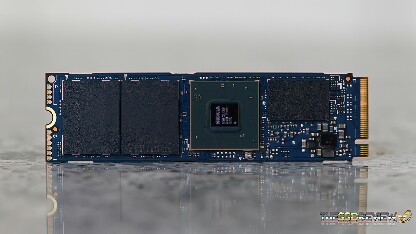
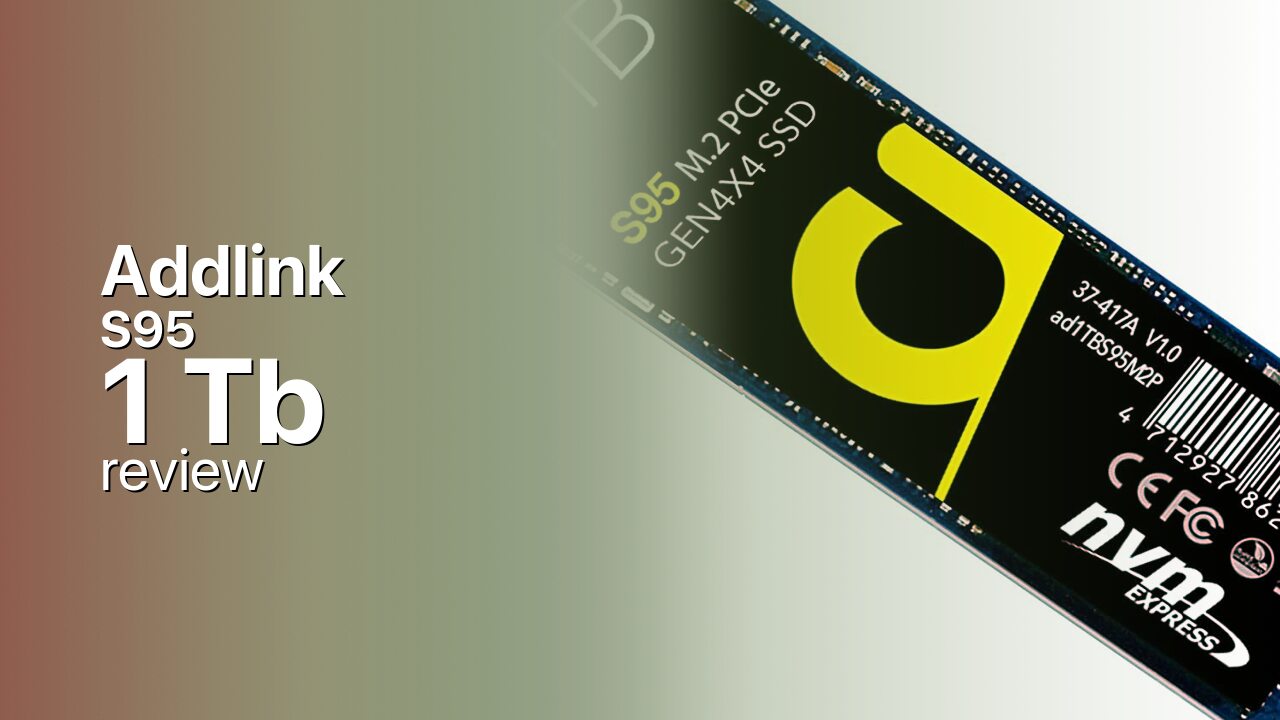
The Addlink S95 is built on the Phison PS5018-E18, the second-generation PCIe 4.0 controller that powered the fastest consumer SSDs of the 2020—2022 era. It is an 8-channel design with a dedicated DDR4-2666 DRAM cache, paired with Micron 3D TLC NAND. The drive uses the PCIe 4.0 x4 interface on an M.2 2280 form factor and is available as a bare drive without a factory heatsink — buyers planning sustained-write workloads should budget for a motherboard M.2 heatsink or a third-party solution.
Addlink also sells the S95 in a 2 TB capacity, which typically doubles the endurance and may carry higher write speed ratings than the 1 TB. The 1 TB variant reviewed here is the volume seller and the capacity most buyers will encounter. The S95 competes directly against other Phison E18 reference-design drives: the Sabrent Rocket 4 Plus, Corsair MP600 Pro, and Seagate FireCuda 530 — all of which share the same controller architecture and differ primarily in NAND selection, firmware tuning, and brand recognition.
Addlink is a smaller brand without the retail presence of Samsung or WD, which affects warranty support accessibility and long-term firmware update availability. What the S95 offers is flagship controller performance with Micron TLC at a price that typically undercuts the bigger names. For a desktop builder comfortable with a less familiar brand in exchange for cost savings, it is a compelling proposition. For anyone who prioritises brand support and resale value, the Sabrent or Corsair equivalents may be worth the premium.
Storage Comparisons:
S95 Performance & Benchmarks
Addlink rates the S95 1 TB at up to 7,100 MB/s sequential reads and 6,800 MB/s sequential writes — figures at the top end of the Phison E18 platform and competitive with any PCIe 4.0 drive on the market. Random performance is rated at up to 650,000 read IOPS and 700,000 write IOPS, a consequence of the 8-channel controller and dedicated DRAM. In real-world use, game load times and OS boot speeds are indistinguishable from any high-end NVMe drive — the difference between 7,100 MB/s and 7,400 MB/s is invisible outside of sustained sequential transfers.
Addlink S95 1 TB vs M.2 4.0 x 4 peers
Switch between sequential throughput and random IOPS to see how this drive stacks up against other M.2 4.0 x 4 SSDs in our database. The highlighted bar is the drive on this page — click any other bar to open that drive.
- Patriot Viper PV593 1 TB: 14,500 MB/s read, 14,000 MB/s write
- Patriot Viper PV593 2 TB: 14,500 MB/s read, 14,000 MB/s write
- Patriot Viper PV593 4 TB: 14,500 MB/s read, 14,000 MB/s write
- Patriot Viper PV573 2 TB: 14,000 MB/s read, 12,000 MB/s write
- Addlink S95 1 TB (this drive): 7,100 MB/s read, 6,800 MB/s write
The Phison E18 uses a large SLC write cache — typically 150—200 GB on a 1 TB E18 drive — and direct-to-TLC writes settle in the 1,500—2,000 MB/s range after the cache fills, which is still well above SATA speeds. Independent reviews of the E18 platform consistently note that sustained write throughput holds up better than first-gen PCIe 4.0 controllers, and the S95 benefits from this generational improvement. The E18 runs cooler than the first-gen E16 but still generates meaningful heat under sustained load — a motherboard M.2 heatsink is recommended for any workload longer than a few minutes of continuous writes. Without one, thermal throttling can cut performance by 30—50% once the controller exceeds 75 °C.
Addlink S95 vs Competitors
See how the S95 stacks up against other M.2 4.0 x 4 drives in our database:
Compare with rival drives:
Endurance, TBW & Warranty
The 1 TB Addlink S95 carries a 700 TBW endurance rating and a 5-year limited warranty, whichever limit is reached first. At a typical desktop workload of 20—50 GB of writes per day, this translates to roughly 40 to 100 years of usable life — the warranty will almost certainly expire before the NAND cells approach their endurance limit. The MTBF is rated at 1.8 million hours, a population-level reliability statistic. For context, the Sabrent Rocket 4 Plus 1 TB and Corsair MP600 Pro 1 TB — both built on the same Phison E18 platform — are also rated at 700 TBW. The 2 TB variant of the S95 reportedly doubles endurance to 1,400 TBW. Addlink handles warranty claims through its distribution partners; as a smaller brand, warranty service may be less streamlined than Samsung or WD, something to factor into the purchase decision.
Addlink S95 1 TB Specifications
| Category | Value |
|---|---|
| Capacity [?] | 1 TB |
| Interface [?] | M.2 4.0 x 4 |
| Controller [?] | Phison PS5018-E18 |
| Memory type [?] | Micron 3D TLC |
| DRAM [?] | DDR4 Cache |
| Read speed (MB/s) [?] | 7100 |
| Write speed (MB/s) [?] | 6800 |
| Read IOPS [?] | 650000 |
| Write IOPS [?] | 700000 |
| Endurance (TBW) [?] | 700 |
| MTBF (million hours) [?] | 1.8 |
| Warranty (years) [?] | 5 |
Verdict: Is the S95 Worth It in 2026?
The Addlink S95 1 TB is a full-fat Phison E18 drive sold at a brand-discount price. It delivers the same controller, DRAM cache, and PCIe 4.0 throughput as the Sabrent Rocket 4 Plus and Corsair MP600 Pro — drives that cost more for the same underlying silicon. Buy it if you are comfortable with a smaller brand and want flagship PCIe 4.0 performance without paying for the logo. Skip it if you value seamless warranty support, regular firmware updates, or the reassurance of a known brand behind your boot drive — the Samsung 980 Pro and WD Black SN850 offer comparable performance with better post-purchase infrastructure. The S95 is a component for builders who read spec sheets, not box labels, and at that game it competes well above its price point.
+ Pros
- 7,100 MB/s reads on the Phison E18 PCIe 4.0 controller
- DDR4 DRAM cache for consistent mixed-workload latency
- 700 TBW endurance — matches Sabrent and Corsair E18 equivalents
- 5-year warranty on a flagship controller platform
- 700,000 random write IOPS for demanding workloads
- Competitively priced against brand-name E18 alternatives
- Cons
- Smaller brand — warranty support and firmware updates less certain
- No factory heatsink included on most SKUs
- Phison E18 requires a heatsink for sustained write workloads
- Limited retail availability outside select online channels
- No hardware encryption support
Buy this or similar SSD Storage:



Video Review
Can an Amazon 1TB SSD compete with a Samsung EVO? Actually... yes | Hardware