ADATA XPG Atom 50 1TB — Innogrit-Powered PCIe 4.0 NVMe (2026)
Quick answer
The ADATA XPG Atom 50 1 TB is a PCIe 4.0 drive that succeeds by making smart component choices rather than chasing headline numbers.
Read: 5000 MB/s Write: 4500 MB/s Endurance: 650 TBW Warranty: 5 years Interface: M.2 4.0 x 4
The ADATA XPG Atom 50 1TB is a DRAM-less PCIe 4.0 drive that punches above its weight class — pairing an Innogrit IG5220 controller with Micron 176-layer TLC to deliver near-flagship read speeds at a mid-range price.
Controller & Memory
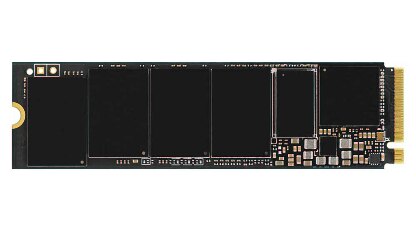
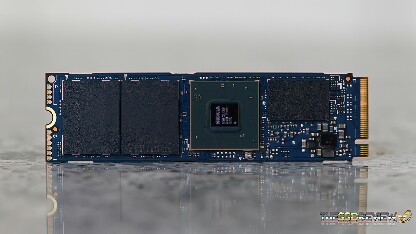
Inside the XPG Atom 50, ADATA pairs the Innogrit IG5220 Rainier controller with Micron 176-layer 3D TLC NAND (B47R). The IG5220 is a DRAM-less, four-channel PCIe 4.0 design that relies on the Host Memory Buffer (HMB) for its mapping table — Windows allocates up to 64 MB of system RAM, though the controller supports up to 512 MB. The NAND is rebadged under ADATA's branding but is confirmed by multiple teardowns as Micron's B47R, the same 176-layer TLC flash found in several higher-priced drives. The PCB is single-sided M.2 2280, making it compatible with thin laptops and the PlayStation 5 expansion bay.
ADATA launched the Atom 50 in a 1 TB capacity as the primary SKU, with a 2 TB variant announced later. The 1 TB model is rated at 5,000 MB/s sequential reads and 4,500 MB/s sequential writes — numbers that sit just below the PCIe 4.0 x4 theoretical ceiling of roughly 7,400 MB/s, limited by the four-channel IG5220 rather than the interface. Formatted capacity comes to approximately 931 GB in Windows. The drive's single-sided PCB and modest power consumption — the IG5220 is built on a 12 nm process — mean it runs cooler than eight-channel PCIe 4.0 flagships, an advantage in thermally constrained enclosures.
The Atom 50 competes in the value PCIe 4.0 segment against the WD Black SN770, Samsung 980 (non-PRO), and Crucial P3 Plus. Against the SN770 it trades a few hundred MB/s of peak throughput for a lower typical street price and the advantage of confirmed TLC NAND versus the SN770's mixed TLC/QLC sourcing. Against the Samsung 980 it offers PCIe 4.0 bandwidth versus the 980's PCIe 3.0 ceiling. The Atom 50's combination of a known-good Innogrit controller, high-layer-count Micron TLC, and a 5-year warranty makes it one of the more transparent value propositions in the DRAM-less PCIe 4.0 segment — fewer unknowns than the commodity-controller alternatives.
Storage Comparisons:
Atom 50 Performance & Benchmarks
ADATA rates the 1 TB Atom 50 at up to 5,000 MB/s sequential reads and 4,500 MB/s sequential writes, with random performance of up to 650,000 IOPS read and 600,000 IOPS write. These are strong numbers for a four-channel, DRAM-less controller — the IG5220 extracts more PCIe 4.0 throughput per channel than most competing budget designs. Real-world testing by independent reviewers confirms the drive sustains its rated speeds under typical consumer workloads with minimal thermal throttling, a credit to both the 12 nm controller process and the single-sided PCB's heat dissipation characteristics.
ADATA Atom 50 1 TB vs M.2 4.0 x 4 peers
Switch between sequential throughput and random IOPS to see how this drive stacks up against other M.2 4.0 x 4 SSDs in our database. The highlighted bar is the drive on this page — click any other bar to open that drive.
- Patriot Viper PV593 1 TB: 14,500 MB/s read, 14,000 MB/s write
- Patriot Viper PV593 2 TB: 14,500 MB/s read, 14,000 MB/s write
- Patriot Viper PV593 4 TB: 14,500 MB/s read, 14,000 MB/s write
- Patriot Viper PV573 2 TB: 14,000 MB/s read, 12,000 MB/s write
- ADATA Atom 50 1 TB (this drive): 5,000 MB/s read, 4,500 MB/s write
The drive maintains a dynamic SLC write cache that absorbs burst writes at full speed. Once the cache fills — typically after several hundred gigabytes of sustained sequential writes on the 1 TB model — write throughput settles to native TLC speeds, which remain above 1,000 MB/s thanks to the Micron 176-layer NAND's high native write performance. This is a meaningful advantage over QLC-based competitors that can fall below 200 MB/s after cache exhaustion. For gaming, content consumption, and general desktop use, the cache rarely fills in normal operation, and the post-cache TLC speeds are high enough that even large file transfers complete without the dramatic slowdown associated with QLC.
In synthetic benchmarks the Atom 50 trades blows with the WD Black SN770 — the SN770 holds an edge in peak sequential writes and some mixed-workload tests, while the Atom 50 often matches or exceeds it in random read latency, a metric that correlates more directly with OS and application responsiveness. Independent reviewers consistently describe the Atom 50 as a drive whose real-world feel exceeds what its spec sheet suggests, thanks to the IG5220's strong low-queue-depth performance.
ADATA Atom 50 vs Competitors
See how the Atom 50 stacks up against other M.2 4.0 x 4 drives in our database:
Compare with rival drives:
Endurance, TBW & Warranty
ADATA backs the Atom 50 1 TB with a 5-year limited warranty, capped by a 650 TBW endurance rating. This works out to roughly 650 TBW per terabyte — a solid ratio for a consumer PCIe 4.0 drive, though below the 1,200 TBW per terabyte offered by premium TLC drives like the Samsung 980 PRO. At a typical daily write load of 30 to 50 GB, the drive would last 35 to 59 years before approaching the TBW ceiling, making endurance a non-issue for consumer use cases. The Micron 176-layer TLC NAND's rated program/erase cycle count aligns with the 650 TBW figure, so the rating is consistent with the hardware rather than artificially capped. Warranty claims go through ADATA's standard RMA process; the 5-year period runs from the original purchase date, and buyers should retain proof of purchase.
ADATA Atom 50 1 TB Specifications
| Category | Value |
|---|---|
| Capacity [?] | 1 TB |
| Interface [?] | M.2 4.0 x 4 |
| Controller [?] | Innogrit IG5220 |
| Memory type [?] | Micron 176-layer 3D TLC |
| DRAM [?] | No |
| Read speed (MB/s) [?] | 5000 |
| Write speed (MB/s) [?] | 4500 |
| Read IOPS [?] | 650000 |
| Write IOPS [?] | 600000 |
| Endurance (TBW) [?] | 650 |
| MTBF (million hours) [?] | 1500000 |
| Warranty (years) [?] | 5 |
Verdict: Is the Atom 50 Worth It in 2026?
The ADATA XPG Atom 50 1 TB is a PCIe 4.0 drive that succeeds by making smart component choices rather than chasing headline numbers. The Innogrit IG5220 controller is a known quantity with proven firmware, the Micron 176-layer TLC is a generation ahead of the NAND in many competing budget drives, and the 5-year warranty with 650 TBW endurance removes the documentation gaps that plague lesser-known alternatives. It is well suited as a system drive in a mid-range gaming or productivity build, a PS5 expansion SSD, or a laptop upgrade where single-sided PCB fitment matters. Skip it if you need the absolute fastest sequential writes — the WD Black SN770 at 2 TB outpaces it, and DRAM-equipped drives like the Samsung 980 PRO offer lower latency under heavy multitasking. For the buyer who wants PCIe 4.0 bandwidth, confirmed TLC NAND, and a controller they can look up, the Atom 50 delivers one of the cleanest value propositions in the DRAM-less segment.
+ Pros
- Innogrit IG5220 controller with mature, documented firmware
- Micron 176-layer 3D TLC NAND, confirmed by teardowns
- 5,000 MB/s reads, saturating the four-channel PCIe 4.0 ceiling
- 650 TBW endurance with a 5-year warranty
- Single-sided PCB fits thin laptops and PS5 expansion slot
- Minimal thermal throttling under sustained consumer loads
- Cons
- No dedicated DRAM cache, HMB-only architecture
- Peak writes trail eight-channel PCIe 4.0 competitors
- 2 TB variant less widely available than the 1 TB SKU
- Endurance ratio below premium TLC drives like Samsung 980 PRO
Buy this or similar SSD Storage:



Video Review
Can a DRAM-less SSD be fast? XPG Atom 50 1TB NVMe PCIe 4.0 Solid State Drive Review