SSD Warranty Explained: 3-Year vs 5-Year and What Is Covered
Posted on
by
Raymond Chen
SSD warranties protect against defects and early failures. Most consumer drives offer 3 to 5 years of coverage, but the terms and conditions matter.
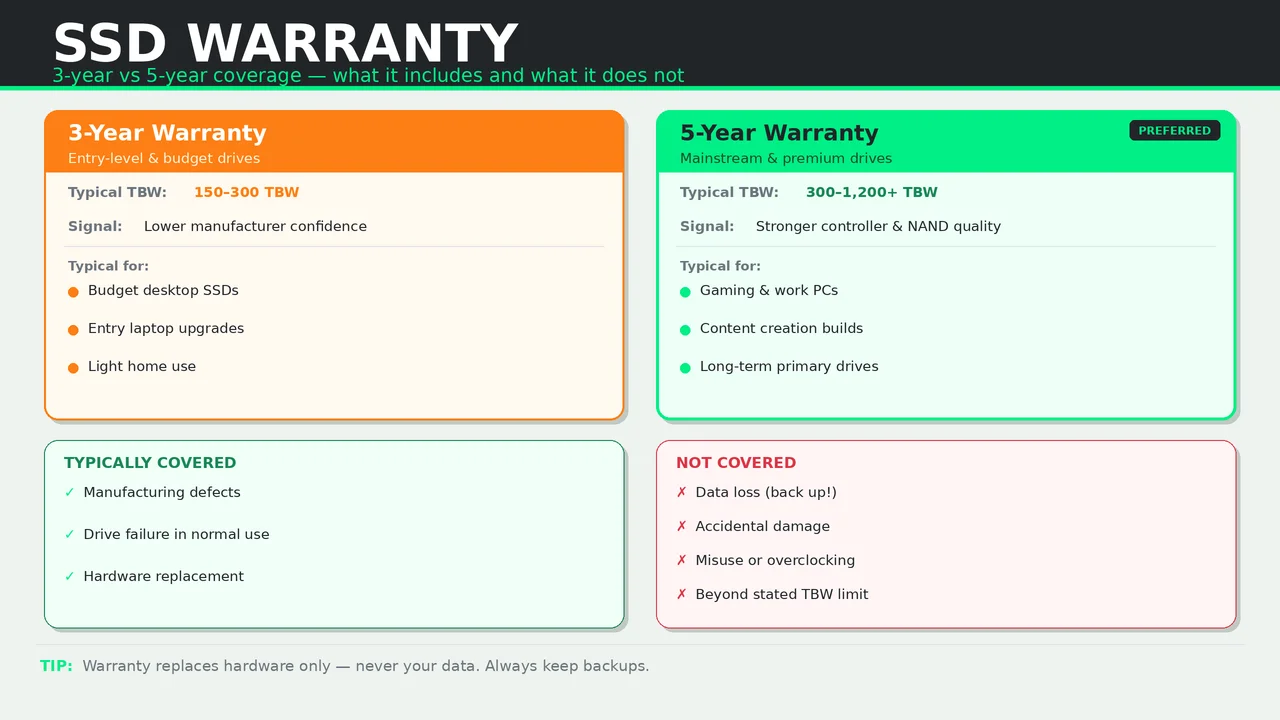
3-year vs 5-year warranty
3-year warranty
- Common on budget and entry-level drives
- Typical TBW: 150 to 300 TBW
- Suggests lower manufacturer confidence in NAND or controller
5-year warranty
- Standard on mainstream and premium drives
- Typical TBW: 300 to 1,200+ TBW
- Stronger signal of better NAND quality and controller
What does an SSD warranty actually cover?
Usually covered
- Manufacturing defects
- Drive failure during normal use
- Hardware replacement
Usually not covered
- Data loss (backups are your responsibility)
- Accidental damage
- Misuse or overclocking
- Exceeding the TBW limit
Warranty ends when either time OR TBW runs out
If you hit the TBW limit before the warranty period ends, coverage can end even if you still have time left. For most home users, time runs out first, but heavy write workloads can hit TBW sooner.
Why warranty length matters
A 5-year warranty suggests the manufacturer expects the drive to last. It is a useful signal when comparing drives. For peace of mind, especially for a primary boot drive, 5-year coverage is worth paying a bit more.