SSD Read Speed: Sequential vs Random and What Matters
SSD read speed measures how fast the drive can fetch data. Sequential read speed is good for large file transfers, but random read speed matters more for everyday responsiveness.
Sequential vs random read speed
- Sequential read — reading large files contiguously. Examples: loading game levels, copying videos, transferring project archives.
- Random read — reading small blocks scattered across the drive. Examples: app launches, boot times, file browsing, multitasking.
For daily desktop use, random read performance is more noticeable than the sequential numbers on the box.
Typical read speeds by interface
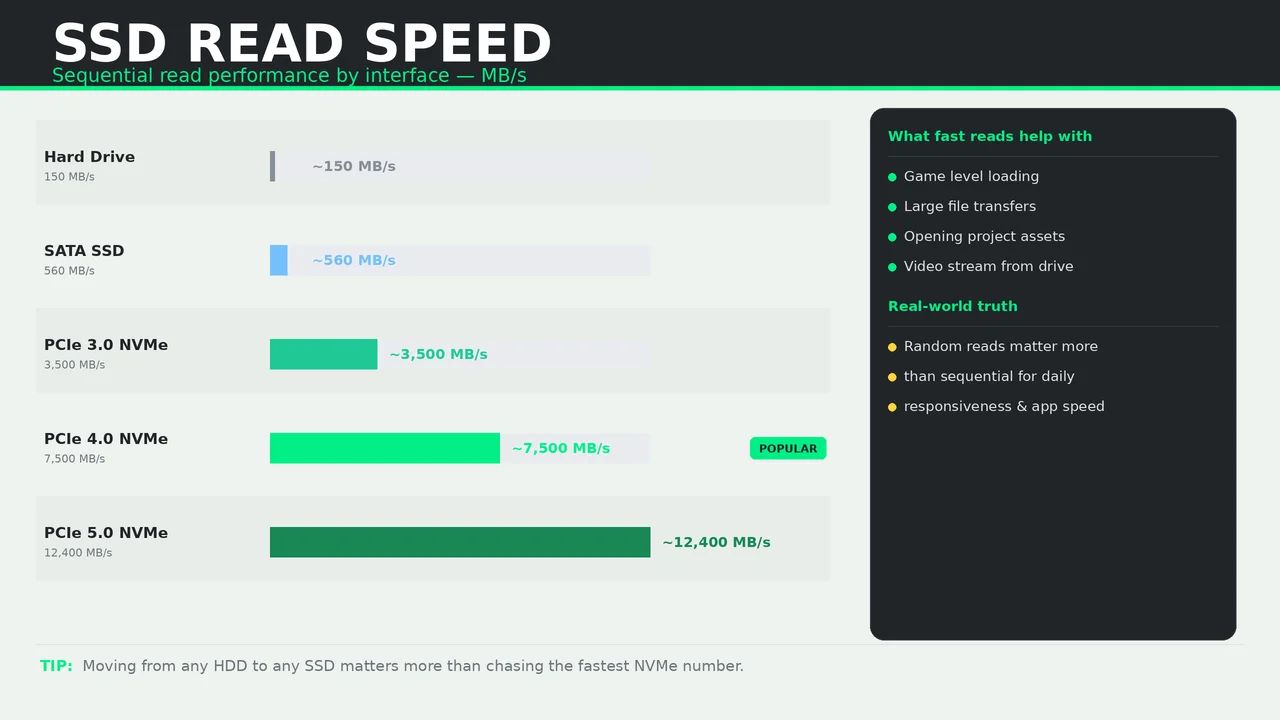
- SATA SSD — up to about 560 MB/s
- PCIe 3.0 NVMe — around 2,000 to 3,500 MB/s
- PCIe 4.0 NVMe — around 5,000 to 7,500 MB/s
- PCIe 5.0 NVMe — can exceed 10,000 MB/s
Does faster read speed make a noticeable difference?
It depends on what you do.
For gaming, differences between PCIe 3.0 and PCIe 4.0 are usually small. A fast SATA SSD is already a huge jump over any hard drive. Going from SATA to NVMe helps with large asset loading, but diminishing returns set in quickly.
For content creation, faster sequential reads help with large video, photo, and project files. Random reads matter more when browsing assets or opening many small files.
Why random reads matter more than you think
Operating systems and apps constantly read small blocks scattered across the drive. Good random read performance keeps the system feeling snappy even under multitasking. This is where NVMe tends to shine more than the headline sequential numbers suggest.