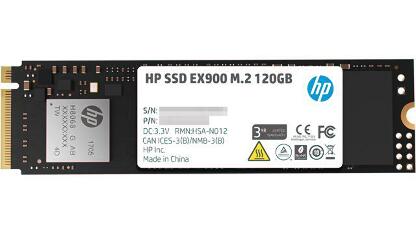
Netac 930E 120GB — Entry-Level TLC PCIe 3.0 NVMe SSD (2026)
Quick answer
The Netac 930E 120 GB is a defensible choice for exactly one buyer: someone building the lowest-cost PC they can and needing an NVMe boot drive that costs as little as possible.
Read: 2000 MB/s Write: 1500 MB/s Endurance: 80 TBW Warranty: 3 years Interface: M.2 3.0 x 4
The Netac 930E 120GB is one of the cheapest ways to put an NVMe boot drive in a budget PC — a TLC PCIe 3.0 drive that trades capacity and polish for an entry price few competitors match at this form factor.
Controller & Memory
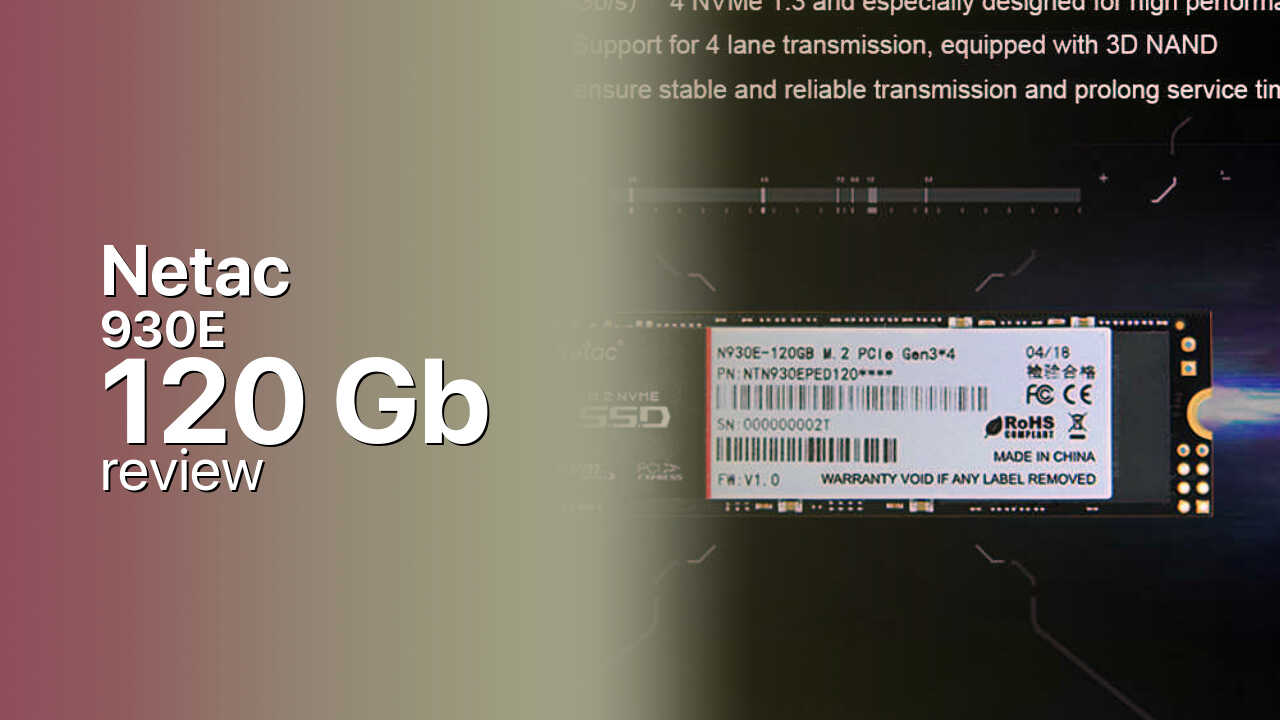
The Netac 930E (also sold as the N930E PRO) is an entry-level M.2 2280 NVMe SSD built around 3D TLC NAND and a DRAM-less controller that uses the Host Memory Buffer for its mapping table. Netac does not publicly disclose the controller model, and independent teardowns are sparse — but at this price tier the controller is almost certainly a low-cost four-channel design from one of the commodity controller vendors. The 120 GB capacity marks this as the smallest SKU in the lineup, which also includes 256 GB, 512 GB, and 1 TB variants. The drive uses a single-sided PCB, which makes it compatible with thin laptops, mini-PCs, and any motherboard with a standard M.2 slot.
The 930E is positioned strictly as a boot-drive replacement — it is not meant for large game libraries, content creation scratch disks, or any workload that demands sustained throughput. At 120 GB, formatted capacity sits around 111 GB in Windows, which is enough for the operating system, essential applications, and little else. Users who need room for a game or two should consider the 256 GB or 512 GB variants instead. The TLC NAND is a genuine advantage over the QLC found in competing bottom-tier drives like the WD Green SN350, as TLC provides better sustained write performance and higher endurance at the cost of peak density.
In the entry-level NVMe segment the 930E competes against the Kingston NV2, the Silicon Power P34A60, and the Team Group MP33. None of these drives carry premium features — DRAM caches, hardware encryption, or PCIe 4.0 — but the 930E undercuts most of them on price while using TLC rather than QLC. The trade-off is brand recognition and warranty infrastructure: Netac's support network is less established than Kingston's or WD's, and the 3-year coverage period is shorter than the 5-year standard on mid-range drives. For a budget build where every dollar counts, the 930E's TLC NAND makes it a more defensible choice than QLC alternatives at the same price point.
Storage Comparisons:
930E Performance & Benchmarks
Netac rates the 120 GB 930E at up to 2,000 MB/s sequential reads and 1,500 MB/s sequential writes on the PCIe 3.0 x4 interface. These figures sit comfortably above SATA III's 560 MB/s ceiling and represent a meaningful upgrade for anyone moving from a SATA SSD or hard drive. Random IOPS are not published by Netac, which is common for drives in this price bracket and generally indicates modest 4K random performance — adequate for OS responsiveness and application launches but not competitive with DRAM-equipped PCIe 3.0 drives like the Samsung 970 EVO Plus.
Netac 930E 120 GB vs M.2 3.0 x 4 peers
Switch between sequential throughput and random IOPS to see how this drive stacks up against other M.2 3.0 x 4 SSDs in our database. The highlighted bar is the drive on this page — click any other bar to open that drive.
- ADATA SX 8800 Pro 512 GB: 3,500 MB/s read, 2,700 MB/s write
- ADATA SX 8800 Pro 1 TB: 3,500 MB/s read, 2,700 MB/s write
- ADATA XPG Spectrix S40G RGB 256 GB: 3,500 MB/s read, 3,000 MB/s write
- ADATA XPG Spectrix S40G RGB 512 GB: 3,500 MB/s read, 3,000 MB/s write
- Netac 930E 120 GB (this drive): 2,000 MB/s read, 1,500 MB/s write
The 120 GB capacity imposes a practical performance ceiling beyond the published sequential numbers. Small-capacity SSDs have fewer NAND dies to parallelize writes across, so sustained write throughput on the 120 GB model will be lower than on the 512 GB or 1 TB variants. This is not a defect specific to the 930E — every SSD scales write performance with capacity — but it is worth noting if you are comparing the published 1,500 MB/s number across different sizes. The 120 GB 930E will saturate at its rated speeds for short bursts and then settle lower under sustained load.
For its intended use as a boot drive, the 930E's performance profile is appropriate. Windows boot times, browser launches, and office application loads are dominated by random read latency, not sequential throughput, and any PCIe 3.0 NVMe drive clears the bar for snappy system responsiveness. The real upgrade from this drive is not to another PCIe 3.0 model but to a larger-capacity SSD that leaves more spare area for the controller to manage wear leveling and garbage collection efficiently.
Netac 930E vs Competitors
See how the 930E stacks up against other M.2 3.0 x 4 drives in our database:
Compare with rival drives:
Endurance, TBW & Warranty
Netac provides a 3-year limited warranty on the 930E, which is shorter than the 5-year coverage offered by most mid-range and premium SSD manufacturers. The endurance rating in TBW (Terabytes Written) is not published by Netac for this drive, which is not unusual for entry-level products from smaller brands — but it does leave buyers without a guaranteed write endurance ceiling. For a 120 GB boot drive, daily write loads are typically low, on the order of 10 to 20 GB per day, so the TLC NAND is unlikely to approach its endurance limit during the warranty period even under conservative assumptions. The MTBF is also not published. Warranty claims are handled through Netac's support channels; buyers should register the product and retain proof of purchase, as the 3-year period starts from the original sale date. Given the brand's limited retail presence outside of Asia and online marketplaces, warranty service may involve longer turnaround times compared to more established manufacturers.
Netac 930E 120 GB Specifications
| Category | Value |
|---|---|
| Capacity [?] | 120 GB |
| Interface [?] | M.2 3.0 x 4 |
| Controller [?] | Silicon Motion SM2263XT |
| Memory type [?] | TLC |
| DRAM [?] | HMB |
| Read speed (MB/s) [?] | 2000 |
| Write speed (MB/s) [?] | 1500 |
| Read IOPS [?] | 90000 |
| Write IOPS [?] | 120000 |
| Endurance (TBW) [?] | 80 |
| MTBF (million hours) [?] | 1500000 |
| Warranty (years) [?] | 3 |
Verdict: Is the 930E Worth It in 2026?
The Netac 930E 120 GB is a defensible choice for exactly one buyer: someone building the lowest-cost PC they can and needing an NVMe boot drive that costs as little as possible. It gets the basics right — TLC NAND, PCIe 3.0 x4, single-sided M.2 2280 — and avoids the QLC trap that makes some competing budget drives genuinely unpleasant to use as a system disk. Skip it if you can stretch to a 256 GB or 512 GB drive from a brand with stronger warranty support, or if you plan to store anything beyond the operating system and essential applications. Alternatives worth the small premium include the Kingston NV2 250 GB and the Team Group MP33 256 GB, both of which offer more breathing room and better-documented endurance ratings. As a boot drive for a web-browsing, document-editing PC, the 930E does its job without drama — and at this price, that is the entire value proposition.
+ Pros
- TLC NAND avoids the QLC write cliff at this price
- 2,000 MB/s sequential reads, triple SATA III speeds
- Single-sided M.2 2280 PCB fits most laptops
- Available in capacities from 120 GB to 1 TB
- HMB support mitigates DRAM-less controller latency
- Cons
- Endurance TBW rating not published by manufacturer
- 120 GB usable capacity tight for modern OS plus applications
- No dedicated DRAM cache on any capacity
- 3-year warranty shorter than 5-year industry standard
- Limited retail and warranty support outside of Asia
Buy this or similar SSD Storage:
Video Review
Netac M.2 NVME PCIe Gen3x4 SSD